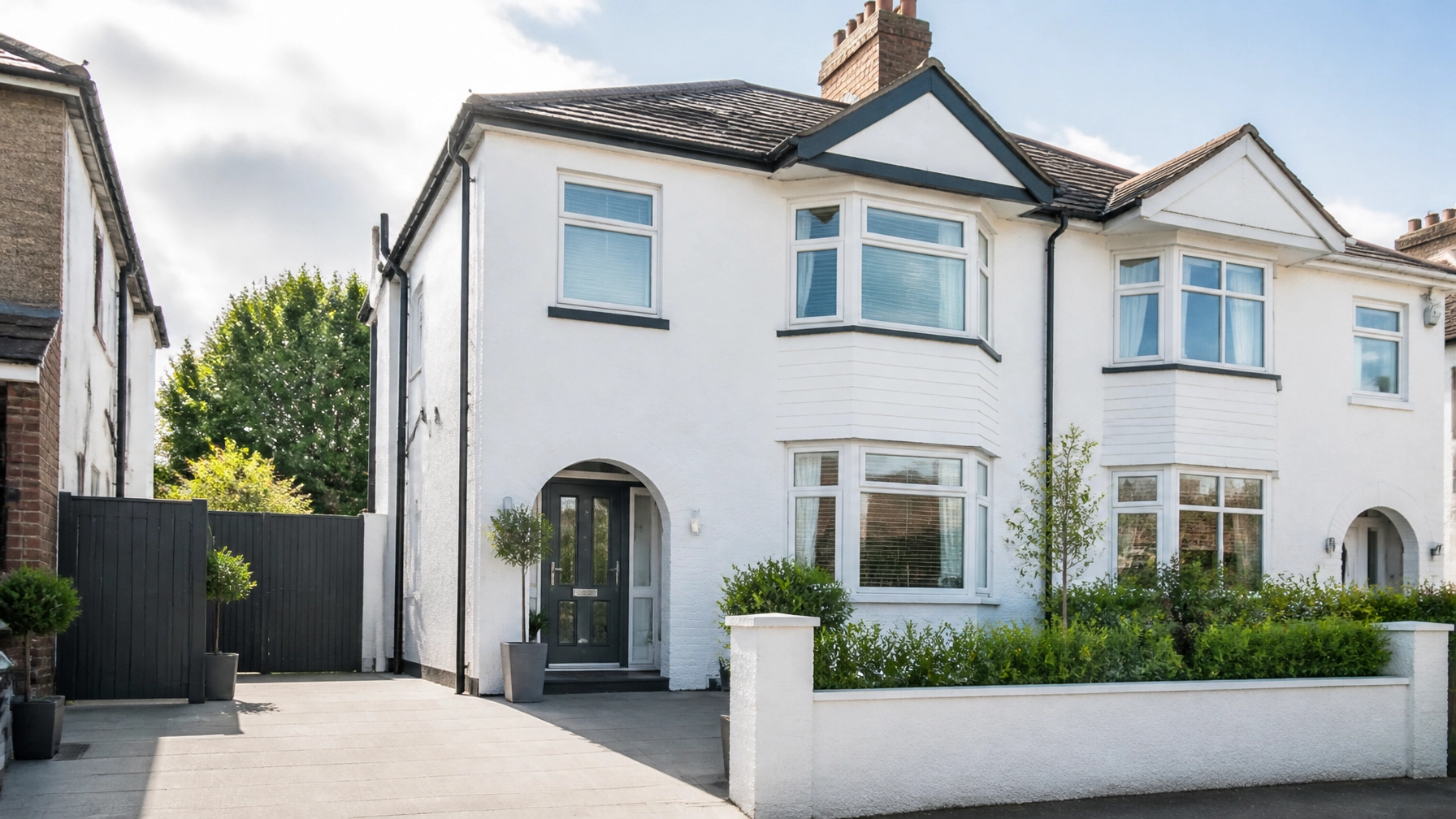
The quiet, tree-lined streets of Trafford are usually defined by the rhythmic hum of suburban life: the distant sound of the Metrolink, the clatter of morning commutes, and the gentle bustle of local shops. However, over one extraordinary weekend, a single semi-detached house became the focal point of a logistical and emotional feat that has left a permanent mark on the local community. It began with a call for help and ended with forty strangers, two sleepless nights, and a home that has been described by its owner, Sarah Walton, as nothing short of a miracle.
Sarah, a devoted mother to three young sons, has spent years navigating the immense challenges of raising children with complex neurodivergent needs. For many families, a home is a place of rest, but for the Waltons, their living space had become a source of daily friction. The layout was cramped, the walls bore the scars of high-energy play, and the lack of dedicated sensory zones meant that Sarah was often managing three different sets of needs in a space that offered no respite. The kitchen was outdated, the garden was an unusable patch of uneven ground, and the bedrooms lacked the calming atmosphere essential for children who struggle with sensory processing.
Enter Project 33, a grassroots collective of tradespeople and volunteers known for their "blitz-style" renovations. When they heard about Sarah’s situation through a local community board, the response was immediate. They didn't just offer to fix a leaky tap or repaint a hallway; they committed to a total, ground-up transformation of the family’s environment in just forty-eight hours. What followed was a masterclass in human kindness and technical precision, as forty people who had never met before descended on the Trafford property with a singular goal.
A Mother’s Burden and a Community’s Answer
To understand the scale of the transformation, one must first understand the weight Sarah Walton has been carrying. As a solo carer, her days are measured in appointments, sensory meltdowns, and the constant vigilance required to keep her three sons safe. The eldest, who has severe autism, requires a highly structured environment where every object has its place to avoid distress. The younger two also have significant sensory needs, meaning the family home needed to be more than just a house; it needed to be a therapeutic tool.
Before the volunteers arrived, the house felt like it was closing in on them. Sarah described a "permanent state of high alert," where the physical limitations of the building made everyday tasks like cooking or bedtime feel like an uphill battle. The stairs were steep and poorly lit, the flooring was difficult to clean, and the absence of a "safe room" meant there was nowhere for the boys to retreat when the world became too loud or too bright.
The arrival of Project 33 changed the atmosphere almost instantly. On a Friday morning at 07:00, the street was filled with vans, ladders, and the optimistic chatter of volunteers from all over Greater Manchester. Plumbers, electricians, carpenters, and decorators: many of whom had taken time off work or donated their weekend: stood ready. The coordination was military in its precision. While one team cleared the garden of overgrown brambles, another was already stripping the old, stained carpets from the upper floors. There was no hierarchy; the local master builder worked alongside a student who had simply turned up to help with the heavy lifting. The Trafford community also stepped in, with neighbours providing endless rounds of tea, sandwiches, and even a local bakery delivering fresh pastries to keep the workforce fuelled.
Forty-Eight Hours of Extraordinary Effort
The clock started on Friday, and by Saturday morning, the house was a hive of controlled chaos. The internal walls were reconfigured to create an open-plan living area that allowed Sarah to keep an eye on all three boys from the kitchen. This structural change was crucial; it meant that for the first time in years, Sarah could prepare a meal without the constant anxiety of what was happening in the next room. Durable, easy-to-clean flooring was laid throughout the ground floor, replacing the old carpets that had long since seen their best days.
One of the most technically challenging aspects of the renovation was the garden. It was transformed from a muddy, dangerous slope into a multi-sensory playground. Volunteers installed high-quality artificial grass, a sunken trampoline for safe burning of energy, and a high-fenced perimeter that gave Sarah the peace of mind to let the boys play outside independently. For a family that often feels isolated because of the difficulties of visiting public parks, this private sanctuary was a life-changing addition.
As the sun set on the first day, the work didn't stop. Floodlights were brought in, and the sound of drills and sanders echoed late into the night. It was during these quiet hours of the second night that the project’s most artistic element took shape. A local muralist, working alongside the decorating team, spent hours in the boys' shared bedroom. Sarah had mentioned that the boys were often calmed by the night sky, and she had always dreamed of giving them a room that reflected that peace. The result was a stunning, floor-to-ceiling night-sky mural. Deep indigos and blacks were blended with shimmering, hand-painted stars and constellations, created using special glow-in-the-dark paint. It wasn't just a wall; it was a portal to a world of calm, designed specifically to help three children with complex needs drift into a peaceful sleep.
Creating a Sanctuary for the Future
By Sunday afternoon, the transformation was complete. The final coats of paint were dry, the new furniture was assembled, and the sensory lighting had been tested. The forty volunteers, exhausted and covered in dust, gathered in the street for the "reveal." When Sarah and her three sons returned to the house, the silence that fell over the crowd was heavy with anticipation.
The reaction was visceral. Walking through the front door, Sarah was met with a home that finally worked for her family rather than against them. The new kitchen, with its smart storage and clear sightlines, brought her to tears. But it was the reaction of the boys that truly moved the onlookers. The eldest son, usually wary of new environments, walked straight to the night-sky mural, traced the stars with his fingers, and sat down on his new bed with a sense of immediate belonging. The younger boys discovered the garden, their laughter echoing through the new fencing: a sound Sarah said she hadn't heard with such abandon in a long time.
This project was never just about bricks and mortar; it was about reclaiming a sense of dignity and hope for a family that felt forgotten. The kindness of forty strangers has provided more than just a renovated house; they have provided a foundation for a different kind of life. Sarah spoke of the "suffocating weight" that had been lifted, replaced by a sense of community that she hadn't known existed in such a profound way. As the vans eventually pulled away from the Trafford street, they left behind a house that was finally a home, and a family that finally had the space to breathe. The miracle of Trafford wasn't just in the 48-hour timeline, but in the enduring power of people coming together to change a life.