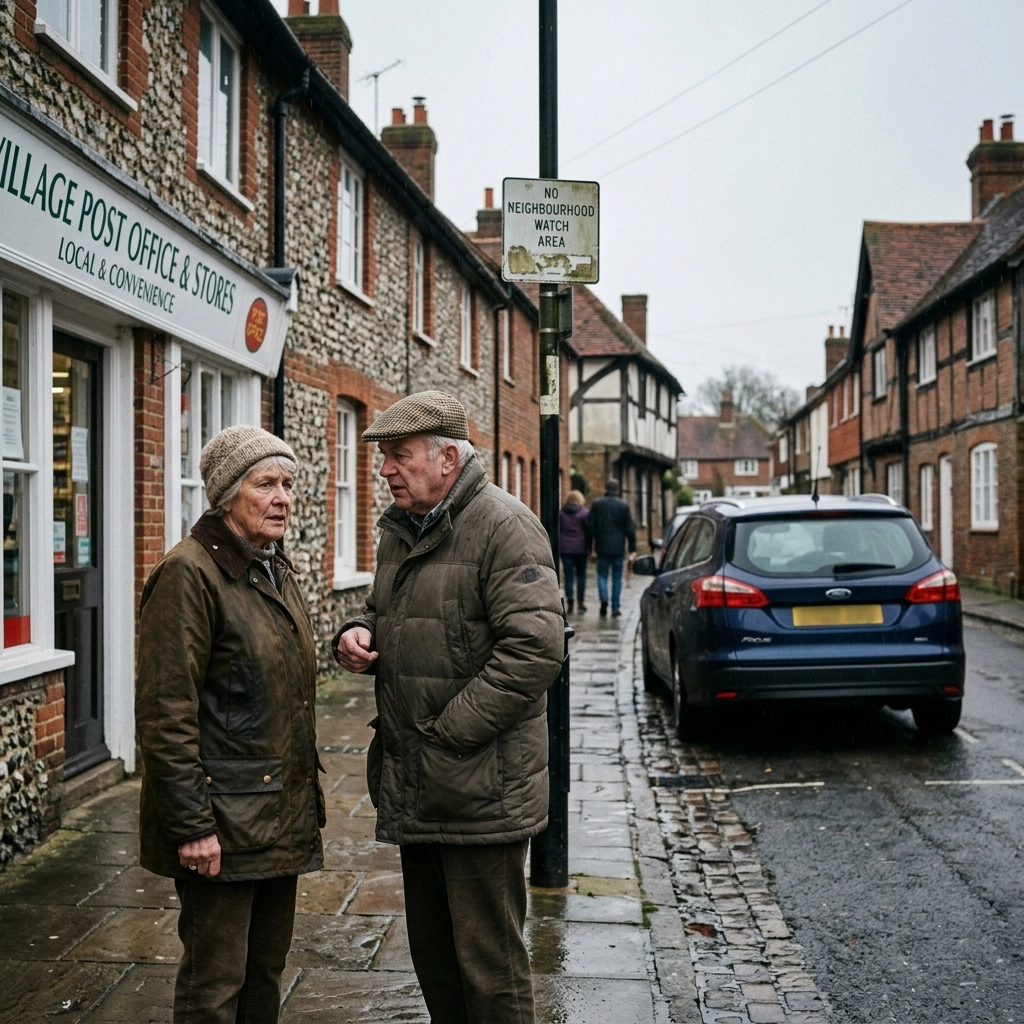
Kent is often called the Garden of England for a reason. Its rolling hills, ancient orchards, and quiet, tight-knit villages offer a sense of security that is hard to find elsewhere. In these communities, people tend to know their neighbours, and a person’s word still carries weight. However, it was this very sense of trust that a man named Paul Davis decided to exploit. Over several years, Davis moved through the Kent countryside not as a friendly neighbour, but as a calculated predator, leaving a trail of financial and emotional wreckage in his wake.
To the outside world, Davis might have seemed like just another professional looking for a quiet life in the country. But behind the polite exterior was a man who lived a life built on fabrications. At some point, he even took the step of legally changing his name to Ethan Hunt. Whether this was a nod to the "Mission Impossible" protagonist or simply a way to distance himself from his past is anyone's guess, but the cinematic irony wasn't lost on those he eventually crossed. In the world of independent news UK, these are the untold stories that remind us how easily the facade of a peaceful life can be shattered.
The story of Paul Davis is not just a tale of one big heist. It is a story of "death by a thousand cuts": a series of smaller, persistent deceptions that targeted individuals rather than institutions. From property owners to retired veterans, Davis found ways to insert himself into the lives of those around him, preying on their kindness and their desire to believe the best in people.
A Master of Disguise in the Garden of England
The mechanics of Davis’s operations were remarkably consistent. He would typically target rental properties in affluent or quiet Kent villages. These locations provided the perfect cover; they were secluded enough to avoid immediate scrutiny but close enough to major hubs to maintain an air of professional legitimacy. He didn't stay in one place for long, usually moving every 12 to 18 months. This transient lifestyle allowed him to stay one step ahead of the consequences of his actions while constantly refreshing his pool of potential targets.
One of the most high-profile cases associated with Davis involved a homeowner named Katherine Campbell. Katherine had a property she was looking to rent out, and Davis appeared to be the ideal tenant. However, the reality was far from the professional image he projected. As the months rolled on, the relationship soured, leading to a legal battle over unpaid debts. In a staggering display of audacity, Davis allegedly produced a forged court document to convince Katherine that he had cleared his debts. In reality, a county court judgment was still very much active against him.
The impact on Katherine went far beyond the money she was owed. For over a year, she found herself trapped in a bureaucratic nightmare. Debt collection agencies, acting on information linked to Davis, repeatedly targeted her property. She was forced to spend countless hours proving her own identity and clarifying that she was not responsible for Davis’s mounting financial failures. This kind of allegations of fraud can turn a person's life upside down, transforming their home from a sanctuary into a place of constant anxiety and stress. It is a stark reminder of how a single dishonest individual can cause ripple effects that last for years.
From Rental Ruses to Broken Dreams
While the rental fraud was significant, it was only one facet of Davis’s activities. He didn't just want a place to live; he seemed to want a lifestyle he hadn't earned. This led him to target individuals with investment opportunities that were too good to be true. One of the most heartbreaking accounts comes from a man named Lance, a retired Army veteran and cancer survivor. Lance had served his country and was looking to enjoy a quiet retirement in Kent, but his path crossed with Davis, who was then using the name Ethan Hunt.
Davis reportedly befriended Lance, building a relationship based on shared interests and the promise of a lucrative business venture. The plan was seemingly glamorous: a champagne boat tour business. For someone looking to invest their savings into something exciting and profitable, it sounded like a dream. Lance was eventually convinced to invest a sum of roughly £14,000 ($18,000) into the scheme. He believed he was building a future, but instead, he was funding Davis’s lifestyle.
The loss of that money was devastating for Lance, but the betrayal of trust was perhaps even worse. When someone targets a veteran or a person recovering from a serious illness, the cruelty of the con becomes much more apparent. This wasn't just a business deal gone wrong; it was a targeted exploitation of a person's hopes for the future. These untold stories are essential to highlight because they show the human face behind the statistics of fraud. Often, the legal system treats these cases as simple financial disputes, but for the victims, the damage is deeply personal and often permanent. The action needed to protect vulnerable individuals from such predators remains a major point of discussion in legal circles across the UK.
The Lasting Impact on Small Communities
When a con artist operates in a small village, the damage isn't just felt by the direct victims. It affects the entire community's sense of trust. Villages in Kent often thrive on a culture of "localism," where people look out for one another and local businesses are supported by a loyal customer base. When someone like Paul Davis enters that ecosystem and poisons it with deception, it makes everyone a little more guarded and a little less likely to offer help to a stranger.
The trail of destruction Davis left behind stretched across several villages, only a few miles apart. By the time one community started to catch on to his games, he was already packing his bags and moving to the next. This pattern suggests a deep understanding of how to manipulate social circles. He knew that by moving just a short distance away, he could restart his narrative with a fresh audience who hadn't heard the warnings from the neighbouring parish.
The reality of modern fraud is that it often mimics the complexities of legitimate finance. Whether it's through forged documents or complex investment schemes, con artists today use the same tools that honest people use to build their lives. For those struggling with their own financial burdens, such as those mentioned in our look at student loans and the debt trap, the idea of someone actively working to steal what little others have is particularly galling. It underscores the importance of staying vigilant and verifying the identities and claims of those we do business with, no matter how charming they may seem.
Ultimately, the case of the Kent conman is a cautionary tale about the vulnerability of trust in the modern age. Paul Davis, or Ethan Hunt, or whatever name he chooses next, managed to navigate the quiet lanes of Kent by pretending to be someone he wasn't. While he was eventually brought to justice for specific instances of fraud, the wider scope of his alleged activities suggests a man who made a career out of deception. For the people of Kent, the memory of his presence serves as a reminder that even in the most peaceful settings, one must always keep a watchful eye.
The victims of these crimes are left to pick up the pieces, often with little hope of recovering their lost funds. However, by sharing these stories, we can help build a collective awareness that makes it harder for the next "Ethan Hunt" to find a foothold. Independent news UK plays a vital role in this by shining a light on the narratives that don't always make the front pages of national broadsheets but matter immensely to the local people involved. These are the stories that define our communities and remind us of the value of true integrity in an increasingly complicated world.
The legal proceedings and the subsequent investigations have provided some closure, but for many, the financial scars remain. The villages of Kent continue to be beautiful, welcoming places, but there is a newfound awareness of the shadows that can hide behind a friendly smile and a forged document. The legacy of Paul Davis is not one of a master criminal, but of a man who chose to build a life on the misery of others, a choice that eventually, inevitably, caught up with him.