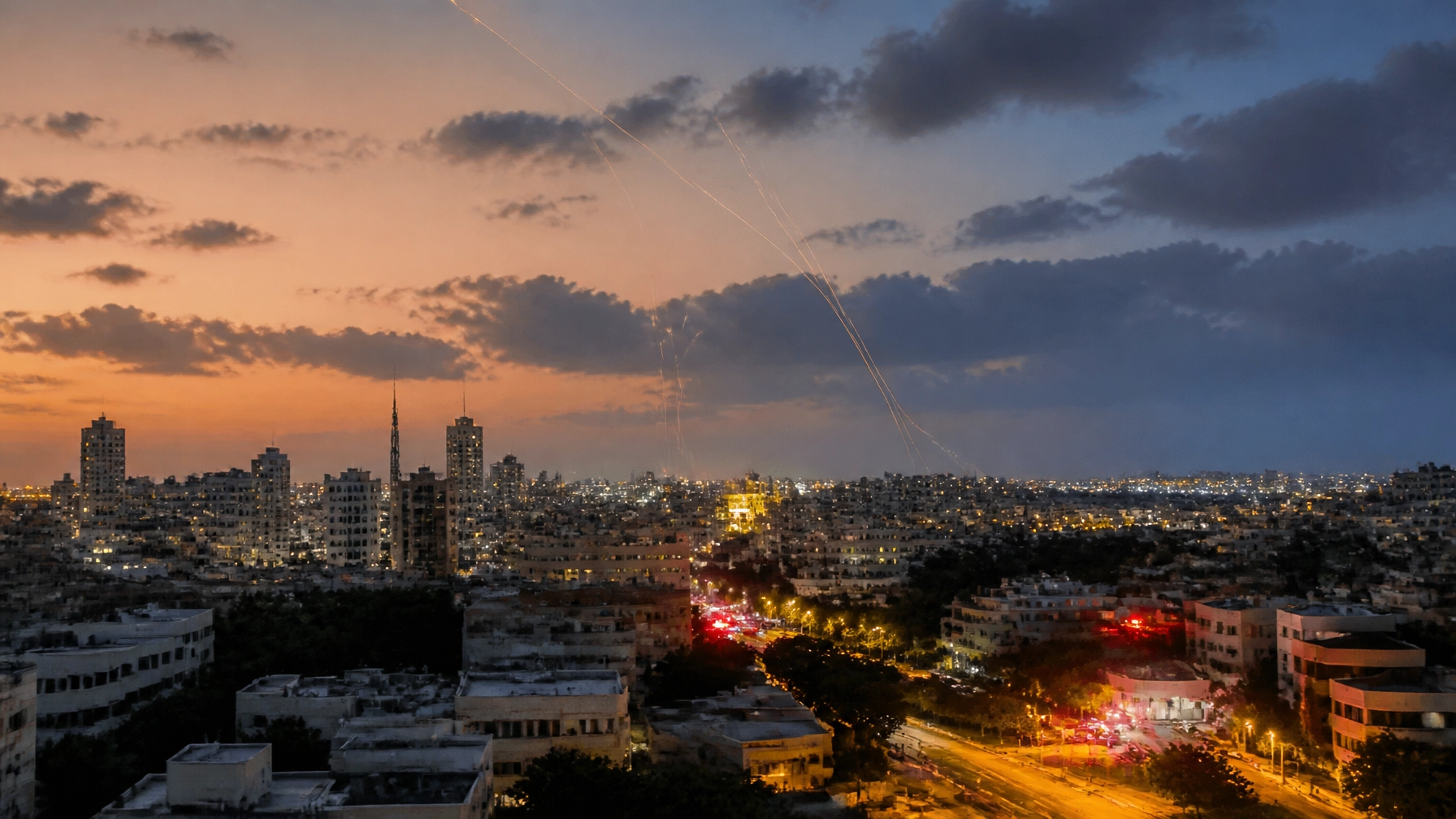
The fragile stability of the Middle East was pushed to the precipice this week as a series of direct military exchanges between Iran and Israel reignited fears of a total regional collapse.
After months of simmering tensions and shadow warfare, the direct confrontation has reached a point where international observers are questioning whether the current conditional pause can hold. The latest flare-up began following an operation in the suburbs of Beirut, which acted as a catalyst for a 24-hour cycle of ballistic missile launches and aerial bombardments that spanned multiple borders. This escalation marks the most significant direct clash since the brief ceasefire established in April, further complicating the geopolitical landscape during what has now become a 100-day broader conflict involving several regional powers and international actors.
Regional security under threat
The immediate catalyst for the latest exchange was an Israeli strike targeting a suburb near Beirut, an action that was seen by Tehran as a breach of the standing security arrangements in the region. In a swift response, Iran launched a barrage of approximately 30 ballistic missiles aimed at three primary Israeli air bases, including facilities in central and northern Israel. While the majority of these incoming projectiles were successfully intercepted by advanced air defence systems, the scale of the attack signalled a shift from proxy engagement to direct confrontation. Debris from the interceptions caused several brush fires and minor damage to civilian property, including a residential building in the West Bank, yet no significant casualties were reported in the immediate aftermath.
Israel’s retaliation was equally decisive, focusing on Iranian military and economic infrastructure. Reports indicate that Israeli aircraft targeted air defence sites across Iran, including locations near Tehran, Isfahan, and Tabriz. Furthermore, a petrochemical complex in the southwestern city of Mahshahr was struck, leading to the evacuation of workers and visible damage to the facility. These strikes were described as a measured response intended to signal capability without forcing an immediate and uncontrollable escalation. However, the temporary closure of major Iranian airports during the height of the strikes underscored the severity of the situation. The involvement of Houthi forces in Yemen, who launched their own missiles toward Israel in support of the Iranian position, has only added to the complexity of the security challenge, creating a multi-front threat that stretches from the Red Sea to the Levant.
The current situation is framed by a wider conflict that has been ongoing for approximately 100 days. This period has seen a sustained campaign of naval blockades and targeted strikes that have severely disrupted the normal flow of commerce and security in the region. The transition from indirect skirmishes to direct state-on-state strikes represents a dangerous evolution in the conflict, as both nations test the limits of each other’s endurance and international patience. Military analysts suggest that while both sides possess the capability for further destruction, the strategic objective of this week's exchange was likely to re-establish deterrence rather than to initiate a full-scale ground war. Nevertheless, with military assets on high alert across the region, the risk of a miscalculation or an unintended escalation remains at an all-time high.
Global calls for immediate restraint
As the smoke cleared from the 24-hour exchange, a flurry of diplomatic activity emerged from Washington and other global capitals. The international community has been vocal in its demand for an immediate cessation of hostilities, with direct pressure being applied to both the Israeli and Iranian leadership. In recent days, the United States has taken a central role in attempting to mediate a return to the status quo, with senior officials engaging in intensive phone diplomacy. The message from the West has been clear: a wider war would be catastrophic for the global economy and regional stability. This diplomatic push appeared to yield a temporary result, as both nations publicly signalled a conditional halt to their offensive operations.
In Tehran, the military joint command announced that it would pause strikes against Israel, claiming that the objective of the retaliation had been met and that a "lesson" had been delivered. However, this statement was heavily caveated with warnings that any further Israeli operations in Lebanon or against Iranian assets would be met with even more forceful measures. Similarly, the Israeli government stated that its current operations against Iranian territory are "on hold," while simultaneously reaffirming its right to self-defence. The Prime Minister’s office made it clear that while they are not seeking a broader war, any renewed aggression from the "terror regime" in Tehran would trigger a massive and uncompromising response. This rhetoric suggests that while the missiles have stopped flying for the moment, the underlying issues remain entirely unresolved.
The role of international intermediaries has become crucial in maintaining this fragile peace. Messages are being passed through back-channels and third-party nations to ensure that neither side misinterprets the other’s movements. The current pause is largely seen as a result of the intense pressure from Washington, where there is a growing reluctance to see the United States dragged into a wider conflict. This diplomatic tension is compounded by the fact that ongoing ceasefire negotiations regarding other regional flashpoints are currently under immense strain. The success or failure of these talks will likely dictate the path of the next few weeks, as the international community tries to move the region away from the brink of a conflict that no one claims to want, yet everyone seems prepared to fight.
The humanitarian and economic toll of escalation
Beyond the immediate military and political ramifications, the escalating tensions have begun to exert a heavy toll on the global economy and the civilian populations caught in the crossfire. One of the most immediate indicators of the regional instability has been the reaction of the financial markets. Oil prices surged following the reports of strikes on Iranian petrochemical facilities and the potential for disruption in the Strait of Hormuz. As a critical artery for the world’s energy supply, any threat to the safe passage of tankers through this narrow waterway sends shockwaves through the global supply chain. This economic volatility is being felt far beyond the Middle East, as rising fuel costs and bond yield fluctuations begin to impact everything from international shipping rates to the cost of basic consumer goods.
The humanitarian situation is equally concerning, particularly in areas where the conflict is most active. In Lebanon, the breach of previous ceasefire arrangements has led to renewed displacement and fear among the civilian population. While the strikes in Israel and Iran did not result in large-scale casualties this week, the psychological impact of living under the constant threat of ballistic missile attacks cannot be overstated. In Iran, the disruption to air travel and the targeting of industrial sites have added to the economic hardships faced by a population already struggling under a regime of international sanctions and the strain of a 100-day conflict. The unpredictability of the strikes means that civilian infrastructure is often caught in the periphery of military objectives, leading to a climate of persistent anxiety.
As the region navigates this period of conditional restraint, the focus remains on whether the current pause can be converted into a more durable peace. The maritime security situation in the Red Sea remains precarious, with Houthi forces continuing to threaten shipping lanes, further complicating the humanitarian effort to deliver aid to conflict-affected zones. The international community is increasingly aware that without a comprehensive political solution that addresses the root causes of the Iran-Israel rivalry, these periodic outbursts of violence are likely to continue. For now, the world watches with bated breath, hoping that the calls for restraint are heard louder than the drums of war, as the Middle East stands at a historical crossroads between further escalation and a long-overdue return to stability.