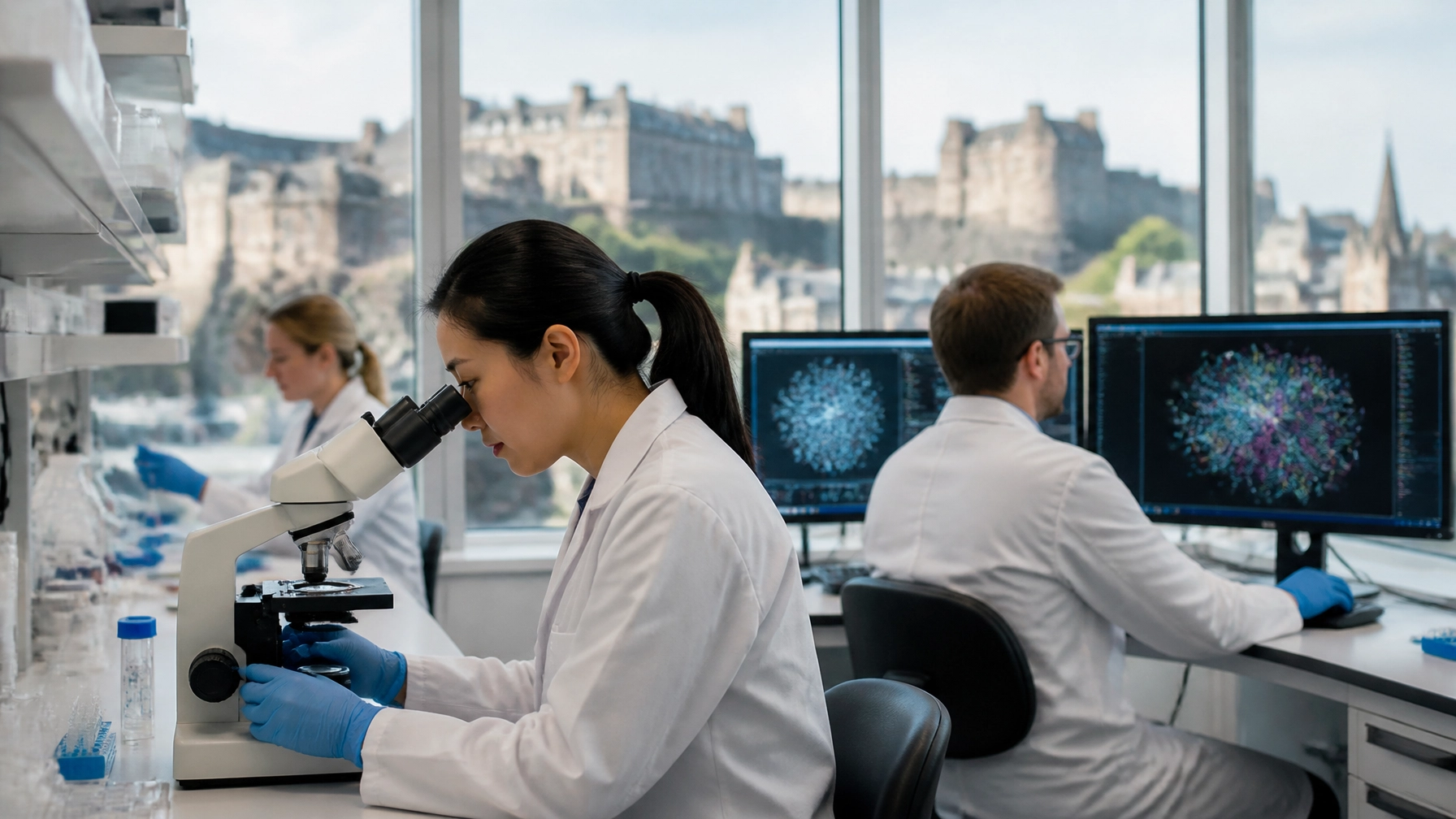
Scientists in Edinburgh have launched a pioneering project that harnesses the power of artificial intelligence to transform the search for effective treatments for Motor Neurone Disease. This ambitious initiative aims to slash the time it takes to identify life-saving drugs by using advanced machine learning to screen thousands of existing medicines. By focusing on drugs that are already licensed for other conditions, the research team hopes to bypass the lengthy safety testing required for entirely new compounds, potentially bringing hope to patients within a fraction of the usual timeframe. The project, led by experts at the University of Edinburgh, represents a significant shift in how neurological research is conducted, placing data-driven technology at the heart of the laboratory.
Motor Neurone Disease, or MND, is a progressive and terminal condition that affects the brain and nerves. It causes weakness that gets worse over time, eventually leading to paralysis and the loss of the ability to speak, eat, and breathe. Currently, there is no cure, and existing treatments provide only modest benefits in extending life. The complexity of the disease has long frustrated researchers, as it involves multiple biological pathways that vary between individuals. However, the new Edinburgh-led study suggests that the answer may not lie in a single "silver bullet" but in a combination of existing treatments that can be identified and prioritised through the use of sophisticated algorithms.
The research is being spearheaded by the UK Dementia Research Institute and the Euan MacDonald Centre for MND Research. With substantial funding from medical charities, the team is set to revolutionise the drug discovery pipeline. Traditional methods of drug development can take upwards of fifteen years and cost billions of pounds. By contrast, the use of artificial intelligence to repurpose existing medicines could see new treatment combinations ready for clinical trials in as little as four to five years. This acceleration is crucial for a disease where life expectancy after diagnosis is often just a few years.
Leveraging Machine Learning for Drug Discovery
The core of this breakthrough lies in the integration of machine learning with advanced stem cell technology. Researchers are using skin cells from MND patients, which are then reprogrammed into motor neurons in the laboratory. These "patient-in-a-dish" models allow scientists to observe the disease’s progression in real-time and test how different drugs interact with human nerve cells. The sheer volume of data generated by these experiments is staggering, and this is where artificial intelligence becomes indispensable. The AI system can analyse thousands of cellular responses simultaneously, identifying subtle patterns that would be impossible for a human researcher to spot.
Beyond laboratory experiments, the AI is also being used to conduct a massive, automated review of existing scientific literature. There are tens of thousands of published papers on MND and related neurological conditions, containing a wealth of untapped information. The machine learning algorithms can "read" through this vast body of work, cross-referencing findings and identifying drugs that have shown promise in other areas of medicine but have not yet been applied to MND. This data-driven approach allows the team to build a prioritised list of candidate drugs that target the specific biological failures observed in motor neurons, such as mitochondrial dysfunction or the toxic accumulation of proteins.
This dual-pronged strategy, combining biological testing with computational analysis, allows for a more holistic understanding of the disease. Rather than focusing on a single gene or protein, the AI looks at the entire cellular landscape. It can predict how different drugs might work together, potentially creating combinations of medication that hit multiple targets at once. This mirrors the successful approach used in treating other complex diseases like cancer and HIV, where combination therapies have significantly improved patient outcomes. The goal is to move away from a one-size-fits-all model and towards a more personalised, multi-targeted form of treatment.
A Revolution in Clinical Trial Timelines
The speed at which this research is moving is largely thanks to the connection between the laboratory work and the MND-SMART clinical trial platform. Also based in Edinburgh, MND-SMART is one of the most advanced clinical trial programmes in the world. Unlike traditional trials that test one drug at a time, this adaptive platform allows for multiple treatments to be tested simultaneously against a single placebo group. If a drug is found to be ineffective, it can be removed from the trial quickly, and new candidates identified by the AI project can be added without the need to start a new study from scratch.
This seamless link between the AI-driven discovery phase and the clinical testing phase creates a fast-track system for drug delivery. Once the AI identifies a promising combination of existing drugs, they can be moved rapidly into the MND-SMART trial. Because these drugs are already approved for use in humans for other conditions, the researchers already have extensive data on their safety and side effects. This removes a major hurdle in the regulatory process, as the primary question becomes whether the drugs are effective against MND, rather than whether they are safe to ingest.
The impact of this streamlined process cannot be overstated. For the thousands of people currently living with MND in the UK, the knowledge that the scientific community is moving at an unprecedented pace provides a vital sense of optimism. The project is not just about finding a treatment for the future; it is about finding treatments that can be used by people today. The researchers believe that by utilising the tools of the digital age, they can bridge the gap between laboratory success and bedside application more effectively than ever before.
Global Implications for Neurological Research
While the immediate focus of the Edinburgh team is on Motor Neurone Disease, the methodologies they are developing have far-reaching implications for the study of other neurological conditions. Diseases such as Alzheimer’s, Parkinson’s, and Multiple Sclerosis share similar complexities with MND, involving multiple cellular pathways and a high degree of variability among patients. The AI-powered drug repurposing model could easily be adapted to these fields, potentially leading to a new era of "accelerated discovery" across the entire spectrum of neurodegenerative research.
The project also highlights the growing importance of interdisciplinary collaboration in modern science. The team in Edinburgh brings together biologists, clinicians, computer scientists, and data analysts, all working toward a common goal. This convergence of expertise is essential for tackling the biggest challenges in medicine. By breaking down the silos between different fields, the researchers are able to leverage the strengths of each, using computational power to guide biological enquiry and clinical experience to refine digital models.
As the AI continues to refine its search and the first drug combinations begin to emerge, the eyes of the global scientific community are on Scotland. The success of this initiative could provide a blueprint for how we fight disease in the twenty-first century. It demonstrates that while the biological puzzles of the human brain are incredibly complex, the combination of human ingenuity and machine intelligence offers a potent way forward. For those affected by MND, this breakthrough represents more than just a scientific milestone; it is a significant step toward a future where a diagnosis no longer carries the same weight of inevitability. The work in Edinburgh is a testament to the power of innovation and the enduring commitment to uncovering the stories and solutions that have for too long remained out of reach.