A new chapter in conservation is unfolding on the banks of the River Tees as RSPB Saltholme prepares to welcome a group of unconventional workers to its sprawling nature reserve. The introduction of Tamworth pigs to the Teesside marshes marks a significant shift in how the landscape is managed, moving away from mechanical intervention and towards a more natural, dynamic form of habitat restoration known as rewilding. This initiative seeks to utilise the innate behaviours of these hardy animals to rejuvenate the ground and create a more complex ecosystem for the diverse birdlife that calls this industrial-adjacent haven home.
The decision to bring in pigs is not merely a novelty; it is a calculated ecological strategy. For centuries, wild boar roamed the British Isles, acting as nature’s most effective landscapers. Through their constant rooting, trampling, and foraging, they disturbed the soil, broke up dense mats of vegetation, and created a mosaic of habitats that allowed a vast array of flora and fauna to thrive. Since the extinction of wild boar in Britain, these natural processes have been missing from the landscape, often replaced by heavy machinery or sheep grazing, neither of which perfectly replicates the unique impact of a suid species. By introducing Tamworth pigs: a breed known for its physical similarity and shared ancestral traits with wild boar: the reserve aims to bridge this ecological gap.
Ecosystem Engineers on the Teesside Marshes
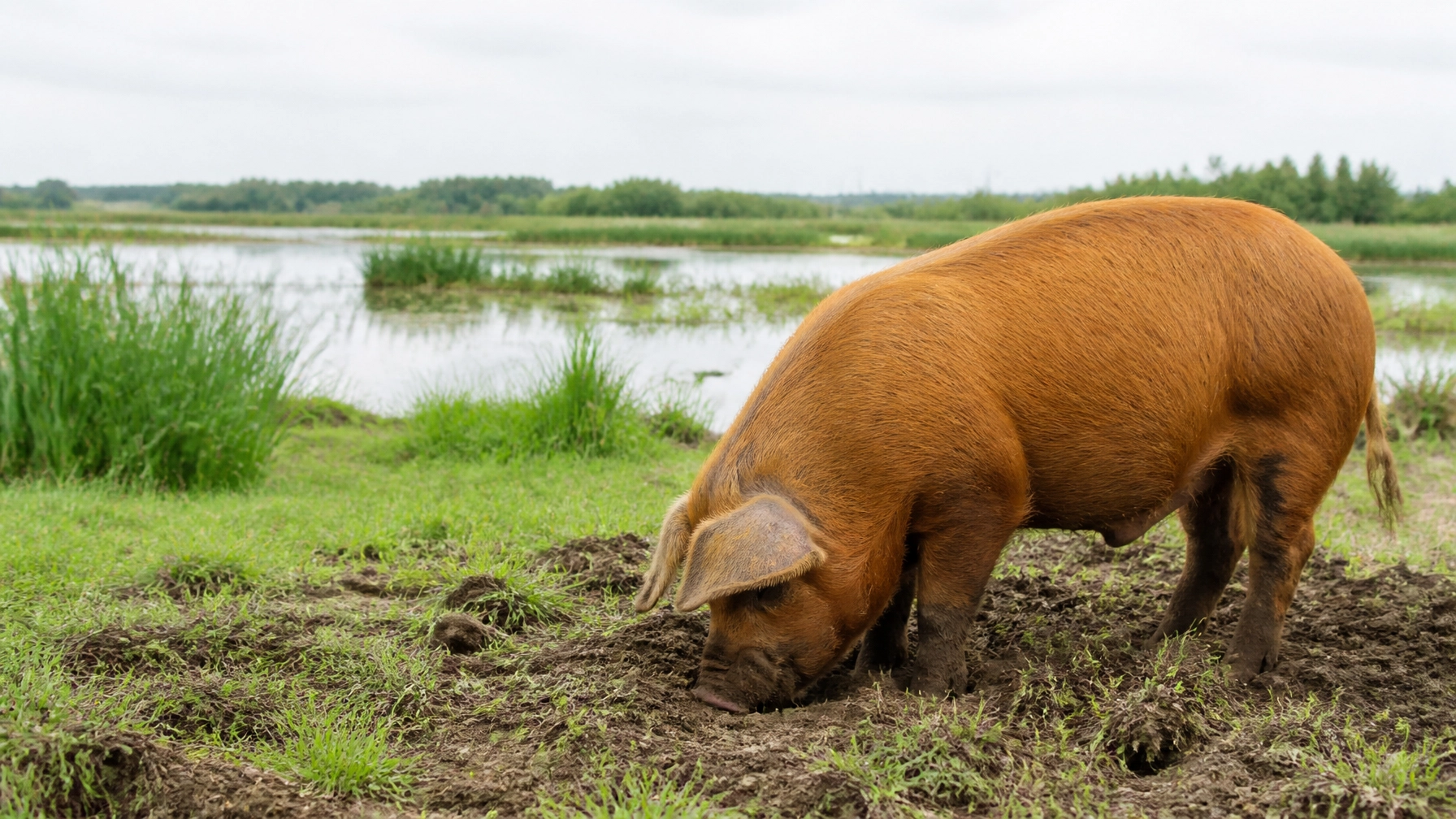
The Tamworth pigs will act as "ecosystem engineers," a term used by conservationists to describe species that significantly modify their environment. Unlike traditional livestock that may simply graze the surface of the grass, pigs are famous for their powerful snouts and their instinct to dig deep into the earth. This process, known as poaching or rooting, is vital for a healthy wetland environment. By turning over the turf, the pigs expose bare soil, which provides the perfect germination site for various wildflowers and pioneer plant species that struggle to compete in thick, established grassland.
This disturbance is also essential for insect life. The damp, churned earth becomes a breeding ground for invertebrates, providing a rich food source for ground-feeding birds. Furthermore, the pigs' physical presence helps to break up the uniform height of the vegetation. At RSPB Saltholme, the goal is to create a diverse "sward structure": a mix of short grass, tall stalks, and bare patches. This variety is crucial for species that require different heights of cover for nesting and hunting. For example, some birds need short grass to spot predators, while others require thicker tufts to hide their nests. The random, chaotic nature of porcine disturbance is far superior to the uniform cut of a mower in achieving this natural complexity.
Restoring Biodiversity Through Ancient Instincts
The ultimate beneficiaries of this rewilding project are the iconic bird species that inhabit the Teesside reserve. Conservationists are particularly hopeful that the pigs will improve the fortunes of yellow wagtails, skylarks, and short-eared owls. Yellow wagtails often follow large mammals to feed on the insects disturbed by their movement, a symbiotic relationship that has been largely lost in modern agricultural landscapes. By reintroducing large, active foragers like the Tamworth pig, the reserve is essentially restoring a prehistoric food chain that these birds evolved to exploit.
The impact extends to the soil health and seed dispersal as well. As the pigs move across the marshes, seeds become attached to their coarse ginger bristles or pass through their digestive systems, allowing for the natural spread of plant life across the reserve. This helps to connect isolated pockets of biodiversity and ensures that the flora remains resilient against environmental changes. The presence of the pigs also changes the nutrient cycle of the marsh; their waste provides organic fertiliser that supports a different range of fungi and micro-organisms than that of traditional grazers. This subterranean activity is just as important as what happens on the surface, creating a robust foundation for the entire food web.
A Scientific Approach to Conservation Research
While the use of pigs in rewilding is a growing trend across the UK, the project at Saltholme is grounded in rigorous scientific monitoring. The initiative forms the core of a four-year research project led by the University of Nottingham. This study aims to quantify exactly how the pigs change the landscape and how those changes correlate with bird populations. Using advanced technology such as drone surveys and infrared mapping, researchers will be able to track the movement of the pigs and the subsequent shifts in vegetation density and soil moisture levels.
This research is supported by a scholarship dedicated to the memory of James Denis Summers-Smith, a renowned local bird enthusiast whose legacy continues to influence conservation in the North East. The data gathered over the next four years will provide invaluable insights not only for Saltholme but for other wetland reserves across the country considering similar rewilding techniques. By combining ancient animal instincts with modern monitoring technology, the project represents a sophisticated approach to environmental management. It acknowledges that while we can learn from the past, we must also use the tools of the future to ensure that our remaining wild spaces are managed as effectively as possible in a rapidly changing climate. As the Tamworth pigs settle into their new home on Teesside, they carry with them the hopes of a more vibrant, diverse, and naturally functioning landscape.