The streets of Salford have witnessed a rare and profound moment of collective joy this week as two stolen Torah scrolls, missing for months and feared lost forever, were finally returned to their rightful home. The recovery of these sacred items has not only brought an end to a period of deep distress for the local Jewish community but has also served as a powerful testament to the strength and resilience of interfaith relations across Greater Manchester. What began as a targeted and professional theft ended in an act of unexpected restoration, sparked by nothing more than a timely conversation on the airwaves and a chain of local connections that spanned different faiths and neighbourhoods.
The scrolls, known as Sifrei Torah, are the most sacred objects in Jewish life. Their return to the Beis HaMedrash Torah Etz Chaim synagogue on Bury New Road marks the conclusion of an investigation that had left many in the community feeling vulnerable. However, the story of their recovery is being hailed as a "beautiful" example of how Manchester’s diverse religious communities work together in times of crisis. It is a narrative that highlights how shared values of respect for the sacred can overcome the darkness of crime, and how a simple media appeal can reach the hearts of those who might otherwise remain silent.
A Community Reunited in Relief
The ordeal began in the early hours of a Friday morning when thieves launched a sophisticated raid on the synagogue, often referred to locally as "the 69." CCTV footage from the time captured the moment three men, dressed in high-visibility clothing to avoid suspicion, forced their way into the building. Their target was a heavy, industrial-grade safe. Working with clinical efficiency, they managed to remove the safe and load it into a waiting van before disappearing into the darkness. While the safe was built to be secure, its contents were far more precious than any amount of cash or jewellery. Inside were two Torah scrolls, handwritten on parchment and encased in protective coverings, each around a century old.
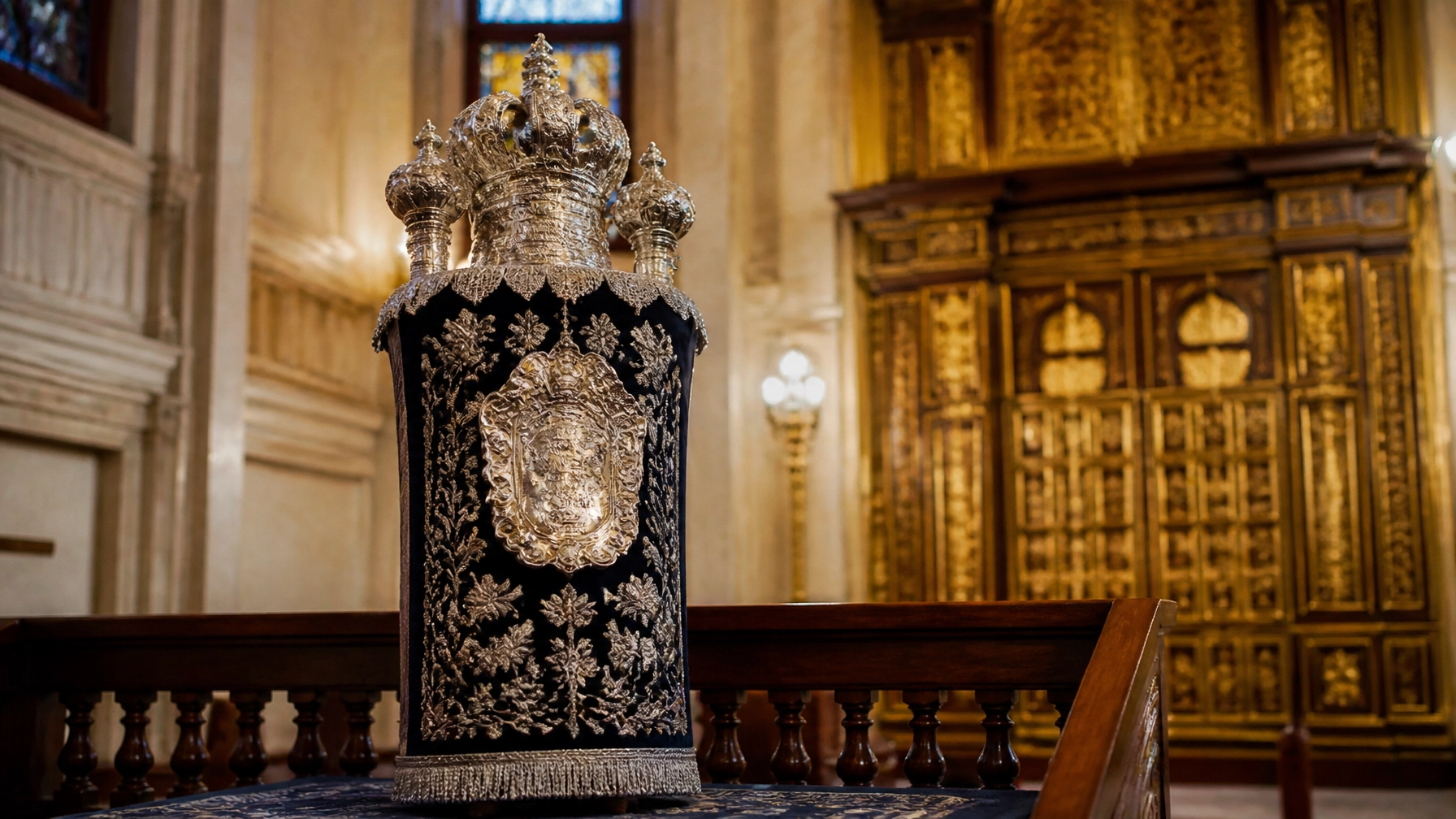
For the members of Beis HaMedrash Torah Etz Chaim, the loss was devastating. A Torah scroll is not merely a book; it is a labor of love that takes a skilled scribe, or Sofer, over a year to complete. Every one of the 304,805 letters must be perfect, written with a quill and special ink on animal hide. To the community, these scrolls represented their history, their lineage, and their spiritual heartbeat. The financial cost of replacing such items is high: often tens of thousands of pounds: but the emotional and religious cost is immeasurable. They are treated with the utmost reverence, often dressed in silver ornaments and velvet, and are kissed as they are carried through the congregation.
For nearly three months, the trail went cold. Despite an urgent appeal and the offering of a substantial reward, there was no word on the whereabouts of the scrolls. The community was left to wonder if the thieves had realised the items had no resale value on the black market and had simply discarded them, or if they had been destroyed. The safe itself was likely the primary target, with the thieves perhaps hoping for gold or cash, unaware that they had taken something far more significant to the people of Salford. As weeks turned into months, hope began to flicker, but the underlying sense of loss remained a heavy cloud over the synagogue’s daily prayers.
The Power of Local Connection
The breakthrough came from an unlikely source: a casual radio discussion regarding the nature of sacred texts and the importance of religious heritage. During a morning broadcast, a Methodist minister was participating in a segment about what makes certain writings holy and why they matter to different communities. While the theft in Salford was not the primary focus of the chat, the conversation touched on the universal respect for scripture that exists across different traditions. It was a moment of soft power, a reminder broadcast to thousands of listeners that some things are too important to be treated as mere property.
In an extraordinary turn of events, just hours after the broadcast concluded, the minister involved in the radio segment discovered two large, wrapped items left outside the doors of her church in Whalley Range. Upon inspection, it became clear that these were the missing scrolls. Whether the person responsible for leaving them there had been moved by the radio conversation or had simply been looking for a safe way to return them remains a mystery. What was clear, however, was that the scrolls had been treated with care. They were intact, dry, and appeared to be in remarkably good condition despite their long absence.
The minister, Joanne Cox-Darling, immediately recognised that she held something of immense importance, though she lacked the specific Hebrew knowledge to identify where they belonged. This is where the local network of Manchester’s religious leaders swung into action. She reached out to interfaith contacts, seeking someone who could translate the ceremonial coverings and the prayers attached to the scrolls. The response was near-instantaneous. Within thirty minutes, through a series of phone calls and shared images, the scrolls were identified as those belonging to the Salford synagogue. The speed of the identification was a direct result of the existing friendships and professional bonds built through years of interfaith dialogue in the city.
Strengthening Interfaith Bonds in Manchester
The return of the scrolls was not a quiet affair. As word spread through Salford that the "Sifrei Torah" had been found, a wave of relief and excitement took hold. When the scrolls finally arrived back at Bury New Road, the scene was one of jubilant celebration. Members of the community poured into the streets, singing and dancing in a traditional display of gratitude. For a community that had felt the sting of a targeted robbery, seeing the scrolls being carried back into the sanctuary was a moment of profound healing. It was a restoration of more than just parchment and ink; it was a restoration of a sense of security and belonging.
The role of the Methodist church in the recovery has been highlighted as a shining example of the "interfaith at its best" spirit that defines Manchester. The fact that Jewish sacred items were protected and returned by a Christian minister, with the assistance of a multi-faith forum, has resonated deeply with residents of all backgrounds. It serves as a reminder that the bonds between the different faith groups in the North West are not just theoretical or limited to formal meetings, but are practical, living connections that can be called upon in times of genuine need. When one house of worship is violated, the entire religious community feels the impact, and in this case, they all shared in the victory of the recovery.
As the scrolls are returned to their place in the Ark, the incident leaves behind a legacy of strengthened cooperation. The Greater Manchester Faiths Forum and other local bodies have pointed to this event as a blueprint for how communities can support one another. In an era where news is often dominated by stories of division, the Salford Torah recovery stands as a counter-narrative of unity and mutual respect. The scrolls, now home, will continue to be read in the synagogue for generations to come, their journey from theft to a Methodist church porch and finally back to Salford becoming a new chapter in their long and storied history. For the people of Salford, the lesson is clear: while a thief can take a physical object, they cannot break the spirit of a community that looks out for one another.