The British summer has always been a bit of a gamble, but Storm Dave didn't just move the goalposts; it uprooted them and tossed them into the nearest flooded basement. Across the UK, the tail end of this week saw a deluge that turned high streets into canals and back gardens into boggy marshes. While the official weather warnings have finally been downgraded from amber to a weary shade of grey, the real story isn't the rainfall statistics or the wind speed: it is the sheer, unadulterated grit of the people who stayed behind to sweep up the mess. While mainstream outlets often focus on the chaos of the commute or the cost of the damage, the untold stories of the recovery efforts paint a much more vivid picture of national resilience.
The damage is, admittedly, quite a gut-punch. From the battered coastal fronts of the South West to the saturated valleys of Yorkshire, the physical toll of Storm Dave has been significant. Thousands of homes have faced power cuts, and for many, the sight of a sodden sofa sitting on the pavement is a heartbreaking reality. There is a palpable sense of frustration in many regions where the infrastructure seemed to buckle under the first sign of real pressure. Drainage systems that were supposedly "fit for purpose" turned out to be anything but, leaving homeowners to fend for themselves as the waters rose. It is a hard-hitting reminder that despite our best-laid plans, nature still holds all the high cards, and sometimes the official response can feel a little too slow for those currently standing knee-deep in their own kitchens.
The Kettle is Always On: Small Acts, Big Impact
However, once the initial shock of the water subsided, something remarkable happened. In towns that the national news usually forgets to mention, the sound of howling winds was replaced by the clinking of ceramic mugs. The Great British response to a crisis is often measured in tea, and Storm Dave was no exception. In one small Devonshire village, a local cafe owner: whose own basement was actively flooding: refused to close his doors. Instead, he spent forty-eight hours straight serving free hot rolls and "industrial strength" tea to the emergency crews and the elderly residents who had been cut off by a fallen oak tree.
It wasn’t just about the refreshments; it was about the refusal to let the isolation take hold. This kind of grassroots solidarity is the backbone of the UK’s independent spirit. While the big headlines were busy debating the naming conventions of storms, these individuals were busy checking on their neighbours. We heard reports of teenagers using their paddleboards to deliver groceries to stranded pensioners, and a group of local mechanics who spent their Sunday drying out car engines for free. These are the narratives that rarely make the front page but define the recovery. It is a witty defiance against the gloom; if you can’t beat the weather, you might as well have a sandwich and a laugh about it with the person next door.
Shifting Sludge and Shared Spirits
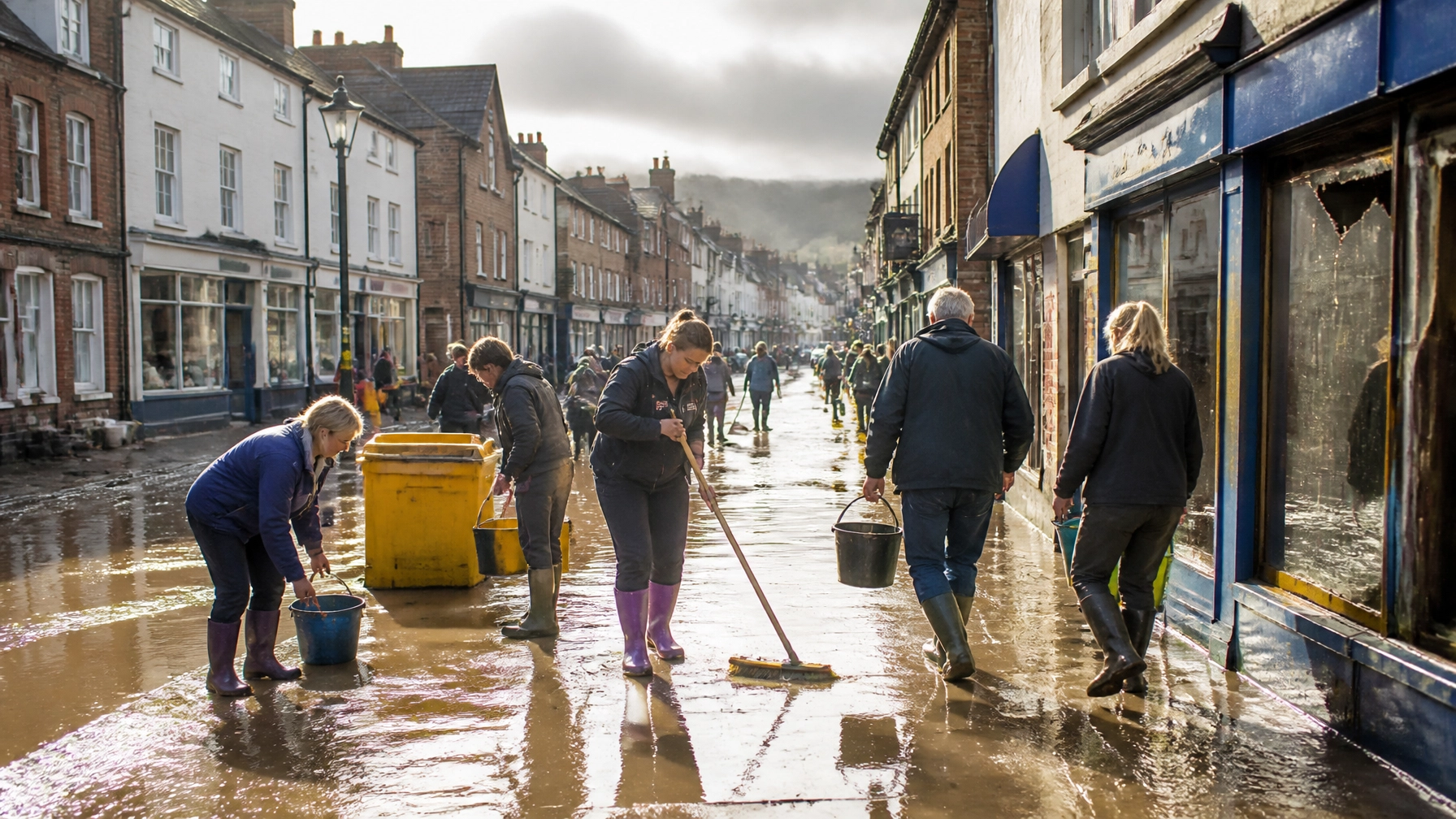
The physical cleanup is where the true manual labour began. Shifting river silt from a carpet is a task that would break the spirit of most, yet the scenes on Monday morning were nothing short of a communal work party. In the North West, an informal "Bucket Brigade" formed spontaneously on a high street that had been submerged just twelve hours earlier. People who had never spoken to each other despite living on the same street for a decade were suddenly shoulder-to-shoulder, scraping sludge and hauling debris. There is a peculiar kind of bonding that happens when you are both covered in muck and trying to save a local bookshop’s stock.
This isn’t to say it was all sunshine and rainbows. The reality of a storm aftermath is gritty, smelly, and exhausting. The stench of stagnant water lingers, and the loss of personal mementos is a weight that tea alone can’t lift. Yet, the energy of these local heroes turned a potential tragedy into a testament to community power. When the council skips were full, private van drivers offered their services for the price of a petrol contribution. When the local school was flooded, the church hall was converted into a temporary classroom within three hours. This isn't just about cleaning up; it’s about a refusal to wait for permission to help. It values the person with the shovel just as much as the person with the microphone.
A Blueprint for Resilience in a Changing Climate
As the puddles dry up and the insurance claims begin their long, bureaucratic crawl, there is a lesson to be learned from the wake of Storm Dave. The resilience shown this week wasn’t a one-off fluke; it’s a blueprint for how we might have to live in an increasingly unpredictable climate. The "untold stories" of this week reveal a significant gap between how we are managed from the top down and how we care for each other from the bottom up. While we certainly need better flood defences and a more robust national infrastructure, the most effective "defence" we witnessed was the guy three doors down with a submersible pump and a spare pair of wellies.
The conversation now needs to shift towards how we sustain this community spirit when the sun is shining. It shouldn't take a named storm to get us to talk to our neighbours or to realise that the local independent shops are the heartbeat of our towns. Storm Dave was a bruising encounter, but it also stripped away the digital distractions and forced us to look at the people standing right in front of us. If we can carry even ten percent of this week's unity into the rest of the year, then the aftermath of the storm might actually leave us in a better place than we started. The water might have been cold, and the damage might be deep, but the community spirit in the UK has never looked warmer.