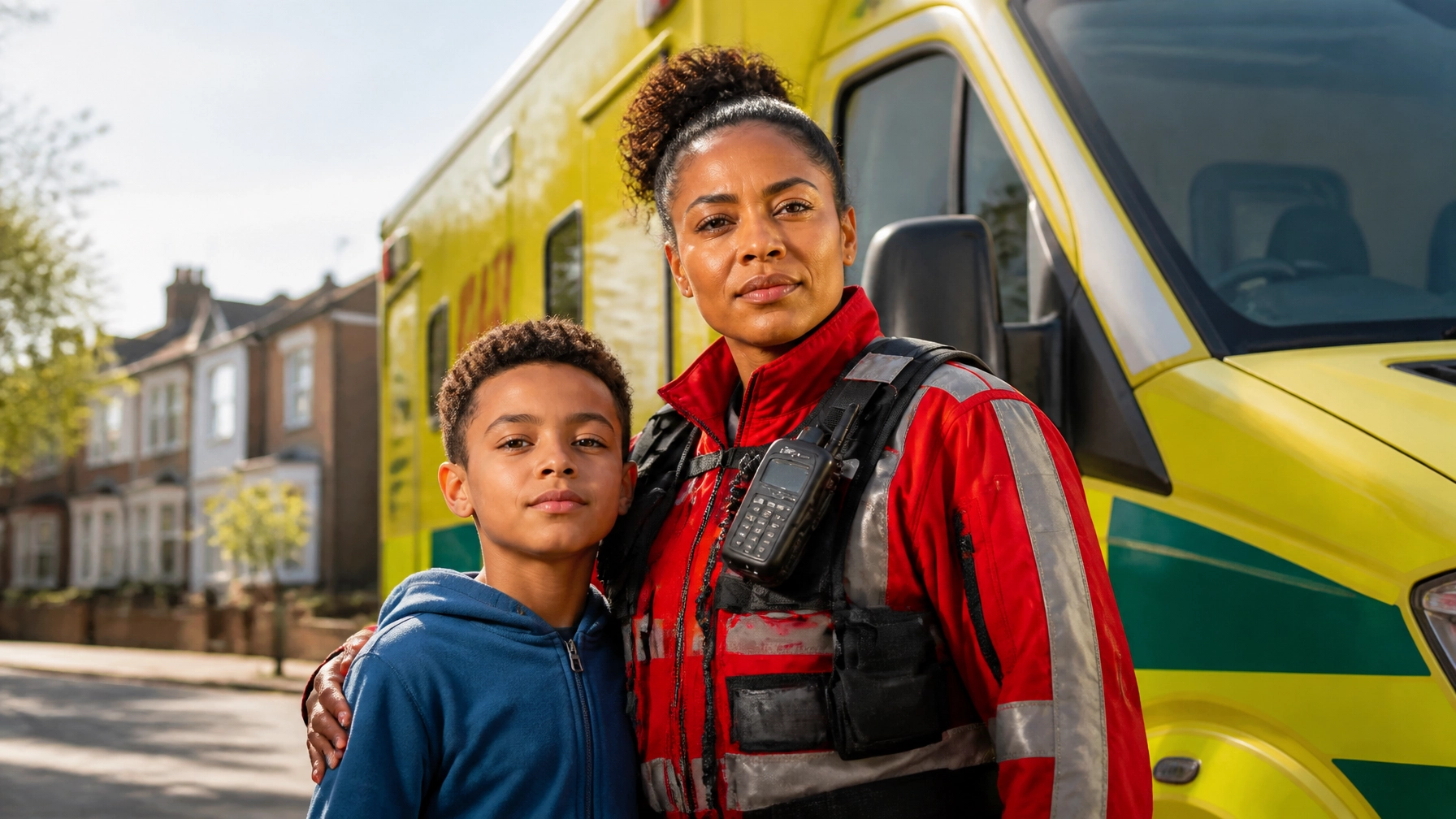
A ten-year-old boy from Sydenham has been hailed as a hero after his quick-thinking and composure saved his mother’s life during a medical emergency at their home. Isaiah was preparing for a routine morning of football training when he noticed his mother, Sabrina, beginning to struggle with her speech and movement. Within minutes, the young boy had assessed the situation, contacted emergency services, and ensured that vital life-saving treatment was on its way.
The incident unfolded on a quiet weekday morning in South East London. Sabrina had been in her bedroom when she suddenly found herself unable to form coherent sentences. What began as a slight slurring of words quickly escalated as she lost balance and collapsed. Isaiah, who was in the adjacent room, heard the commotion and rushed to her side. Recognising that his mother was experiencing more than a simple fall, he immediately reached for a telephone to dial 999.
While many children might have been overwhelmed by the sight of a parent in distress, Isaiah remained remarkably calm. During the emergency call, he provided the operator with clear information regarding their address and a precise description of his mother’s symptoms. His ability to stay on the line and follow the call handler’s instructions proved critical in the moments before help arrived.
A Life-Saving Recognition of Crisis
The effectiveness of Isaiah’s response was rooted in his ability to identify the classic signs of a stroke, a condition where every second is vital for the long-term recovery of the patient. Medical professionals often use the acronym FAST: Face, Arms, Speech, Time: to educate the public on identifying the onset of a stroke. In this instance, Isaiah’s focus on his mother’s slurred speech and her sudden inability to stand allowed him to bypass any hesitation and seek professional help immediately.
Emergency call handlers who spoke with Isaiah noted that his composure was well beyond his years. He didn’t just make the call; he managed the environment around him. Realising that the paramedics would need quick access to the property, the ten-year-old went downstairs to unlock the front door and waited to guide the ambulance crew directly to the bedroom. This small but significant action saved precious minutes that would have otherwise been spent trying to gain entry to the home.
Sabrina, who is now recovering after the ordeal, recalled the moment she realised she was in trouble. She described a feeling of helplessness as she tried to speak but found the words wouldn't come. Seeing her son take charge provided a sense of relief amidst the fear. The bond between the two was evident as she spoke of her pride, noting that Isaiah has always been a responsible child but that his actions on that morning were truly extraordinary.
Rapid Response and Specialist Care
When the London Ambulance Service arrived at the Sydenham residence, they found a patient who had already been monitored and a child ready to provide a handover of the situation. The paramedics were able to begin immediate clinical intervention, stabilising Sabrina before preparing her for transport. Due to the clarity of the initial 999 call, the dispatch team had already identified the case as a potential stroke, ensuring that the responding crew was fully briefed.
Sabrina was rushed to King’s College Hospital, a facility renowned for its specialist stroke services and hyper-acute stroke unit. Upon arrival, she was met by a multidisciplinary team of neurologists and emergency doctors. Because Isaiah had acted so quickly, the medical team was able to administer time-sensitive treatments that are often unavailable if a patient arrives hours after the initial symptoms. These interventions are designed to restore blood flow to the brain and minimise the permanent damage caused by a stroke.
Doctors at the hospital confirmed that the speed of the intervention significantly improved Sabrina’s prognosis. A stroke occurs when the blood supply to part of the brain is cut off, either by a clot or a burst blood vessel. Without oxygen, brain cells begin to die within minutes. By reducing the "onset-to-needle" time: the duration between the start of the stroke and the administration of treatment: Isaiah directly contributed to his mother’s ability to walk and speak today. The medical staff at King’s College praised the young boy, stating that his intervention was the "golden link" in the chain of survival.
Empowering the Next Generation
The story of Isaiah’s bravery has resonated throughout the local community and has prompted a wider discussion about the importance of emergency education for children. In the aftermath of the event, the London Ambulance Service has used the case to highlight how vital it is for young people to know how to call for help. While many schools provide basic first aid training, the specific ability to handle a 999 call and provide a location can be the difference between life and death in a household.
Community leaders in Sydenham have expressed their admiration for Isaiah, suggesting that his story should be shared in local schools to inspire other children. The composure he demonstrated serves as a powerful reminder that emergency response is not just the domain of adults. When children are taught what to look for and how to use modern technology to reach emergency services, they become an essential part of the safety net for their families.
For Sabrina, the recovery journey is ongoing, but the outlook is bright. She is currently undergoing rehabilitation to regain her full strength, supported every step of the way by the son who refused to panick. Isaiah, meanwhile, has returned to his love of football, modest about his role in the life-saving event. To him, he was simply doing what needed to be done for his mum, but to the paramedics and the doctors who treated her, he is a reminder of the extraordinary impact one person can have, regardless of their age, when they act with courage and clarity in a moment of crisis.