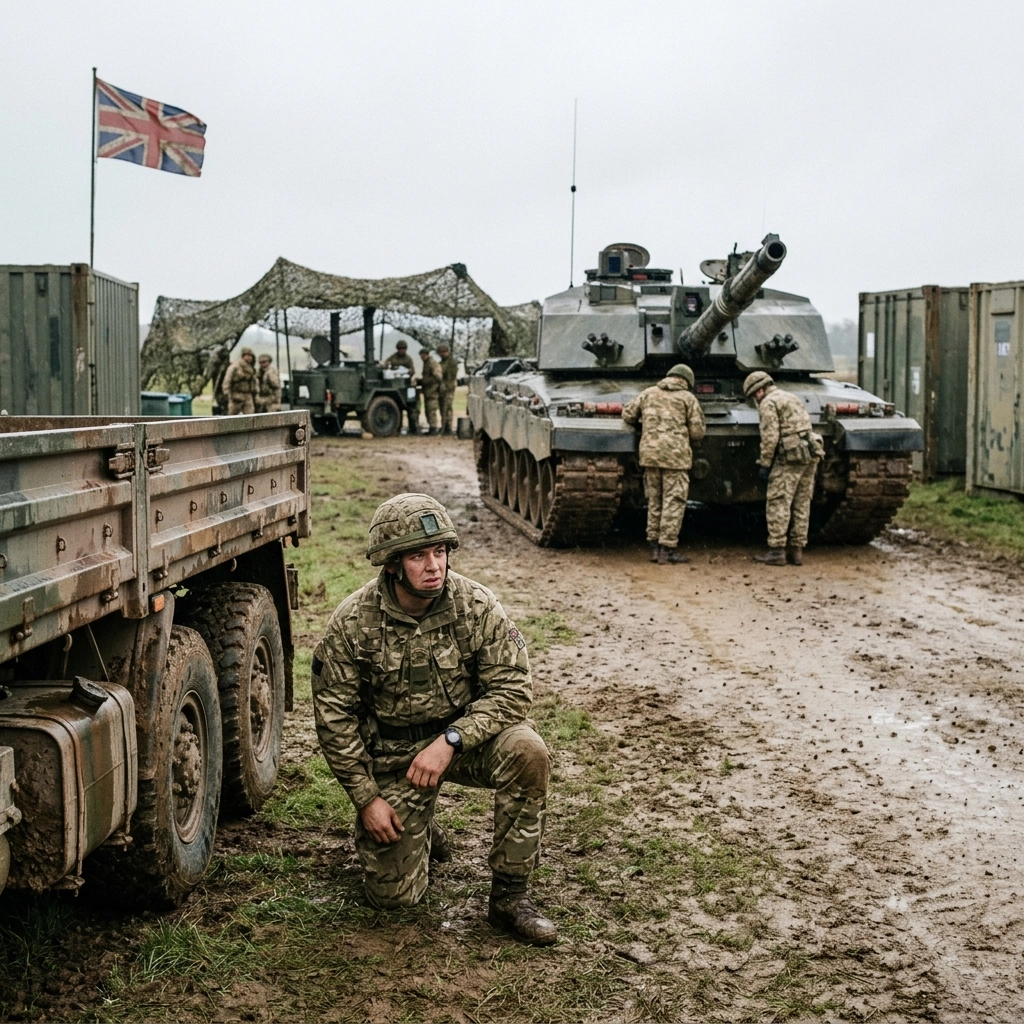
The state of our national security is often one of those topics that feels a bit distant until it suddenly isn't. We hear about budgets and spreadsheets, but the reality on the ground: or at sea and in the air: is becoming increasingly difficult to ignore. As we navigate the middle of 2026, the conversation around the UK’s military readiness has shifted from quiet concern to a fairly loud alarm. Recent assessments have highlighted a staggering multi-billion pound funding gap that threatens to leave our armed forces in a bit of a tight spot.
At NowPWR, we believe in providing independent news uk that goes beyond the standard soundbites. There are plenty of untold stories buried in the Ministry of Defence’s ledgers that suggest we are facing a moment of reckoning. It isn't just about buying a few more tanks or planes; it’s about a systemic shortfall that has been building up for years. Experts and former military leaders are now pointing to what they call a 'corrosive complacency' that has seeped into our strategic planning, leaving a gap between what we say we can do and what we can actually achieve.
The £28 Billion Immediate Reality Check
When you look at the numbers, they are, frankly, eye-watering. Current estimates suggest that the UK’s military is facing a funding shortfall of around £28 billion over the next four years alone. This isn't just a rounding error or a minor budget trim; it’s a massive hole that makes many of our current defence plans look more like wishful thinking than concrete strategy. The gap exists because the cost of modernising our equipment: everything from new frigates to high-tech drone systems: is rising much faster than the money being put aside to pay for them.
This immediate crisis has put the Ministry of Defence in a difficult position with the Treasury. While military chiefs have been asking for a significant boost to help plug this gap, the response has been a bit of a cold shoulder. The argument from the government is often that there simply isn't any extra cash in the pot, especially with so many other departments competing for funds. However, defence analysts suggest that ignoring this £28 billion deficit is a risky game. Without this money, the Army’s ability to sustain a conflict is severely limited. Some reports even suggest that in a high-intensity battle, our current stocks of ammunition might only last about a week. It’s the kind of detail that doesn't always make the front pages, but it’s one of those untold stories that really illustrates the scale of the problem.
Beyond the immediate four-year window, the financial picture gets even more complicated. If the UK is to meet its long-term commitments: raising defence spending to 3% or even 5% of GDP: the infrastructure gap could balloon to between £583 billion and £817 billion by 2040. We are talking about nearly a trillion pounds of investment needed over the next fifteen years to maintain a modern, capable force. As we provide independent news uk, it's our job to point out that these figures aren't just abstract numbers; they represent a fundamental choice about the UK’s role on the global stage and how we intend to protect our interests in an increasingly unpredictable world.
Warnings of Corrosive Complacency
It isn't just the accountants who are worried; some of the most decorated former NATO chiefs have started speaking out with surprising bluntness. They’ve used the phrase 'corrosive complacency' to describe the way the UK has handled its defence obligations over the last decade. The idea is that because we haven't faced a direct, conventional threat to our shores in a long time, we’ve allowed our capabilities to wither away under the assumption that we’ll always have time to catch up if things go wrong.
The reality, according to these experts, is that time is a luxury we might not have. The world has changed rapidly, and the 'hollowing out' of the British military means that while we might have some of the most advanced technology in the world, we don't have nearly enough of it. It’s one thing to have a high-tech aircraft carrier, but it’s another thing entirely to have the full fleet of ships, planes, and personnel required to make it a truly effective force. The NATO warnings highlight that our allies are starting to notice these gaps, and it’s affecting our standing within the alliance.
This complacency isn't just about money; it's about mindset. There has been a tendency to prioritise 'headline-grabbing' projects while letting the basics: like troop housing, maintenance, and recruitment: fall by the wayside. Recruitment, in particular, has become a significant headache. It’s hard to maintain a world-class military if you can't find enough people to fill the uniforms, and part of that comes down to how the military is funded and perceived. By failing to address the funding gap, the government is essentially asking the armed forces to do more with less, a strategy that many believe has finally reached its breaking point.
Reshaping the Future of Defence Spending
So, where do we go from here? The traditional way of doing things: waiting for the Treasury to find a bit of extra cash under the sofa: clearly isn't working anymore. Analysts are now looking at alternative ways to bridge that massive gap. One of the ideas gaining traction involves looking at how we fund major infrastructure. If we treat defence projects more like national infrastructure projects, we might be able to use different types of financing, such as public-private partnerships or regulated asset-based models. This could help bring in the billions needed for things like nuclear capabilities and naval systems without putting all the pressure on the annual state budget.
Another part of the solution involves leaning more heavily into technology to drive down costs. AI and digital simulations are starting to play a bigger role in how we design and test new equipment. If we can use these tools to speed up the development process and catch mistakes before they become expensive physical problems, we can make the money we do have go a lot further. However, technology isn't a silver bullet. You still need the raw materials, the manufacturing capacity, and the skilled people to build and operate these systems.
The shift in priorities is already visible. A few years ago, defence programmes accounted for a relatively small portion of unfunded government projects. Today, they make up over 40%. This shift shows that the government is starting to commit to big ideas, but they haven't yet figured out how to pay the bill. As we continue to follow these untold stories, it’s clear that the next few years will be a defining period for the UK military. Whether we choose to close the funding gap through clever financing, increased taxes, or a total rethink of our global ambitions, the status quo is no longer an option. The 'corrosive complacency' of the past has to be replaced by a realistic, well-funded plan if we want to ensure our national security in the decades to come.
Ultimately, the multi-billion pound funding gap in UK defence is a complex puzzle with no easy answers. It involves balancing the immediate need for ammunition and personnel with the long-term requirement for strategic infrastructure and advanced technology. While the numbers are daunting, the cost of doing nothing could be even higher. As the global landscape continues to shift, the UK faces a choice between investing in its defence or accepting a significantly diminished role in international affairs. Addressing the 'corrosive complacency' and tackling the funding gap head-on is the only way to ensure that our armed forces remain capable of meeting the challenges of the 21st century.