A local volunteer collective has completed a comprehensive renovation of a residential property in Trafford, providing a life-changing environment for a family struggling with complex medical and physical needs. The initiative, spearheaded by the group known as Project 33, saw dozens of skilled tradespeople and local residents descend on the semi-detached house over the course of the last fortnight. The project culminated this week in a reveal that has drawn significant attention to the power of community-led intervention in the face of mounting social and housing challenges.
The family, who have lived in the Trafford area for over a decade, had found themselves increasingly confined by a home that was no longer fit for purpose. With two children requiring specialist equipment and 24-hour care, the traditional layout of the property had become a series of physical barriers. Steep stairs, narrow doorways, and inadequate bathroom facilities meant that much of the house was inaccessible, forcing the family to consolidate their lives into just two rooms on the ground floor. Despite numerous applications for local authority grants, the wait times and bureaucratic hurdles left the household in a state of prolonged crisis, until Project 33 intervened.
A community response to complex needs
The decision to take on the Trafford renovation was born out of a growing recognition that traditional support systems are often stretched beyond their capacity. Project 33, which operates as a non-profit network of volunteers, identified the family’s situation as one where immediate, practical action could prevent a total breakdown in the domestic environment. The group’s philosophy is rooted in the idea that targeted, high-impact renovations can do more than just improve a building; they can restore the dignity and independence of those living within it.
Upon assessing the property, the team found a residence that was structurally sound but functionally obsolete for the occupants’ requirements. The challenges were multifaceted. Beyond the obvious need for wheelchair accessibility, the home required specialized electrical systems to support life-sustaining medical equipment, as well as climate control solutions to manage the temperature-sensitive conditions of the children. The psychological toll on the parents, who had been acting as full-time carers in a cramped and cluttered space, was also a primary consideration for the volunteers.
The call for help was answered by an array of local businesses. From flooring specialists in Sale to electricians from Altrincham, the response was a testament to the local professional community's willingness to donate time and materials. Unlike commercial projects where profit margins dictate the pace and scope, this renovation was guided entirely by the specific clinical and emotional needs of the family. The aim was not merely to redecorate, but to re-engineer the home into a sanctuary that could facilitate professional care while remaining a warm, domestic space.
Meticulous planning and rapid execution
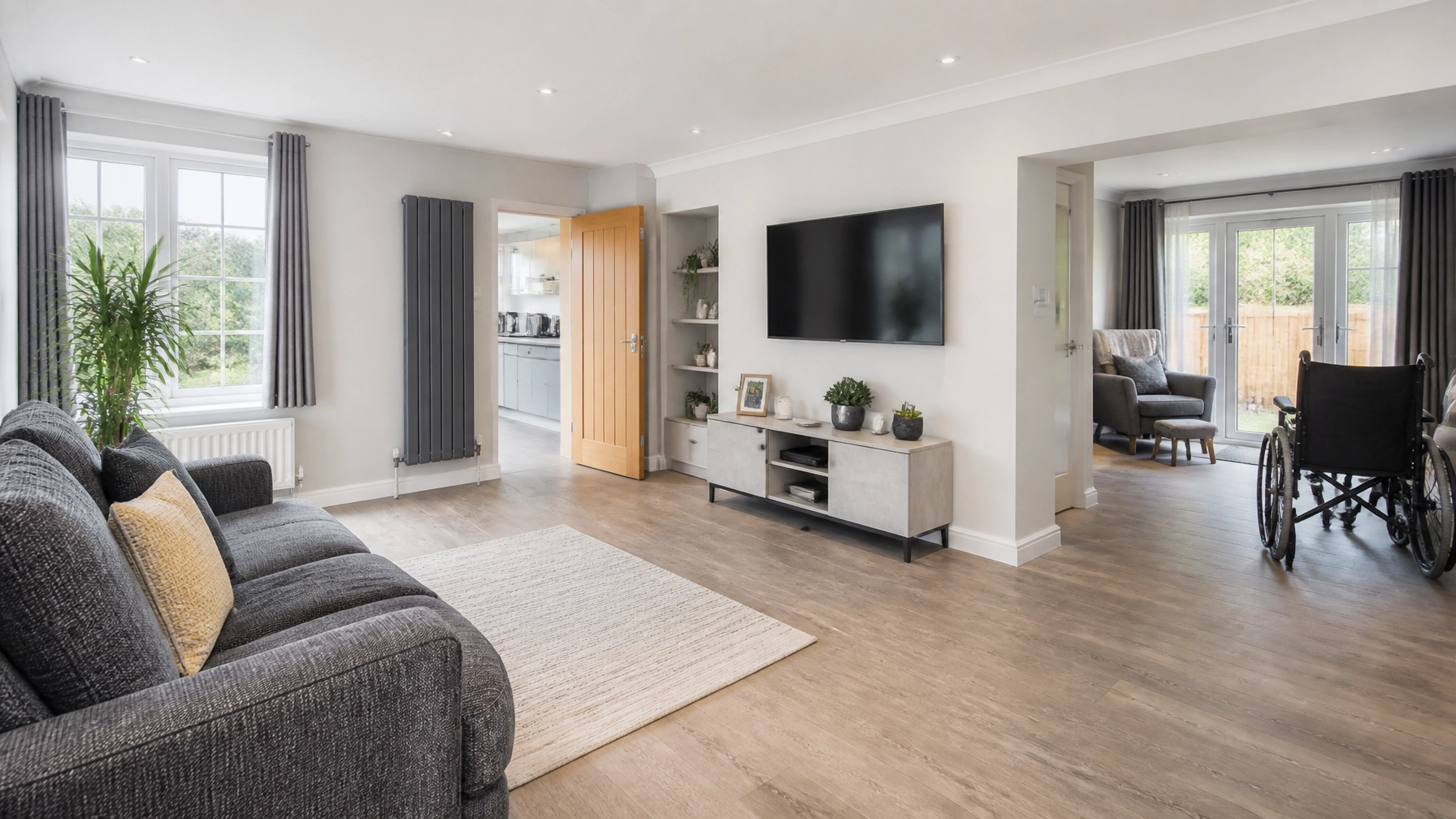
The transformation began with a significant structural overhaul. To create an open-plan living area that allowed for easy movement of medical beds and wheelchairs, several internal walls were removed. This required the installation of heavy-duty steel beams, a task completed by a local engineering firm that donated both the materials and the labour. The downstairs layout was entirely reimagined, shifting the focus from traditional partitioned rooms to a fluid, multi-functional space that integrates the kitchen, dining, and living areas.
One of the most critical upgrades was the installation of a state-of-the-art wet room on the ground floor. Previously, the family had relied on portable bathing equipment, a process that was both physically taxing for the parents and uncomfortable for the children. The new facility includes ceiling-track hoists, non-slip therapeutic flooring, and adjustable fixtures designed to grow with the children. The attention to detail extended to the choice of materials; the volunteers selected high-durability, medical-grade surfaces that do not sacrifice the aesthetic appeal of a modern family home.
The technical complexity of the build was matched by the speed of its execution. Working in shifts that often spanned from dawn until late in the evening, the volunteers managed to complete six months’ worth of work in just fourteen days. This rapid turnaround was essential, as the family had to be temporarily rehoused during the most disruptive phases of the construction. Coordination was managed through a dedicated project office, ensuring that plumbers, decorators, and carpenters were not working at cross-purposes. The result was a seamless integration of various trades, all working toward a singular goal.
The lasting impact of collective action
As the final coat of paint dried and the new furniture: donated by a Manchester-based retailer: was moved into place, the scale of the achievement became clear. The house is now a model of residential accessibility. Smart home technology has been integrated throughout, allowing the parents to monitor medical alerts and control lighting and heating from their smartphones. This technological layer provides an additional safety net, reducing the constant physical strain on the primary carers.
However, the impact of the project extends far beyond the physical boundaries of the Trafford property. It serves as a poignant reminder of the gaps that exist in the current social care and housing sectors. While local authorities are often hampered by budget constraints and a staggering backlog of cases, the success of Project 33 demonstrates that there is a vast reservoir of goodwill and expertise in the private sector and the wider community that can be tapped into. The project has already sparked discussions among local councillors and community leaders about how similar volunteer-led initiatives can be formalised and supported in the future.
For the family, the renovation represents a new chapter. The ability to move freely within their own home, to bathe their children with ease, and to live in a space that is bright and welcoming has had an immediate effect on their mental well-being. The parents described the reveal as an "overwhelming moment of relief," noting that for the first time in years, they feel they can focus on being a family rather than just being carers in a hostile environment. As the volunteers of Project 33 move on to their next assignment, they leave behind a legacy of compassion and a house that is, finally, a home.