








The quiet hum of a motor at three in the morning used to mean a distant motorbike or maybe a late-night delivery driver taking a wrong turn. But for staff on the night shift at some of the UK’s most secure facilities, that faint buzzing now signals a serious security threat. We are seeing a major shift in how contraband gets into prisons. What began as a few amateur attempts with off-the-shelf drones has become a sophisticated smuggling operation with real consequences. This is one of those untold stories that shows how quickly technology can reshape prison security and the illegal economy behind bars.
In the early days, a drone drop was clumsy and unreliable. A pilot would fly a basic consumer drone near a perimeter wall, hope the GPS held up, and release a small package into a courtyard. Now the operations are much more polished. Smugglers are using modified heavy-lift drones that can carry larger payloads and dodge standard security measures with surprising ease. It is a clear example of a fast-moving arms race, and one that matters for anyone following independent news UK and the changing reality above our gaols.
The Evolution of the Unmanned Smuggling Fleet
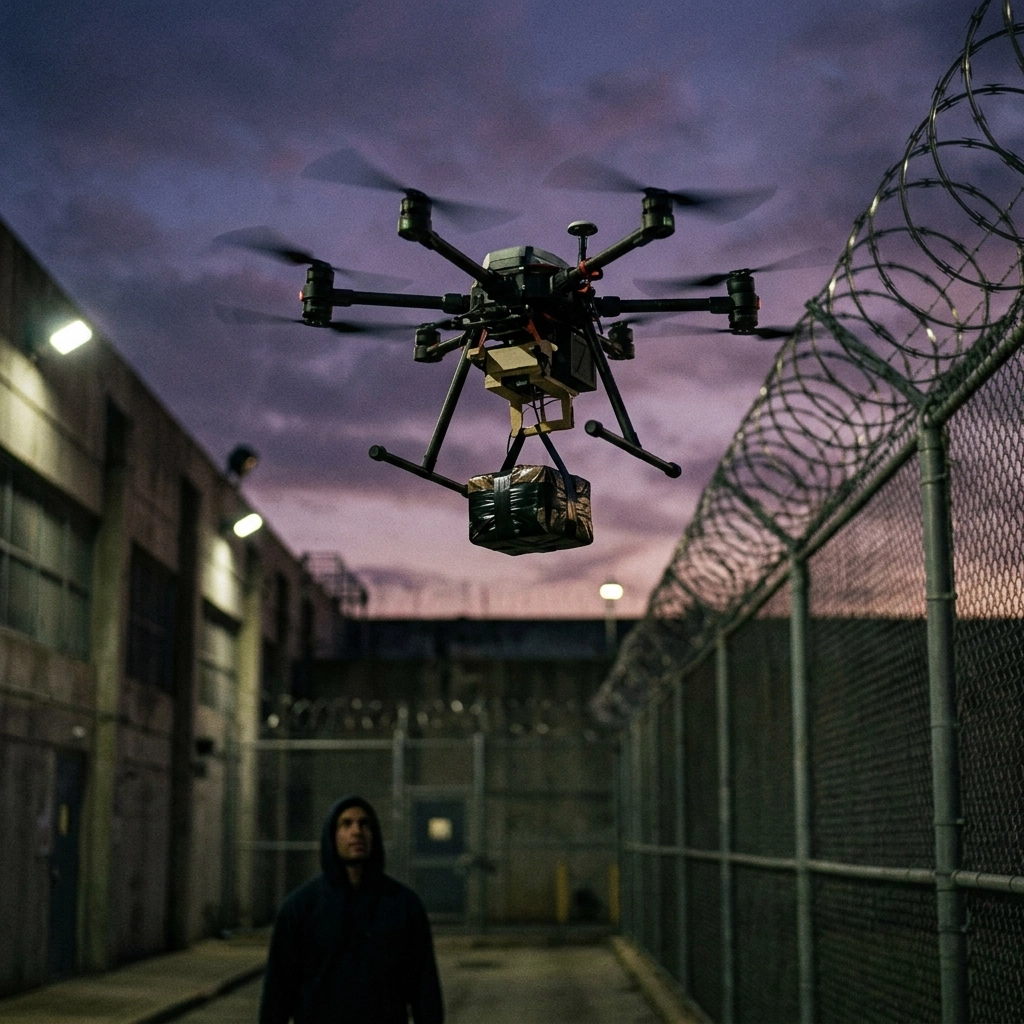
To understand how we got here, we have to look at the tech. A few years ago, a drone might struggle to carry more than a couple of mobile phones or a small wrap of illicit substances. Today’s "Prison Drones 2.0" are a different breed entirely. These units are often modified to remove lights, dampen sound, and even bypass geofencing software that usually prevents drones from flying near sensitive areas like prisons or airports.
The payloads have also grown in size and complexity. We aren't just talking about a single handset anymore. Modern drops often involve sophisticated "payload release" mechanisms that can be triggered remotely once the drone is positioned perfectly over a specific window or a pre-arranged spot in the exercise yard. Some reports suggest that these drones are now hauling weights that would have been impossible just five years ago, including large quantities of "spice," tobacco, and even luxury items that fetch a premium in the underground prison market.
What makes this even harder for authorities is the skill of the pilots. Many of these operators are not casual hobbyists; they are paid specialists, and some may have prior experience of the prison system itself. They understand CCTV blind spots and the timing of patrols. Some reports suggest drones have been fitted with thermal imaging, helping pilots judge when to move and when to hold back. That kind of technical know-how has turned what used to be a risky gamble into a more reliable illegal trade.
Inside the High-Stakes Economy of the Sky
Why is this happening at such a scale? The answer is money. The price of contraband inside a UK prison can be far higher than its street value, sometimes many times over. A single drone flight may carry thousands of pounds worth of goods, which makes the risk attractive for organised crime groups. In many cases, drone deliveries appear to be treated as an extension of wider criminal logistics networks.
The "untold stories" here aren't just about the drugs themselves, but the power dynamics they create. Access to a mobile phone or a steady supply of tobacco can make an inmate a powerful figure within the prison walls. This fuels a cycle of debt and violence that makes rehabilitation even harder for the staff to manage. When a drone successfully drops a package, it’s not just a security breach; it’s an injection of chaos into an already volatile environment.
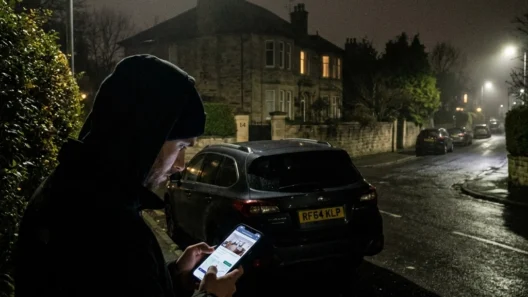
The items being flown in are also becoming more specialized. While drugs and phones remain the staples, there have been instances of drones carrying tools for escape attempts, high-end electronics, and even SIM cards by the dozen. The use of encrypted messaging apps on smuggled phones allows inmates to coordinate these drops in real-time, often communicating directly with the pilot via a second smuggled device to adjust the flight path based on the wind or guard movements. This real-time coordination is what truly separates the 2.0 era from everything that came before. It is a level of connectivity that the prison system was never designed to handle.
The Counter-Drone Front Line and the Legal Hurdles
The Ministry of Justice and HM Prison Service haven't been sitting idly by while the skies fill with contraband. Millions of pounds have been poured into a dedicated Counter-Drone Unit, tasked with finding ways to ground these unwanted visitors. The strategies are varied, ranging from physical barriers like netting over courtyards to high-tech electronic detection systems that can alert staff the moment a drone enters the restricted airspace.
However, the "defence" side of the equation faces significant hurdles. In the UK, the law is quite strict regarding what can be done to a drone while it is in flight. Jamming signals or using "drone hunters" (drones designed to catch other drones) can be legally complex because of the risk of interfering with legitimate civilian air traffic or emergency service frequencies. This means that for many prisons, the primary focus is on detection and rapid response: getting to the drop site before the inmates do.
Some facilities have seen success with "geofencing," where the software inside the drone is programmed to shut down or turn back if it enters a specific coordinate. But as we've seen, tech-savvy smugglers are often one step ahead, using "hacked" firmware to bypass these digital fences. It’s a constant game of leapfrog. Every time the authorities implement a new security measure, the smugglers find a technical workaround. This ongoing battle is a testament to the ingenuity of the criminal world when there is a high profit margin involved. While technology provides the tools for smuggling, it also provides the means for detection, but staying ahead of the curve requires constant investment and a willingness to adapt to the "Prison Drones 2.0" reality.
The rise of drone smuggling represents one of the biggest modern challenges to prison security. It sits at the intersection of technology, economics and public policy. As drones become cheaper, more powerful and easier to operate, pressure on the UK prison system is likely to grow. For readers interested in independent news UK and the untold stories behind the headlines, this issue offers a clear example of how fast the landscape is changing.
The battle for the airspace above prisons is far from settled. As authorities improve detection and the legal framework evolves, both smuggling tactics and countermeasures are likely to become more sophisticated. For now, this remains a serious and fast-moving security issue that continues to reshape the wider justice system.