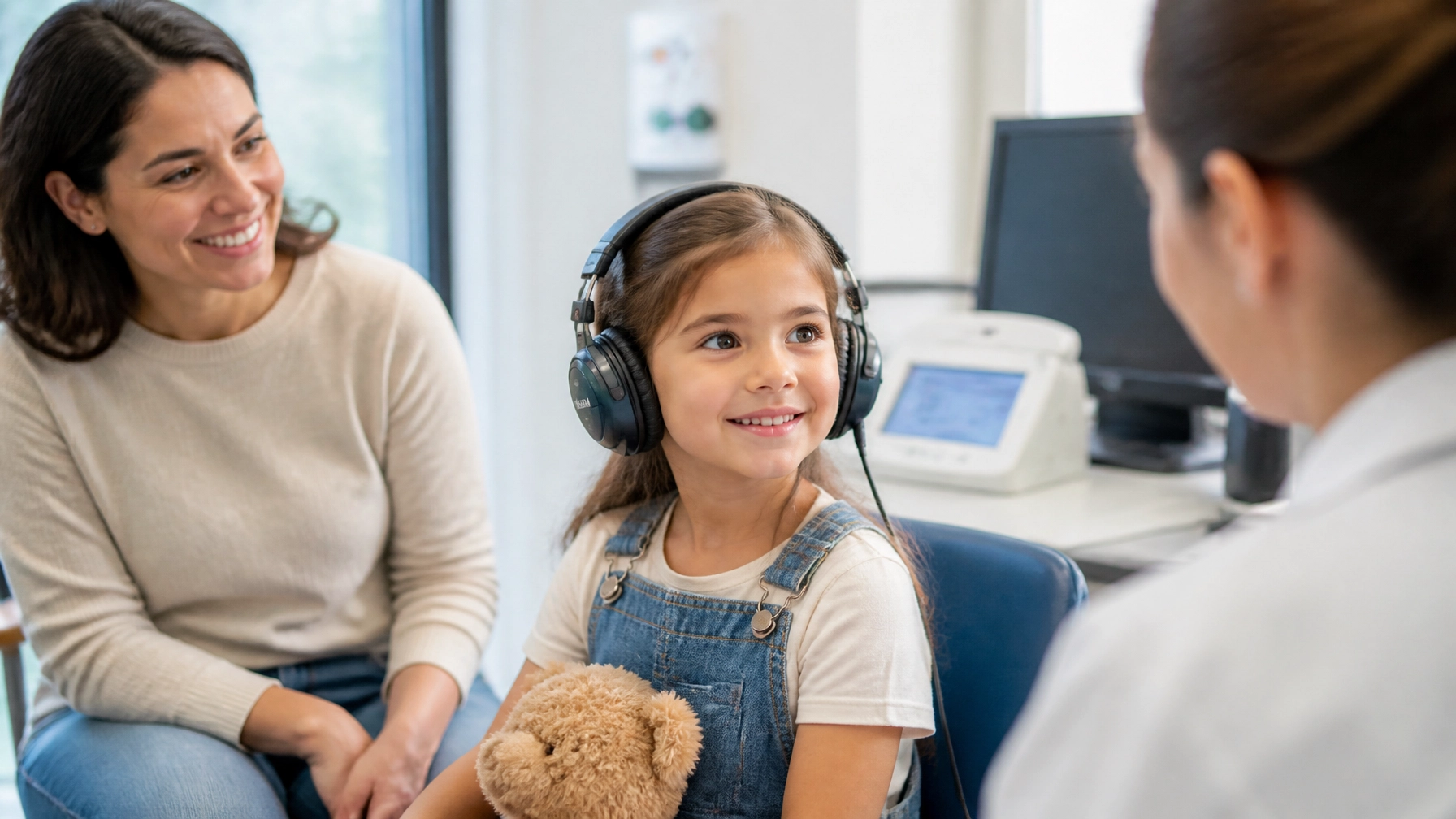
For centuries, the concept of restoring hearing to those born in absolute silence was the stuff of science fiction or religious parable. Yet, in a clinical development that has sent ripples through the global medical community, that silence is finally being broken. The emergence of regenerative gene therapy is no longer a distant hope discussed in hushed laboratory corridors; it is a living, breathing reality for families who once believed their children would never hear the sound of a parent’s voice or the rustle of leaves in the wind. This seismic shift in paediatric medicine marks one of the most significant breakthroughs in the treatment of congenital sensory loss, offering a definitive, biological solution to a problem that was previously managed only through mechanical intervention.
The vanguard of this revolution is represented by children like Opal Sandy, who became the first British patient to receive a pioneering treatment designed to correct a specific genetic fault. Born with auditory neuropathy caused by a mutation in the OTOF gene, Opal was profoundly deaf from birth. In children with this condition, the delicate hair cells in the inner ear are present, but they lack the protein: otoferlin: required to transmit electrical signals to the auditory nerve. Without this protein, the bridge between sound and the brain is effectively washed away. The successful restoration of her hearing serves as a proof of concept that has fundamentally altered our understanding of what is possible in the field of genomic medicine.
A New Era for Auditory Medicine
The journey from a silent world to one filled with sound began at Addenbrooke’s Hospital in Cambridge, where the CHORD trial first opened its doors to young patients. This international study, involving sites across the United Kingdom, the United States, and Europe, targeted the specific OTOF mutation using a delivery system that sounds like something from a futuristic thriller. By utilizing a harmless, modified virus known as an adeno-associated virus (AAV1), surgeons were able to "infect" the hair cells of the cochlea with a functional copy of the missing gene. This was not a temporary fix or a recurring treatment; it was a single, precision-engineered infusion that sought to rewrite the biological script of the inner ear.
The results were nothing short of miraculous. Within mere weeks of the procedure, Opal began to show reactions to environmental sounds. The milestones that followed were a testament to the brain's incredible plasticity. At six months post-treatment, clinical tests confirmed that her hearing levels in the treated ear were near-normal, allowing her to detect soft sounds like whispers. By the time she reached eighteen months of age, she was responding to her name and using her first words: a developmental leap that would have been impossible without the intervention. The success of this trial has now been replicated in several other children globally, with reports indicating that 11 out of the first 12 participants in the DB-OTO programme experienced clinically meaningful hearing improvements.
This transition from mechanical to biological restoration is a critical turning point. While cochlear implants have been the gold standard for decades, they remain external devices that require surgery, maintenance, and a lifelong commitment to hardware. They provide a digital representation of sound that, while life-changing, is not the same as natural, organic hearing. Gene therapy offers the tantalising prospect of "true" hearing, where the body’s own cells are empowered to function exactly as nature intended. It is the difference between listening to a symphony through a grainy telephone line and sitting in the front row of the concert hall.
The Scientific Miracle of Gene Splicing
The technical sophistication required to achieve this outcome cannot be overstated. The inner ear is one of the most protected and delicate environments in the human body, encased in dense bone and filled with sensitive fluids. To deliver the corrective gene, surgeons must perform a highly specialised procedure to inject the viral vector directly into the cochlea. This requires a level of precision that pushes the boundaries of modern microsurgery. The modified virus acts as a microscopic delivery vehicle, carrying the healthy DNA into the sound-sensing cells, where it integrates and begins the production of the otoferlin protein.
Once the protein is being produced, the hair cells can finally do their job. When sound waves hit the ear, these cells convert the mechanical vibration into a chemical signal that the auditory nerve can understand and pass to the brain. For the children in the trial, this was like flicking a switch in a room that had been dark since birth. The brain, which had never processed auditory data, suddenly found itself flooded with information. The speed at which these young minds adapted to their new sense is a powerful reminder of why early intervention is so critical. The younger the child, the more readily their neural pathways can form the connections necessary for speech and language development.
However, the scientific miracle is only part of the story. While the medical community celebrates the technical success, there is a growing realisation that this technology is currently a "bespoke" solution for a very specific problem. The OTOF mutation is responsible for only a small fraction of congenital deafness cases. For the thousands of other families dealing with hearing loss caused by different genetic mutations or environmental factors, the wait for a similarly effective "cure" continues. The challenge for researchers now is to broaden the scope of this therapy, identifying and targeting the dozens of other genes associated with hearing loss, each of which presents its own unique biological puzzle.
Bridging the Gap Between Innovation and Access
While the headlines are dominated by stories of joy and restored senses, the hard-hitting reality of gene therapy is one of economics and ethics. We are entering an age where we can cure profound disabilities, but the price tag for doing so is astronomical. These "one-and-done" treatments are among the most expensive drugs in the history of medicine. The research, development, and high-tech manufacturing required to produce a single dose of viral vector run into the millions of pounds. This raises uncomfortable questions about who gets access to these life-altering breakthroughs. Will this technology be available on the NHS for every eligible child, or will it become a luxury reserved for those in wealthy nations with robust insurance or private means?
Furthermore, the "success" of gene therapy is not viewed through a single lens. Within the Deaf community, there is a complex and often heated debate about the "medicalisation" of deafness. For many, being deaf is not a "defect" to be fixed but a distinct linguistic and cultural identity. There is a concern that by framing deafness as a biological error to be edited out of the human genome, we risk devaluing the rich culture of sign language and the unique perspective of deaf individuals. The pressure on parents to choose a "cure" for their children can be immense, and the long-term psychological impact on a child who is caught between two worlds, the hearing and the deaf, is something that clinical trials are not yet equipped to measure.
Beyond the cultural debate, there is the lingering question of durability. While the initial results for Opal and her peers are stellar, the therapy is still in its infancy. Clinical trials require a five-year follow-up for a reason. We do not yet know if the hearing restoration will last a lifetime or if the body might eventually reject the "corrected" cells or stop producing the necessary proteins. There is also the risk associated with the surgery itself; any invasive procedure on the inner ear carries a risk of infection or further damage. For now, the medical world remains cautiously optimistic, but the road from a successful trial to a standard, universally accessible treatment is fraught with regulatory, financial, and ethical hurdles that will take decades to navigate. The sound of silence has been broken for a lucky few, but the echoes of the challenges ahead are louder than ever.