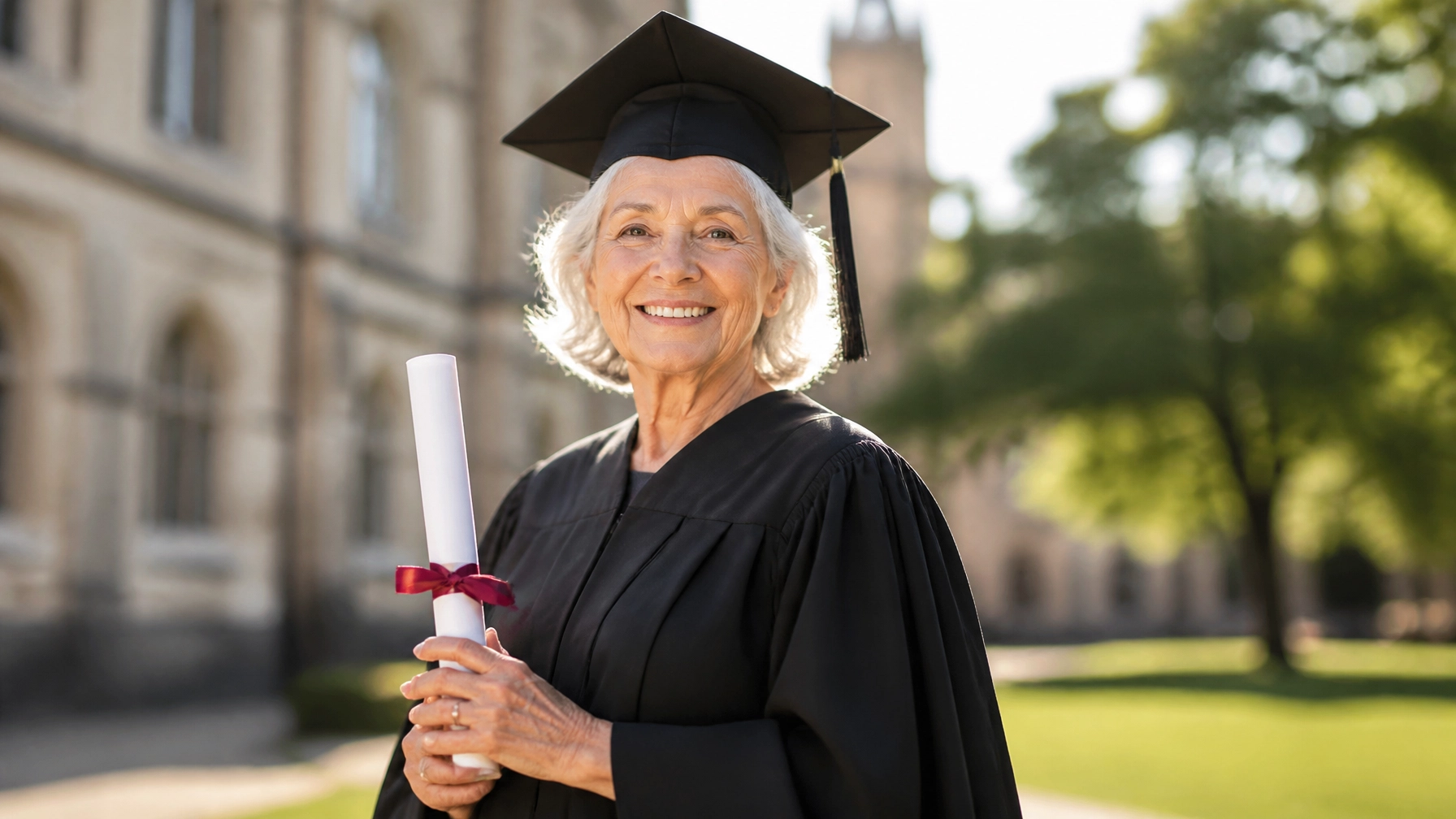
The graduation ceremony was a sea of young faces, mortarboards, and the nervous energy of twenty-somethings stepping into the unknown. But amongst the crowd of students, one face stood out with a smile that seemed to carry the weight of seven decades of patience. Irma Garcia, a seventy-two-year-old grandmother, finally walked across the stage to receive her degree, proving to a packed hall that the timeline of life is far more flexible than society often suggests. Dressed in the traditional black gown and cap, she beamed as her name was called, a moment that had been more than fifty years in the making.
For many of the students graduating alongside her, the journey had been a four-year sprint of late-night study sessions and campus socialising. For Garcia, it was the culmination of a marathon that began when she first dreamed of higher education as a young woman. Life, as it so often does, had other plans. Her path to this podium was paved with hard work, sacrifice, and the relentless pursuit of a goal she refused to let wither. As she accepted her diploma, the applause from the audience was not just for her academic achievement, but for the sheer tenacity of a woman who decided that seventy was as good an age as any to start a new chapter.
The air was thick with emotion as her family, including many of her eight grandchildren, cheered from the stands. They were not just spectators; they were the very reason she had delayed her dreams, and ironically, the reason she was finally able to achieve them. The sight of a grandmother in academic dress is a powerful image in an era where we are often told that our best years are behind us by the time we hit middle age. Garcia’s presence served as a living rebuttal to that notion, a testament to the idea that curiosity does not have an expiry date and that the mind remains a fertile ground for growth, regardless of how many candles are on the birthday cake.
A lifelong dream deferred by family duty
The story of Irma Garcia’s academic success is deeply rooted in her earlier years. Moving from Puerto Rico to the United States as a young woman, she was met with the harsh realities of being a single mother in a new country. The luxury of sitting in a lecture hall was far beyond her reach when there were mouths to feed and a future to build for her children. She worked multiple jobs, often through physical exhaustion, to ensure that her family had the opportunities she was currently bypassing. Education was always the priority, but it was her children’s education that came first.
Over the decades, she watched her children grow, graduate, and start families of their own. She was the cornerstone of her household, the person who made sure every homework assignment was completed and every graduation celebrated. Yet, tucked away in the back of her mind was the quiet, persistent desire to one day earn a degree of her own. She didn't want the degree for a high-flying career or a pay rise; she wanted it for the personal satisfaction of knowing she could do it.
She wanted to prove to herself that the young woman who had arrived with so much ambition was still very much alive inside her.
When she eventually reached the age where most people are looking toward a quiet retirement, Garcia found herself with a rare commodity: time. With her children grown and her grandchildren flourishing, the old spark of academic interest was reignited. She learned of a senior citizen tuition-waiver program that made returning to university financially viable. It was the sign she had been waiting for. Despite the daunting prospect of entering a world that had changed significantly since she was last in a classroom, she signed up. The transition from being the family matriarch to being a first-year student was not without its challenges, but she approached it with the same grit that had carried her through her younger years.
Navigating the digital classroom with family support
Entering a modern university as a septuagenarian is a task that requires more than just intellectual curiosity; it requires a complete technological overhaul. When Garcia first embarked on her degree five years ago, she was met with a landscape of online portals, digital submissions, and virtual classrooms that felt like a foreign language. The traditional methods of pen, paper, and physical libraries had been replaced by a digital ecosystem that can be intimidating even for those half her age. However, this is where her role as a grandmother became her greatest asset.
Her grandchildren, several of whom had already navigated their own university journeys, became her unofficial tutors. They sat with her through the frustrations of forgotten passwords and the complexities of video conferencing software. They showed her how to research in digital archives and how to format her essays to meet modern standards. It was a beautiful role reversal; the woman who had once taught them how to tie their shoes and read their first words was now being guided through the intricacies of the internet by the very people she had raised.
This intergenerational collaboration became a hallmark of her university experience. While she struggled with the tech, she thrived in the discussions. In seminars, she brought a perspective that only seventy years of life experience can provide. She wasn't just quoting textbooks; she was speaking from a place of lived history. Her younger classmates found her presence grounding, a reminder that the subjects they were studying were not just abstract concepts but things that affected real people over long periods of time. The digital divide was bridged by a mutual respect that grew between Garcia and her younger peers, proving that while the tools of education change, the essence of learning remains a deeply human, social endeavour.
Proof that the pursuit of knowledge has no age limit
Now that the final exams are over and the diploma is firmly in her hand, Garcia is not looking to slow down. She has expressed a desire to use her new qualifications to work within the non-profit sector, specifically focusing on community support and helping others who might find themselves in the position she once was: struggling to balance the demands of life with the desire for self-improvement. Her degree is more than a piece of paper; it is a tool for further service. She views her graduation not as an ending, but as a refreshed beginning.
Her story has resonated far beyond the walls of the university. It serves as a vital reminder to society that we often pigeonhole people based on their age. There is a common misconception that after a certain point, we are simply meant to be repositories of the past rather than active participants in the future. Garcia has shattered that glass ceiling, showing that the intellectual fire can burn just as brightly at seventy-two as it does at twenty-two. Her achievement challenges the youth-centric narrative of our current culture and highlights the immense value that senior citizens can bring to academic and professional environments.
As she prepares for a well-earned holiday with her daughters to celebrate her success, her message to others is clear: do not let the calendar dictate your potential.
Whether it is a degree, a new hobby, or a career change, the only thing standing between a person and their goal is the belief that they have run out of time. Irma Garcia has shown us that time is not something that runs out; it is something we use. As she walked away from the ceremony, her degree in hand and her family by her side, she wasn't just a grandmother graduating from university. She was a beacon of hope for anyone who has ever felt that they missed their chance. It is never too late to learn, never too late to grow, and certainly never too late to beam with pride under a graduation cap.