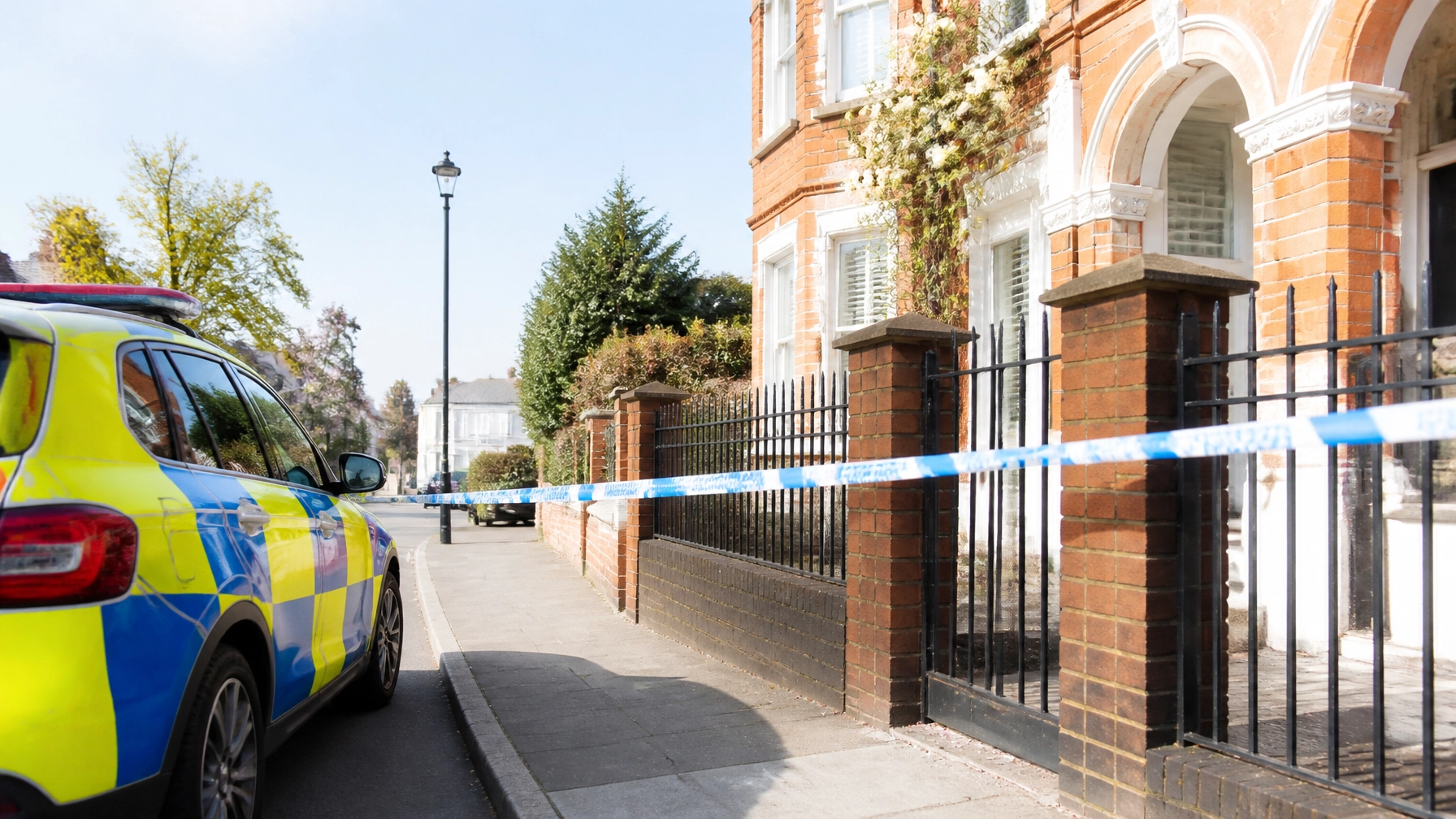
Two men have been found guilty at the Old Bailey for their roles in a series of arson attacks targeting properties linked to Sir Keir Starmer.
The plot, which unfolded over several days in May 2025, was orchestrated by a mysterious Russian-speaking handler known only by the alias ‘El Money’. Following a high-stakes investigation by the Metropolitan Police’s Counter-Terrorism Command, the jury delivered a verdict that highlighted the growing threat of foreign-directed interference on British soil. Roman Lavrynovych, 22, and Stanislav Carpiuc, 27, were both convicted of conspiracy to damage property by fire, while Lavrynovych faced additional convictions for arson with intent to endanger life.
The court heard how the campaign of intimidation began in the early hours of 8 May 2025, when a Toyota RAV4 once owned by the Prime Minister was set ablaze in Kentish Town. This initial attack served as a precursor to a more aggressive series of strikes. Just three days later, on 11 May, the group targeted an apartment in Islington where Sir Keir had previously held a registered interest. The escalation reached its peak on 12 May, when the conspirators turned their attention to the Prime Minister’s constituency home in North London. While no one was physically injured during the incidents, the prosecution argued that the fires were designed to send a chilling message to the heart of the British government.
Evidence presented during the trial revealed a sophisticated level of coordination between the defendants and their handler. Using the encrypted messaging platform Telegram, ‘El Money’ provided the men with specific coordinates, photographs of the targets, and detailed recipes for creating combustible materials. The handler demanded that the attacks be filmed, presumably to be used as propaganda or proof of performance for those funding the operation. In exchange for their cooperation, Lavrynovych was promised approximately £3,000 in cryptocurrency, a digital bounty that underscores the mercenary nature of the plot.
The Digital Trail and the Role of ‘El Money’
The investigation into the arson attacks hinged heavily on the digital footprints left by the conspirators. Detectives from the Counter-Terrorism Command spent months untangling a web of encrypted messages and financial transactions that linked the men in London to the handler abroad. ‘El Money’ was described in court as a shadow figure who operated with a high degree of operational security, yet left behind enough forensic evidence to allow investigators to reconstruct the timeline of the conspiracy. The handler’s use of Russian as a primary language of communication, combined with the promise of cryptocurrency payments, pointed toward a professional operation designed to maintain distance between the organisers and the executors on the ground.
The prosecution detailed how ‘El Money’ directed the men to purchase specific accelerants and instructed them on the most effective ways to ensure the fires would catch. This was not a case of random vandalism, but a calculated effort to create maximum visual impact. The requirement to record the fires was a central component of the instructions; ‘El Money’ insisted that the footage be sent back immediately after each attack. Analysts suggested that this footage was likely intended for circulation on social media or within foreign intelligence circles to demonstrate the vulnerability of British political figures.
Despite the heavy focus on the Russian-speaking handler, the Metropolitan Police clarified that they have yet to establish a definitive link between ‘El Money’ and a foreign state intelligence service. Commander Helen Flanagan, who led the investigation, noted that while the methods used mirrored those of state-sponsored destabilisation campaigns, the identity and ultimate affiliations of the handler remain under investigation. The Russian embassy has consistently denied any involvement in the plot, but the court’s findings have nonetheless raised serious questions about the ease with which foreign actors can recruit and direct individuals to carry out violent acts within the United Kingdom.
Targeted Locations and the Intent to Endanger Life
The choice of targets was meticulously planned to strike at various stages of Sir Keir Starmer’s personal and political life. The burning of the Toyota RAV4 in Kentish Town was more than a simple act of car crime; it was a symbolic strike against the Prime Minister’s past. However, the subsequent attacks on the Islington flat and the constituency home represented a far more dangerous transition from symbolic property damage to life-threatening arson. The court was shown CCTV footage of the men approaching the properties with fuel canisters, demonstrating a total disregard for the safety of any residents who might have been inside at the time.
In the case of the Islington flat, the fire was set directly against the front door of a multi-occupancy building. Prosecutors argued that the fire could have easily spread through the internal hallways, trapping residents in their beds. Lavrynovych’s conviction for arson with intent to endanger life was a direct result of this specific incident. The jury heard testimony from neighbours who were woken by the smell of smoke and the sound of crackling flames, describing the fear that swept through the building as they realised they were being targeted.
The final attack on the constituency home was perhaps the most brazen. Despite increased security measures following the previous incidents, the conspirators managed to approach the property under the cover of darkness. The intent, as argued by the Crown Prosecution Service, was to intimidate the Prime Minister by proving that his most private spaces were not beyond the reach of those directed by ‘El Money’. The psychological impact of such a campaign is a key component of modern asymmetric warfare, where the goal is to create a sense of pervasive insecurity among leadership and the general public alike.
Sentencing and the Future of National Security
The conviction of Lavrynovych and Carpiuc marks a significant victory for the UK’s counter-terrorism efforts, but it also serves as a stark warning about the evolution of domestic threats. The use of low-level criminals or vulnerable individuals to carry out tasks on behalf of distant handlers is a growing trend that challenges traditional policing methods. By using ‘cut-outs’ who have no direct contact with the primary organisers, those who direct these attacks can remain insulated from the legal consequences, even when their subordinates are caught and prosecuted.
The third man accused in the plot, Petro Pochynok, was acquitted of all charges after the jury found there was insufficient evidence to prove his direct involvement in the conspiracy. The focus now shifts to the sentencing of Lavrynovych and Carpiuc, which is expected to take place later this month. Legal experts anticipate that the court will hand down substantial prison terms to reflect the severity of the crimes and the clear intent to undermine national security. The verdict sends a clear message that while the handlers may remain in the shadows, those who choose to carry out their orders on British soil will face the full weight of the law.
Moving forward, the security services are expected to increase their monitoring of encrypted platforms and the flow of cryptocurrency linked to potential domestic threats. The ‘El Money’ case has highlighted a vulnerability that requires a coordinated response between technology companies and law enforcement. As the investigation continues into the true identity of the handler, the conviction of the two men in London provides a measure of closure for those targeted, while leaving the broader question of foreign interference firmly on the national agenda. The Prime Minister’s office has not released a formal statement on the specific verdicts, but sources close to the government indicated that the successful prosecution is seen as a vital step in deterring future attempts at politically motivated violence.