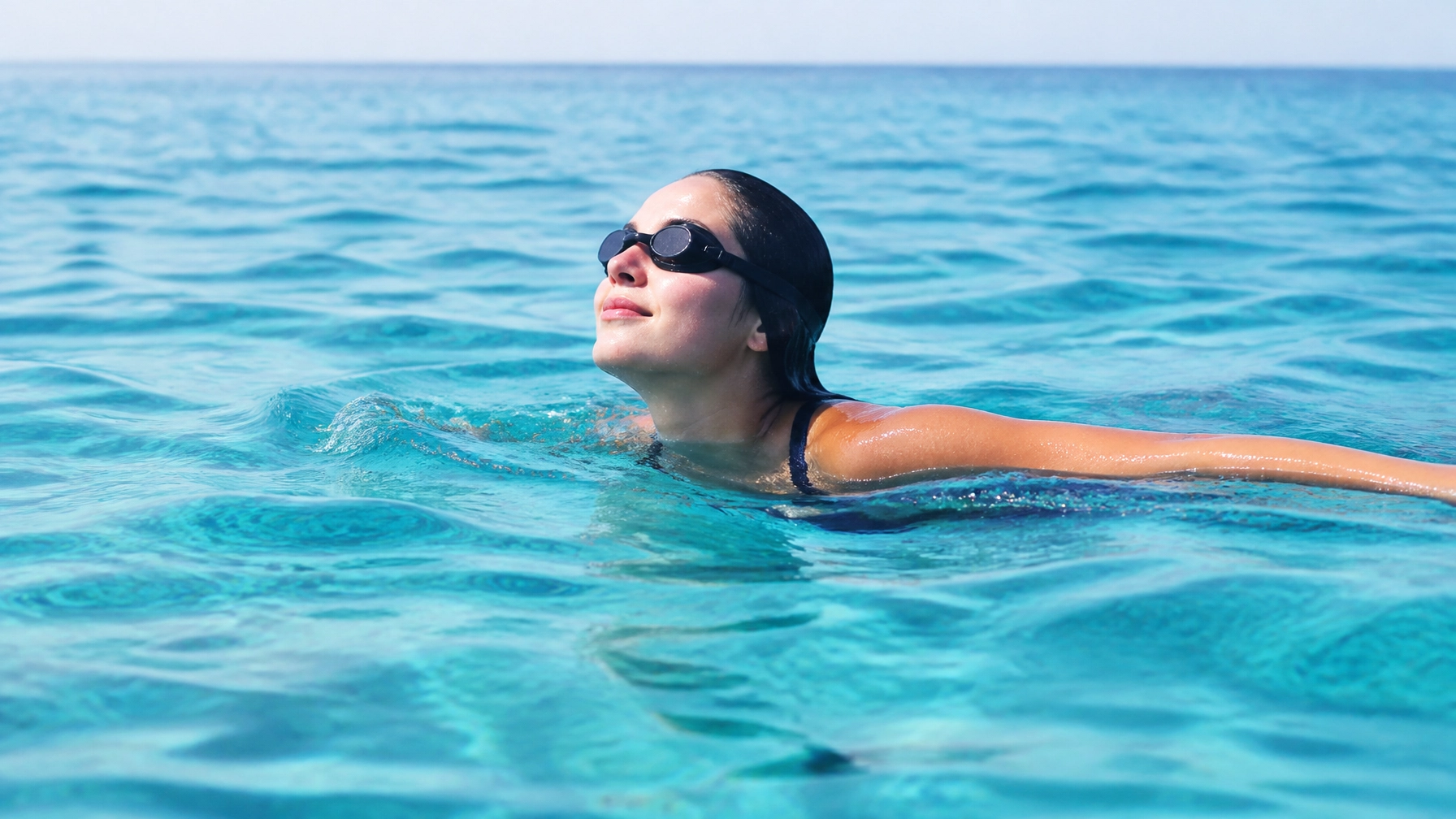
Melanie Barratt, a double Paralympic gold medallist who has spent her life defying the limitations placed upon the visually impaired, has turned her focus from the controlled environment of the swimming pool to the unpredictable expanse of the British coastline.
Having recently made history as the first blind woman to complete a solo swim across the English Channel, Barratt is now spearheading a movement to ensure that the therapeutic and exhilarating experience of open-water swimming is accessible to everyone, regardless of their level of vision. Her advocacy comes at a pivotal moment as coastal communities across the United Kingdom grapple with how to make their natural assets more inclusive for people with disabilities.
The journey from the Paralympic podium to the shores of the south coast has been one defined by both personal grit and a desire to dismantle systemic barriers. Born with congenital toxoplasmosis, Barratt has lived with significant sight loss since birth, but she has never allowed it to dictate the boundaries of her world. After a successful career in competitive pool swimming, she sought a new challenge that would test her endurance in a way the four walls of a leisure centre never could. The English Channel, often described as the "Everest of swimming," became her target. Completing the crossing in just over twelve hours, she proved that with the right support and technology, the sea does not have to be a closed environment for the blind community.
Breaking Barriers in Open Water
The logistical challenges of a blind swimmer navigating the busiest shipping lane in the world are immense. During her crossing, Barratt relied on a sophisticated combination of human intuition and modern technology. She utilised bone-conducting headphones, which allowed her to receive real-time navigational instructions from her support team on a nearby boat without blocking out the vital sounds of the water around her. Her husband provided constant verbal cues, acting as her eyes as she navigated through swells, patches of seaweed, and the ever-present threat of jellyfish. This level of coordination highlights the "hidden" requirements for accessibility that often go unnoticed by the able-bodied public.
Beyond the technical requirements, the psychological barrier of entering the sea without sight is a hurdle that many find insurmountable. For a visually impaired person, the transition from the shore into the water involves a complete loss of traditional navigational markers. The horizon disappears, the texture of the ground changes rapidly, and the sound of the waves can become disorienting. Barratt’s success has served as a proof of concept, demonstrating that these obstacles can be managed through structured support and specialised training. Her feat was not just a personal milestone but a clarion call for better coastal infrastructure, such as tactile markers, accessible changing facilities, and trained water-side guides who understand the specific needs of blind swimmers.
The narrative of "water confidence" is central to Barratt’s mission. She often speaks about the profound sense of freedom that comes with weightlessness in the ocean. In the water, the physical constraints of navigating a world designed for the sighted are temporarily suspended. There are no kerbs to trip over, no unexpected obstacles on a pavement, and no reliance on a white cane. However, this freedom is only possible if the "gateway" to that water is safe and welcoming. Currently, many of the UK’s most popular swimming spots remain inaccessible, with steep, uneven entries or a lack of clear information for those with sensory impairments.
The Gateway to Inclusive Coasts
Following her historic swim, Barratt has become a leading voice for the "Gateway to the Sea" initiative. This project aims to bridge the gap between interest and participation for the visually impaired community. It focuses on creating "taster days" where individuals can experience open water in a controlled, safe, and highly supported environment. These sessions are designed to move beyond the basic safety drills taught in pools, focusing instead on the unique sensory experience of the sea. Participants are taught how to read the water through sound and touch, how to stay oriented relative to the shoreline, and how to build the stamina required for outdoor conditions.
The initiative also works closely with local authorities and coastal managers to provide expertise on inclusive design. Making a beach accessible involves more than just a ramp; it requires an end-to-end consideration of the user journey. For a blind swimmer, this might include audio-described maps of the coastline, colour-contrasted signage for those with some residual vision, and the presence of "beach buddies": volunteers trained to assist with the transition from the car park to the water’s edge. Barratt’s involvement has lent significant weight to these proposals, as she brings the lived experience of an elite athlete who has navigated the most extreme version of these challenges.
The "Gateway to the Sea" project is also addressing the financial barriers to participation. Open-water swimming often requires specialised gear, such as high-visibility tow floats, wetsuits for colder British waters, and, in the case of visually impaired swimmers, communication devices. By providing this equipment during taster sessions, the initiative ensures that socio-economic status does not become another barrier to entry. The goal is to create a sustainable model that can be rolled out across the country, transforming the UK’s coastlines into a national playground that is truly open to all.
Transforming Lives Through Water Confidence
The impact of accessible sea swimming extends far beyond physical fitness. For many participants in the "Gateway to the Sea" sessions, the experience provides a massive boost to their mental well-being and independence. Sight loss can often lead to a sense of isolation and a shrinking of one’s social world. Engaging in a challenging outdoor activity like sea swimming fosters a sense of community and shared achievement. Participants often report that the confidence they gain in the water translates into their daily lives, making them more willing to tackle other challenges and seek out new experiences.
Barratt’s story is a powerful reminder that "disability" is often a product of an inaccessible environment rather than an inherent limitation of the individual. By championing sea access, she is challenging the traditional medical model of disability and promoting a social model that places the responsibility on society to remove barriers. Her work is particularly timely as the popularity of wild swimming continues to surge across the UK. As more people head to the coasts for their health and happiness, the need to ensure that no one is left behind on the shore becomes increasingly urgent.
Looking ahead, the vision for an inclusive coastline is one where a blind person can arrive at a beach and find the same level of welcome and ease as anyone else. It is a vision of a Britain where the natural beauty of the landscape is a shared heritage, not a restricted zone. Through her advocacy and her ongoing commitment to the "Gateway to the Sea" initiative, Melanie Barratt is ensuring that her Channel crossing was not just a singular moment of glory, but the start of a new chapter for inclusive sport in the UK. The sea, she argues, belongs to everyone, and it is time the gateway was opened wide.