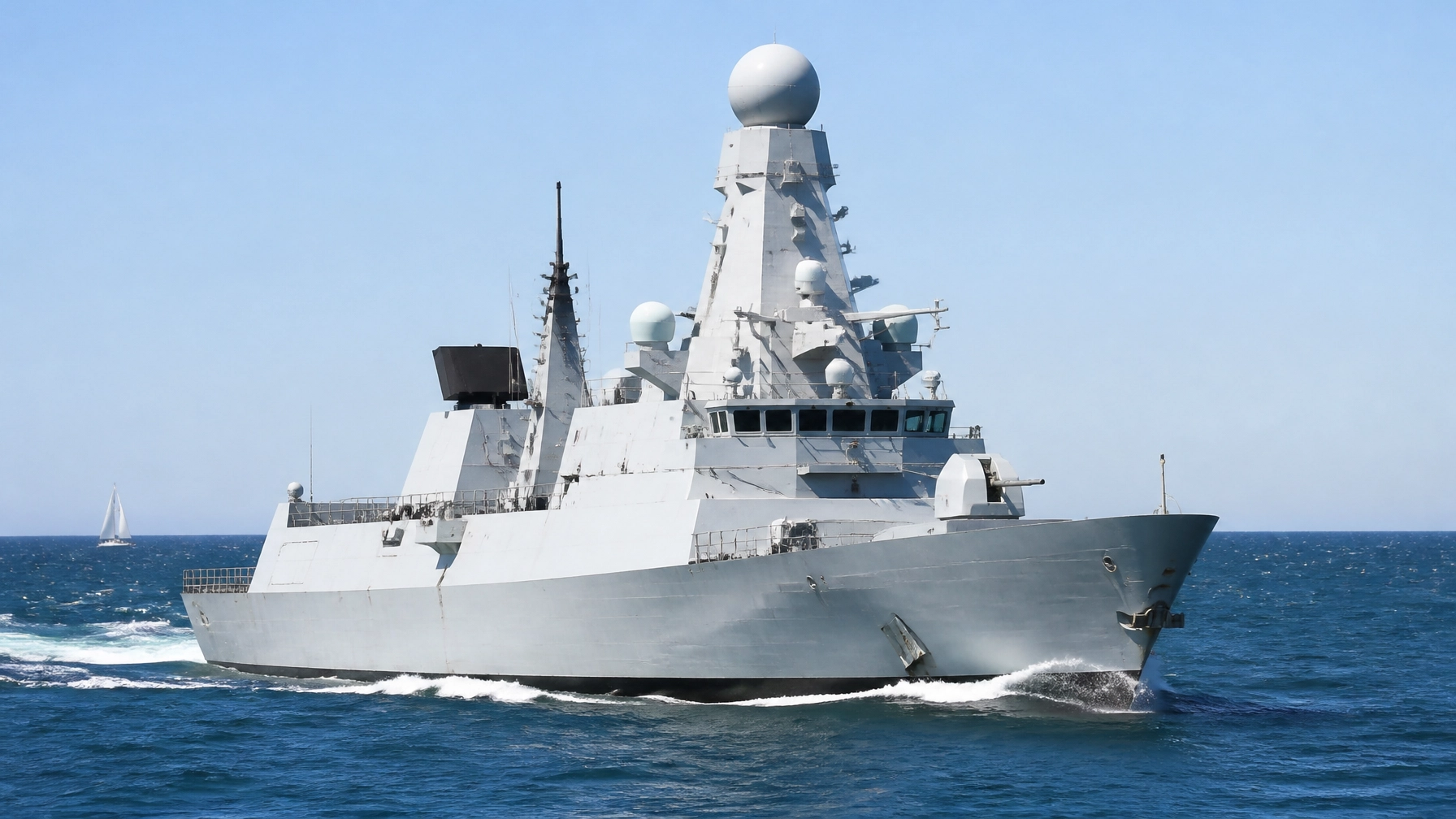
The English Channel, one of the world's busiest shipping lanes, became the theatre for a significant maritime escalation this week when a Russian frigate deployed warning shots in the direction of a British-registered civilian yacht. The incident, which occurred approximately 20 nautical miles south of the Isle of Wight, has sparked a diplomatic row and raised serious questions regarding the safety of civilian vessels in international waters adjacent to the United Kingdom.
The vessel at the heart of the encounter, a sailing yacht named Bright Future, was navigating the waters between the Hampshire coast and Normandy when it was intercepted by the Admiral Grigorovich, a guided-missile frigate of the Russian Navy. According to accounts from the scene, the encounter escalated rapidly from a routine passage into a high-stakes military confrontation. The Russian Ministry of Defence has since confirmed that the frigate’s commander ordered the firing of small-arms warning shots, claiming the yacht was on a "dangerous course" that could have resulted in a collision.
The crew of the Bright Future, Jane and Alan Kelvey, a retired couple from Hampshire, described a harrowing experience that stood in stark contrast to the official Russian narrative. According to the Kelveys, the morning had been clear with moderate sea states, and they were operating under a combination of sail and engine power to maintain their course toward the French coast. They reported that the Russian warship appeared on the horizon and closed the distance at a remarkable speed, eventually looming over their significantly smaller craft. The couple maintained that they did not hear any initial radio contact or see any visual signals before the sounds of gunfire echoed across the water.
Escalation of Maritime Tensions
The use of live ammunition, even in the form of warning shots from small arms, represents a departure from standard maritime interaction in the Channel. Traditionally, naval vessels and civilian craft adhere to the International Regulations for Preventing Collisions at Sea, commonly known as COLREGs. These rules dictate the priority of movement and communication protocols to ensure safety. In this instance, the Russian authorities argued that the yacht failed to respond to radio signals, sound whistles, and signal flares, leaving the frigate with no choice but to fire "pre-emptive" shots across the yacht’s path to force a change of course.
However, maritime security analysts suggest that the proximity of the incident to the British coastline makes the Russian account particularly contentious. While the event took place outside UK territorial waters, it occurred within the UK’s Exclusive Economic Zone, an area where the Royal Navy and the Ministry of Defence maintain constant surveillance. British defence sources have confirmed that the situation was monitored in real-time by coastal radar and air assets, though the speed of the escalation meant that a physical intervention by the Royal Navy was not possible before the shots were fired.
The psychological impact on the civilian sailors cannot be understated. Jane Kelvey described the moment as "entirely surreal," noting that while they eventually realised the shots were not aimed directly at the hull of their yacht, the intention was clearly to intimidate. The four to five rounds fired into the water approximately 500 yards from their position served as a violent reminder of the volatility currently characterising international naval movements. Following the gunfire, the Kelveys immediately altered their course by forty-five degrees, moving away from the frigate, which then continued its passage through the Channel without further interaction.
Naval Response and Strategic Monitoring
In the wake of the incident, the Ministry of Defence has been forced to strike a delicate balance between condemning the Russian action and avoiding a full-scale military standoff. Government officials have labelled the Russian crew’s actions as reckless and irresponsible, highlighting the inherent danger of using weapons in a crowded civilian waterway. Yet, the official assessment from the Ministry of Defence also acknowledged that the shots appeared to be a genuine, albeit extreme, attempt to prevent a collision in difficult navigational conditions.
The Russian frigate, the Admiral Grigorovich, is a well-known actor in these waters. As a modern vessel equipped with sophisticated sensor suites and weaponry, it is frequently tracked by NATO forces as it transits between the North Sea and the Mediterranean. The fact that its crew felt the need to resort to small-arms fire against a slow-moving sailing yacht has been interpreted by some as a sign of heightened hair-trigger sensitivity among Russian naval commanders. This incident follows a series of non-combative but tense encounters between Western and Russian assets over the past year, though this marks the first time in recent memory that live fire has been involved so close to the British Isles.
The Prime Minister has issued a stern rebuke, stating that while the event was an isolated one, it fits into a broader pattern of assertive Russian behaviour. National security experts are now reviewing the protocols for civilian-military communication in the Channel to ensure that yachts and fishing vessels are better informed of the presence of foreign warships. The challenge remains that in international waters, the freedom of navigation applies to all, but the duty of care remains paramount. The Ministry of Defence continues to maintain that its primary objective is the safety of British citizens and the integrity of the nation's maritime borders, even when incidents occur just beyond the twelve-mile limit.
Security Implications for UK Waters
The long-term implications of this confrontation may lead to a permanent change in how the English Channel is policed. For decades, the Channel has been managed through a cooperative framework involving the UK, France, and other European partners. The introduction of aggressive naval posturing into this environment threatens the established order and creates a climate of fear for leisure sailors and commercial operators alike. The yachting community has expressed significant concern, with many questioning whether the "rules of the road" are being discarded in favour of "might makes right" on the high seas.
Technically, the "pre-emptive" nature of the shots claimed by Russia is a point of legal friction. International maritime law allows for various signals to be used to warn off vessels on a collision course, but the use of firearms is generally reserved for situations involving piracy or clear hostile intent. Because the Bright Future was a civilian vessel with no means of threatening a heavily armed frigate, the Russian justification of "self-protection" through warning shots appears thin to many international observers. The yacht was reportedly visible on radar and via visual sighting for several miles, leading to questions about why a more peaceful resolution could not be achieved through standard hailing frequencies.
As the Bright Future returned to port, the investigation into the exact sequence of events continued. Data from the yacht’s onboard GPS and AIS systems will be cross-referenced with military radar logs to determine the exact distance between the ships at the time of the firing. For now, the Ministry of Defence has increased the presence of patrol vessels in the area to provide a visible deterrent and to reassure the public that the Channel remains a safe passage for all. The incident serves as a stark reminder that even in familiar waters, the geopolitical tensions of the modern world can manifest in the most unexpected and dangerous ways.
The story of Jane and Alan Kelvey is a testament to the changing reality of maritime security. What was intended to be a routine summer sail turned into a headline-grabbing encounter that has reached the highest levels of government. As the diplomatic fallout continues, the focus will remain on ensuring that such a "reckless" display of force is not repeated, and that the English Channel does not become a contested zone where civilian lives are put at risk by naval grandstanding.