Efforts to create a continuous belt of woodland around the outskirts of the capital have taken a significant step forward as a dedicated group of young people with learning disabilities joined the front line of London’s environmental recovery. The initiative, part of the ambitious London Tree Ring project, is designed to transform the city’s perimeter into a flourishing corridor for wildlife while simultaneously opening up the green economy to a demographic often sidelined in the traditional labour market.
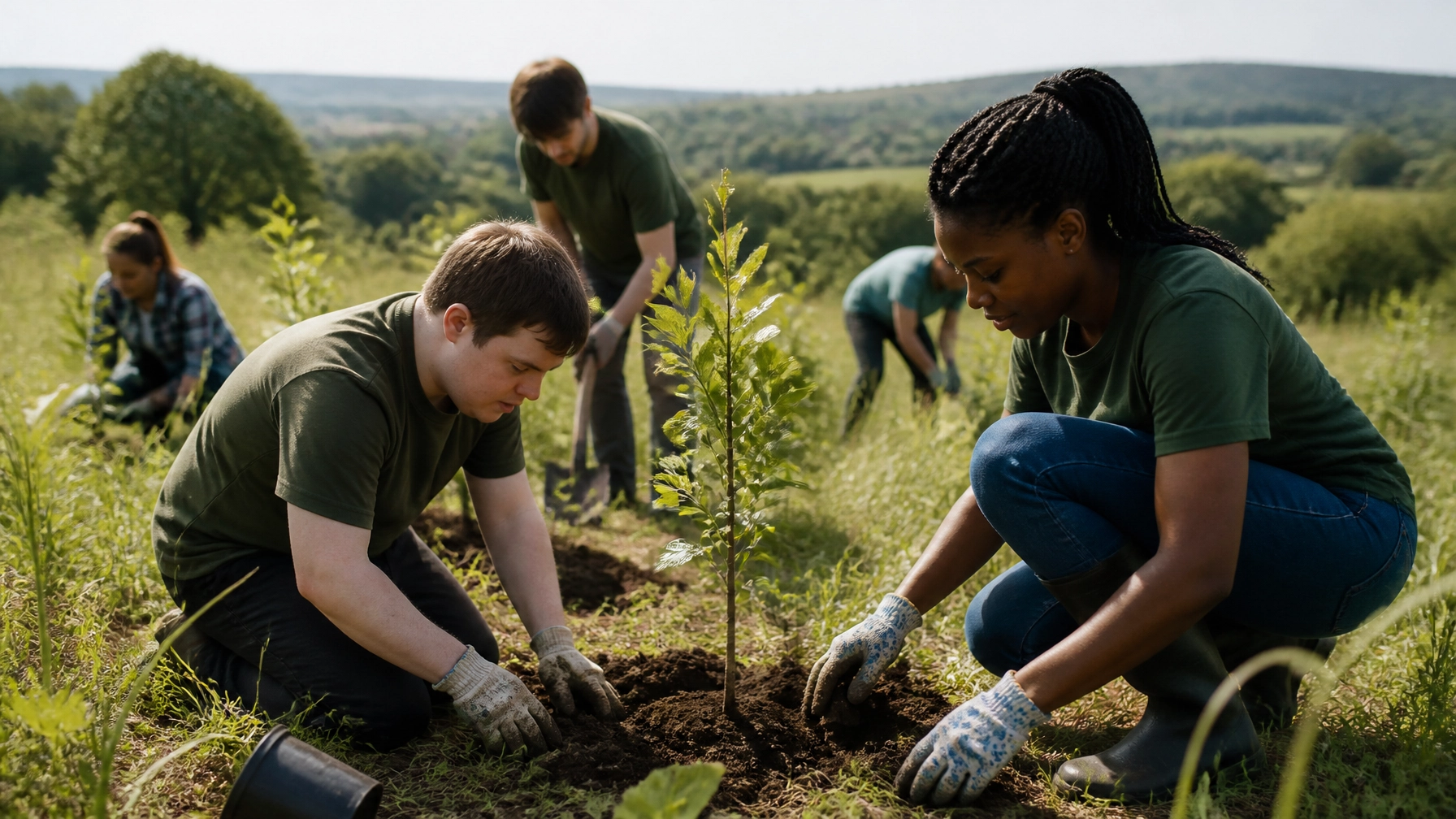
Working across several sites on the fringes of the M25, these young adults are planting thousands of native saplings, including oak, hazel, and birch. The project represents a fundamental shift in how urban forestry is approached, moving away from isolated pockets of greenery towards a cohesive, interconnected ecosystem. For the participants, the work is more than just an environmental contribution; it is a pathway into a sector that is increasingly desperate for skilled workers as the UK pushes toward its net-zero targets.
The London Tree Ring is a long-term vision aimed at linking existing ancient woodlands with new plantations, creating what experts describe as an "ecological superhighway." By bridging the gaps between fragmented habitats, the project allows species such as dormice, hedgehogs, and various pollinators to migrate and thrive in an increasingly urbanised landscape. The involvement of young people with learning disabilities adds a layer of social purpose to this ecological mission, proving that the transition to a greener economy can, and should, be inclusive.
Organisers have noted that many of the participants have previously struggled to find meaningful employment in indoor environments, where sensory overload or rigid office structures can present significant barriers. The outdoor nature of the planting project offers a therapeutic and practical alternative, allowing individuals to develop physical skills, teamwork, and a deep understanding of conservation. This hands-on experience is being paired with vocational training, ensuring that the time spent in the fields translates into long-term career prospects within the horticulture and forestry industries.
Connecting Nature through the Capital
The ecological significance of the London Tree Ring cannot be overstated. For decades, London’s expansion has led to the fragmentation of its natural spaces, leaving wildlife trapped in isolated "islands" of greenery. This isolation makes populations more vulnerable to disease, climate change, and genetic stagnation. The Tree Ring seeks to rectify this by establishing a biodiverse perimeter that acts as a buffer between the urban sprawl and the surrounding countryside.
By planting a wide variety of native species, the project ensures a resilient ecosystem that can withstand the unpredictable weather patterns associated with a changing climate. Broadleaf trees like the English oak provide a habitat for hundreds of different insect species, which in turn support the birds and small mammals that are the hallmark of a healthy British landscape. The inclusion of fruit-bearing trees and shrubs like hawthorn and blackthorn provides essential food sources during the winter months.
This "M25 for nature" is not just about the trees themselves, but about the soil and the wider environment. The planting process involves careful preparation of the land, ensuring that the new woodlands can help with natural flood management and carbon sequestration. As the saplings mature, they will play a vital role in cleaning the air for millions of residents, capturing particulate matter from the heavy traffic of the nearby motorway and releasing oxygen back into the atmosphere.
The project is also designed to be accessible to the public, with new footpaths and cycleways planned to run alongside the tree lines. This will allow residents from some of London’s most nature-depleted boroughs to access high-quality green space within a short journey of their homes. The goal is to create a landscape that serves both the wild and the human inhabitants of the city, fostering a sense of shared ownership and pride in the local environment.
Empowering Young People Through Green Skills
While the environmental benefits are clear, the social impact of the project is where its true innovation lies. The young people involved in the planting are gaining more than just fresh air; they are acquiring technical skills that are in high demand. From soil analysis and sapling care to the use of professional tools and site management, the training provided is comprehensive. For many of the participants, this is the first time they have been given the responsibility and autonomy to manage a large-scale project.
Support staff on-site have reported a marked increase in confidence and communication skills among the group. The nature of the work requires constant coordination, and the shared goal of completing a plantation site fosters a strong sense of community. By working in an environment that values their contributions, the young adults are able to overcome the stigma often associated with learning disabilities in the workplace.
The green sector is one of the fastest-growing areas of the UK economy, yet it remains inaccessible to many due to a lack of clear entry points. This initiative bridges that gap by providing a bridge between education and employment. By working directly with environmental charities and local authorities, the programme ensures that the skills being taught are exactly what employers are looking for. This is not just volunteering; it is a serious investment in the future workforce.
Furthermore, the therapeutic benefits of "green exercise" have been well-documented. For individuals who may experience anxiety or social difficulties, the calm and structured environment of a woodland-in-the-making can be transformative. The physical activity involved in planting thousands of trees provides a healthy outlet for energy, while the visible progress of the woodland provides a sense of tangible achievement that is often missing from more abstract forms of work.
A Sustainable Legacy for London’s Future
As the first phase of the planting concludes, the focus is shifting toward the long-term maintenance of the new woodlands. Trees are not a "plant and forget" solution; they require years of careful management to ensure they reach maturity. The young people who have planted these saplings are being encouraged to stay involved in their care, becoming the long-term stewards of the land they have helped to transform.
This sense of legacy is a core component of the London Tree Ring. In twenty or thirty years, these saplings will be substantial trees, providing a canopy that will define the edge of the city for generations to come. The participants can look back with the knowledge that they were the ones who laid the foundations for this forest. It is a powerful reminder that the fight against climate change and biodiversity loss is a collective effort that requires the participation of every part of society.
The success of this inclusive approach is already attracting interest from other major cities across the UK. There is a growing recognition that urban forestry projects provide a unique opportunity to address multiple social and environmental issues simultaneously. By integrating social care with conservation, cities can create more resilient landscapes and more inclusive communities.
Looking ahead, the London Tree Ring will continue to expand, with plans to involve more schools, community groups, and youth organisations. The goal is to ensure that the ring is never truly finished, but rather grows and evolves alongside the city itself. As more young people with learning disabilities enter the green workforce, the project stands as a testament to the fact that when barriers are removed, everyone has the potential to contribute to the restoration of the natural world. The trees being planted today are a symbol of a more inclusive, more biodiverse, and more sustainable future for the capital.