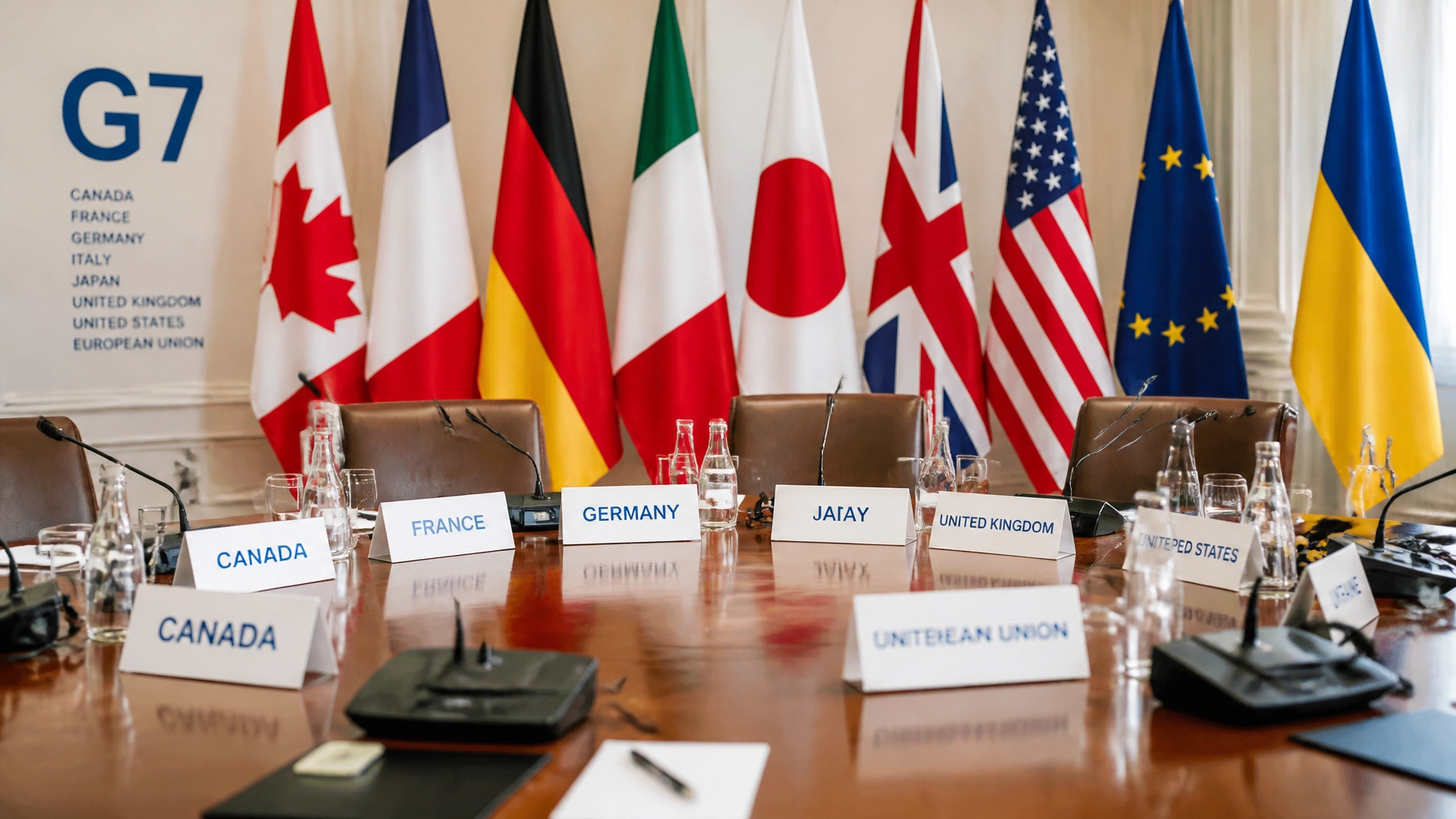
The diplomatic corridors of Évian-les-Bains have become the focal point of global attention this week as the G7 summit convened under a cloud of geopolitical tension. For President Volodymyr Zelenskyy, the journey to the French lakeside town was more than a routine diplomatic engagement; it represented a critical opportunity to shore up international resolve at a time when the conflict in Eastern Europe continues to demand unwavering attention. The atmosphere surrounding the summit has been described by observers as one of cautious optimism, with the Ukrainian delegation sensing a palpable shift in the winds of support coming from Washington. As the summit opened, the message from Kyiv was clear: the momentum gained on the battlefield must be matched by a renewed commitment from Western allies to ensure a stable and sovereign future.
The G7 leaders' official agenda opened with a dedicated two-hour session specifically addressing the situation in Ukraine, a move that underscored the conflict’s position as the primary foreign policy concern for the world's leading economies. This prioritisation comes at a time when the logistics of military aid and the complexities of international finance are being tested to their limits. For the Ukrainian leadership, the presence of the United States at the table remains the most vital component of their defensive strategy. Recent legislative movements in the US House of Representatives have provided a much-needed boost to morale, suggesting that the political deadlock which has occasionally hampered the flow of resources may be easing in favour of a more streamlined approach to security assistance.
Strategic Alliances at the G7 Summit
The gathering in Évian-les-Bains has served as a platform for a series of high-stakes bilateral meetings, each designed to weave a tighter web of security around the embattled nation. President Zelenskyy’s interactions with world leaders have moved beyond the introductory pleas of the early war years, evolving instead into technical and strategic discussions about the long-term architecture of European security. The focus has shifted from immediate survival to the sustainable maintenance of defensive lines and the reconstruction of critical infrastructure. Within the summit’s secure zones, the conversation has been dominated by how the G7 can provide a unified front that transcends individual electoral cycles, ensuring that support for Kyiv remains a permanent fixture of Western foreign policy.
British interests and those of their European counterparts have aligned closely with the American perspective during these talks. The consensus emerging from the summit is that the defence of Ukraine is inextricably linked to the stability of the global order. Leaders have spent considerable time discussing the "new momentum" observed on the battlefield, where Ukrainian forces have demonstrated an ability to reclaim territory and disrupt adversary logistics despite significant odds. This operational success has provided the necessary political capital for G7 leaders to argue for continued, and in some cases increased, financial and military contributions. The dialogue in France has not just been about the next shipment of hardware, but about the intellectual and strategic framework required to support a nation that has become the frontline of democratic resilience.
Bolstering Defensive Capabilities
Central to the "fresh hope" felt by the Ukrainian delegation is the recent progress of a substantial military aid package through the United States Congress. The approval of approximately 8 billion dollars in military assistance by the US House of Representatives is seen as a significant victory for those advocating for a more robust American role. This package is intended to provide a continuous stream of ammunition, advanced weaponry, and intelligence support, filling the gaps that have appeared during periods of legislative delay. For the commanders on the ground in Ukraine, these figures translate into the tangible resources needed to maintain air superiority and defend urban centres from aerial bombardment.
This latest injection of support follows a history of significant American investment in the region’s security. Since the escalation of the conflict, the US Congress has appropriated roughly 174.2 billion dollars across various supplemental bills, covering a broad spectrum of military, economic, and humanitarian needs. While the scale of this assistance is unprecedented, the path to its delivery has often been fraught with political wrangling. The discussions at the G7 have highlighted the necessity of moving away from sporadic, emergency funding toward a more predictable and institutionalised model of support. By securing commitments that span multiple years, the G7 aims to send a clear signal to the world that the exhaustion often predicted by critics of the war has not materialised. Instead, the resolve of the international community appears to be hardening, with a focus on providing the specialised equipment necessary for modern, high-intensity warfare.
A Long-Term Commitment to Sovereignty
As the summit concludes, the focus is increasingly turning toward the concept of long-term security guarantees. It is no longer sufficient to talk about the conflict in terms of months; the planning in Évian-les-Bains is now looking years into the future. This involves not only the provision of arms but also the integration of Ukraine into the broader European economic and security framework. The "new momentum" cited by world leaders is not just a reference to tactical gains on the ground, but also to the institutional reforms and defensive capabilities that Ukraine is building within its own borders. The goal is to create a state that is so well-defended and economically integrated that any future aggression would be deemed impossible or prohibitively expensive.
The commitment shown by the G7 leaders suggests a recognition that the cost of inaction far outweighs the significant financial burden of continued support. There is a growing understanding that the security of the United Kingdom, the United States, and the rest of Europe depends on the successful resolution of this conflict in a way that respects international law and national sovereignty. For the people of Ukraine, the news from the G7 provides a measure of certainty in an otherwise unpredictable environment. The promise of fresh American support, combined with the collective weight of the G7 economies, offers a pathway toward a future where peace is not just a temporary ceasefire, but a durable and lasting reality. As the delegates depart France, the focus shifts back to the implementation of these high-level agreements, ensuring that the hope generated in the halls of the summit is transformed into the practical support required on the front lines.