What began as a solitary cry for companionship on social media has transformed into the most significant movement in British women’s recreational sport. Mel Bound, the visionary behind 'This Woman Runs', has seen her initiative explode from a single local Facebook post in Bristol into a powerhouse community of 250,000 members. Spanning 35 cities and continuing to grow, the organisation has fundamentally altered how women engage with physical activity, prioritising connection and mental well-being over traditional competitive metrics.
The journey started when Bound, a mother who had lost her fitness and confidence following a series of life-changing events, looked for a way to get back into running without the pressure of elite clubs. Her original post asked if any other local mums wanted to join her for a casual jog: a request that resonated far more deeply than she could have anticipated. Within minutes, the replies flooded in, revealing a massive, untapped demand for a space where women could exercise without judgement, regardless of their starting pace or previous experience.
Today, that modest gathering has evolved into a sophisticated network. The recent rebranding from ‘This Mum Runs’ to ‘This Woman Runs’ reflects the inclusive nature of the community, acknowledging that the barriers to sport: time poverty, safety concerns, and lack of confidence: affect all women, not just those with children. The scale of the achievement was formally recognised in the King’s Birthday Honours list, where Bound was awarded an OBE for her services to women’s community sport. This honour underscores the vital role that grassroots initiatives play in the nation's health, often reaching those that mainstream sporting bodies have long overlooked.
From a Single Post to a Global Movement
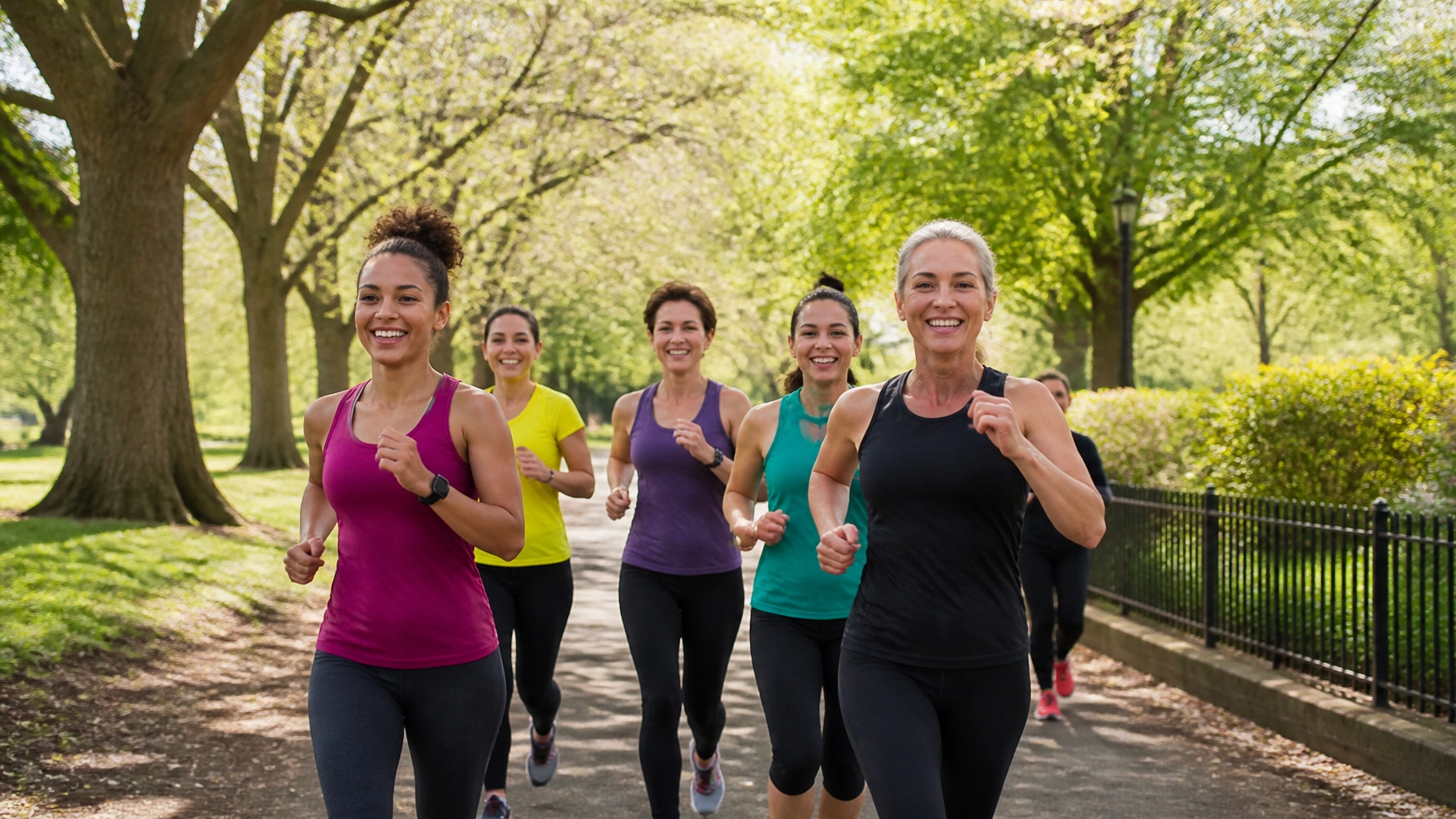
The architecture of this success is built on the ‘Run Angel’ system, a volunteer-led programme that ensures the club’s ethos remains consistent as it scales. These volunteers are not necessarily the fastest runners; rather, they are individuals trained to foster an environment of support and encouragement. Every Sunday, across dozens of UK cities, these groups meet for 30-minute sessions that focus on consistency and camaraderie. By removing the clock and the competitive edge, the club has managed to engage women who previously felt alienated by traditional athletics.
The growth trajectory of the community is a testament to the power of digital connectivity when paired with real-world action. While the platform uses technology to organise and inspire, the core product is the physical presence of women on the streets, reclaiming public spaces and supporting one another. The transition to 250,000 members was not achieved through aggressive marketing but through word-of-mouth and the visible success of its participants. In Bristol, where it all began, the presence of the club is a staple of the local landscape, but that same spirit has now been replicated in cities from Glasgow to Brighton.
The rebranding to ‘This Woman Runs’ was a strategic pivot designed to ensure no woman felt excluded by the club’s name. As the community matured, it became clear that the ‘mum’ label, while powerful, was too narrow for the diverse demographic joining the ranks. Grandmothers, students, and professionals without children were all seeking the same thing: a safe, supportive environment to move their bodies. This expansion has allowed the organisation to tackle a broader range of issues, from the gender play gap to the safety of women running in urban environments at night.
Redefining the Female Sporting Experience
Mainstream sports media often focuses on the elite: the record-breakers and the gold-medallists. However, the true story of British sport in the 2020s is found in the thousands of women who are finding their feet on damp Sunday mornings. This movement challenges the historical narrative that sport is about winning. Instead, it frames physical activity as a fundamental right and a tool for mental health. For many members, the club provides a rare window of ‘me-time’ in lives dominated by work and caregiving responsibilities.
The data surrounding women’s participation in sport has long highlighted a significant drop-off in activity levels during adulthood. This is often attributed to a lack of confidence and the intimidation factor of traditional gyms or competitive clubs. By creating a ‘zero-pressure’ entry point, Bound has successfully bridged this gap. The philosophy is simple: if you can walk for 30 minutes, you can join. This low barrier to entry is the secret to the club’s astronomical growth. It doesn't ask women to change who they are; it simply asks them to show up.
Moreover, the impact extends beyond the physical. The social bonds formed during these runs act as a critical support network. In an era where loneliness is described as a modern epidemic, the club provides a consistent, reliable community. Members report that the conversations had while running are as vital as the exercise itself. It is a space where problems are shared and solutions are found, all while the miles tick by unnoticed. This holistic approach to health is what sets the organisation apart from purely fitness-focused apps or commercial gyms.
Bridging the Gap for Inclusive Fitness
As the club looks to the future, the challenge lies in maintaining the intimate, local feel of the groups while managing a quarter of a million members. The OBE awarded to Mel Bound is a signal that the government and sporting authorities are beginning to take these grassroots movements seriously. It marks a shift in how ‘success’ in sport is measured, moving away from medals and toward the number of people living active, connected lives. The influence of the club is also being felt in policy circles, with Bound serving as a Non-Executive Director for major national campaigns aimed at getting the country moving.
The inclusive nature of the club also means addressing the specific barriers faced by women from diverse backgrounds. Whether it is providing safe routes in well-lit areas or ensuring that the imagery used by the organisation reflects the true diversity of the UK, the commitment to accessibility is absolute. The goal is to ensure that no matter a woman’s postcode or background, she has access to a local chapter of the community. This is particularly important in areas where traditional leisure facilities may be lacking or prohibitively expensive.
The story of Mel Bound and the birth of the UK’s largest women’s running club is ultimately a story of the power of one individual to spark a revolution. It proves that there is a massive appetite for community-led, non-competitive sport that prioritises the needs of women. As the organisation continues to expand across more cities and potentially even further afield, its core mission remains unchanged: to create a world where every woman feels she belongs in the world of sport. The 250,000 women currently on the roads of Britain are just the beginning of what looks to be a lasting legacy in the nation’s social and physical history.