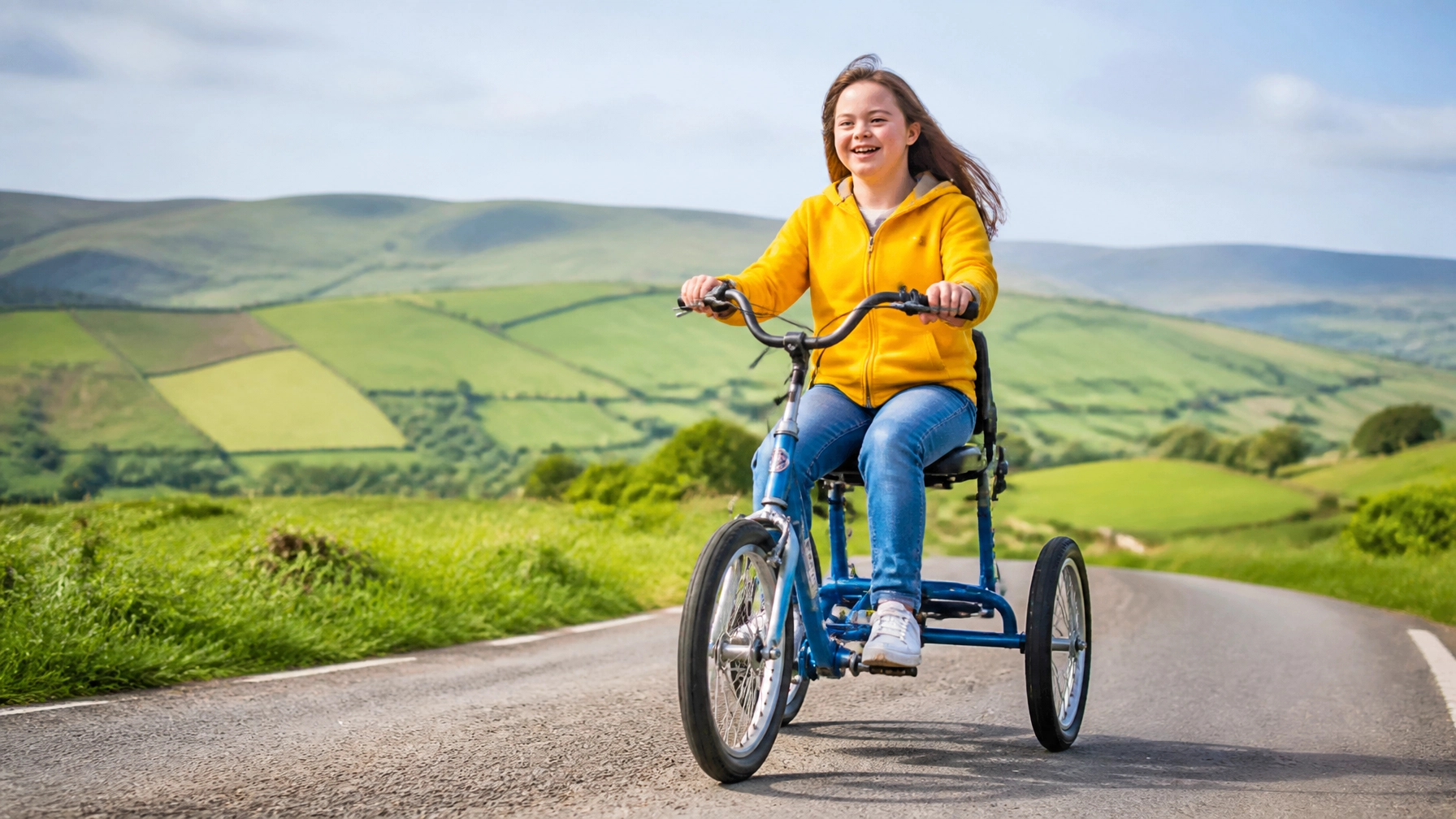
At seventeen years old, most teenagers are navigating the final hurdles of their school years, perhaps worrying about exams or planning their first summer holidays with friends. For Chloe Marriage, however, the horizon looks a little different.
She is currently preparing to mount an adapted tricycle and peddle the entire length of the United Kingdom, a gruelling 1,000-mile journey from Land’s End to John O’Groats. This is a feat that challenges even the most seasoned long-distance cyclists, but for Chloe, who lives with cerebral palsy, it represents something far greater than a mere physical test. It is a bold statement of capability, a fundraiser for disability sport, and a personal quest to redefine what is possible for someone with her condition.
Cerebral palsy is a group of permanent movement disorders that appear in early childhood, caused by abnormal development or damage to the parts of the brain that control movement, balance, and posture. For Chloe, the condition means that every muscle movement requires a conscious effort, and physical fatigue sets in much faster than it would for a non-disabled peer. Yet, the idea of a 1,000-mile trek across the undulating terrain of the British countryside did not deter her. Instead, it became a focal point for her determination. Riding an adapted bike specifically designed to accommodate her physical needs, she is ready to face the steep inclines of Cornwall and the unpredictable winds of the Scottish Highlands.
A Challenge Against the Odds
The journey from the southwestern tip of England to the northeastern point of Scotland is legendary among the cycling community. Often referred to as "LEJOG," the route covers roughly 1,000 miles, depending on the specific paths chosen. It takes cyclists through some of the most beautiful yet punishing landscapes in the country. For Chloe, the preparation has been an intense, multi-month process. Training for such an endurance event involves more than just physical stamina; it requires a complex understanding of how her body reacts to prolonged exertion. Cerebral palsy often brings with it muscle stiffness or "spasticity," which can make repetitive motions like pedalling incredibly taxing over long distances.
Chloe’s adapted bike is a marvel of modern engineering, designed to provide stability and support where her body might struggle. Unlike a standard two-wheeled bicycle, her tricycle offers a lower centre of gravity and custom-fitted seating to ensure her posture remains supported throughout the long hours in the saddle. Every aspect of the machine has been fine-tuned to her measurements, allowing her to harness as much power as possible from her legs while minimising the risk of strain or injury. Despite these modifications, the physical demand remains immense. She isn't just fighting the road; she is constantly working with her own neurology to maintain the rhythm and focus required to keep the wheels turning.
The motivation behind this monumental effort is rooted in her own experiences. Growing up with a disability, Chloe has often seen the barriers that exist in the world of sport and physical activity. She knows firsthand how difficult it can be to find accessible clubs, specialised equipment, and coaches who understand the nuances of coaching athletes with complex needs. By taking on this challenge, she aims to shine a spotlight on these gaps and raise significant funds to ensure that other young people with disabilities have the same opportunities to feel the wind in their hair and the satisfaction of physical achievement.
The Road to Inclusion
One of the primary goals of Chloe’s ride is to support disability sports organisations that provide the infrastructure for inclusive athletics. Sport is often seen as a universal language, yet for many, the entrance fee is much higher than a pair of trainers. Adapted equipment, such as the bike Chloe uses, can cost thousands of pounds, often making it inaccessible for families without external support or charitable grants. By raising funds, Chloe is helping to lower these barriers, ensuring that the next generation of disabled athletes doesn't have to wait until they are teenagers to find a sport that suits them.
The conversation around inclusion in sport has gained momentum in recent years, but there is still a long way to go. Inclusion isn't just about allowing someone to participate; it is about providing the right environment for them to thrive. Chloe’s ride serves as a moving billboard for this cause. As she passes through villages and towns, she isn't just a cyclist passing by; she is a representative of a community that is often overlooked in mainstream sporting narratives. The sheer visibility of a disabled teenager tackling the most famous cycling route in the UK is a powerful tool for changing perceptions.
Throughout her training, Chloe has been supported by a dedicated team of family members and coaches who have watched her progress from short local rides to multi-hour endurance sessions. The logistics of the trip are just as daunting as the physical aspect. A support vehicle will follow her, carrying spare parts, medical supplies, and the necessary nutrition to keep her energy levels high. The route has been carefully mapped to balance the need for safety with the desire to stick as closely as possible to the traditional LEJOG path. Every mile gained will be a testament to the months of sweat and persistence that have led up to this moment.
Fuelled by Determination
As the start date approaches, the excitement is building. Chloe is well aware of the difficulties that lie ahead. There will be days when the rain is relentless and the hills seem never-ending. There will be moments when her muscles ache with a depth of fatigue that makes the idea of another twenty miles feel impossible. However, those who know her best say that Chloe’s mental strength is her greatest asset. She has spent her entire life adapting to a world that wasn't necessarily built for her, and that resilience is what will carry her across the finish line in John O’Groats.
The impact of her journey is already being felt. Stories of her training have inspired other young people with disabilities to look at their own goals with a fresh perspective. If a seventeen-year-old can cycle 1,000 miles across the country, perhaps the local park run or a swimming gala isn't as out of reach as it once seemed. Chloe’s message is clear: disability does not mean a lack of ambition. It simply means that the path to reaching those ambitions might look a little different.
When Chloe finally reaches the northern coast of Scotland and looks out over the Pentland Firth, she will have accomplished something truly extraordinary. She will have proven that with the right support, the right equipment, and an unwavering sense of purpose, even the most daunting challenges can be conquered. Her 1,000-mile journey is more than just a bike ride; it is a celebration of human spirit, a catalyst for charitable giving, and a profound reminder that we should never underestimate the power of a determined individual. As the pedals turn and the miles fall away, Chloe Marriage is not just moving forward; she is leading the way for an entire community.