In a quiet residential street, where most people are more likely to exchange a hurried nod than a conversation, a bond has formed over a chopping board that is challenging the way we think about modern neighbourhood life. It began with a simple observation through a window and has since blossomed into a culinary partnership that has captured the hearts of thousands. What started as a younger man noticing his elderly neighbour was relying on basic, repetitive meals has transformed into a weekly cooking school, proving that the distance between generations is often no wider than a kitchen counter.
The story centres on a young professional who, after moving into the area, noticed that his neighbour, an eighty-five-year-old widower, was living a life of quiet routine. While the older man was independent and capable, his diet had become a secondary concern, consisting largely of tinned soups and microwavable convenience foods. Recognising that the lack of fresh ingredients was perhaps a symptom of the isolation that often follows the loss of a spouse, the younger man decided to step in, not with a handout, but with an invitation. He didn't just want to provide a meal; he wanted to share the skill of making one.
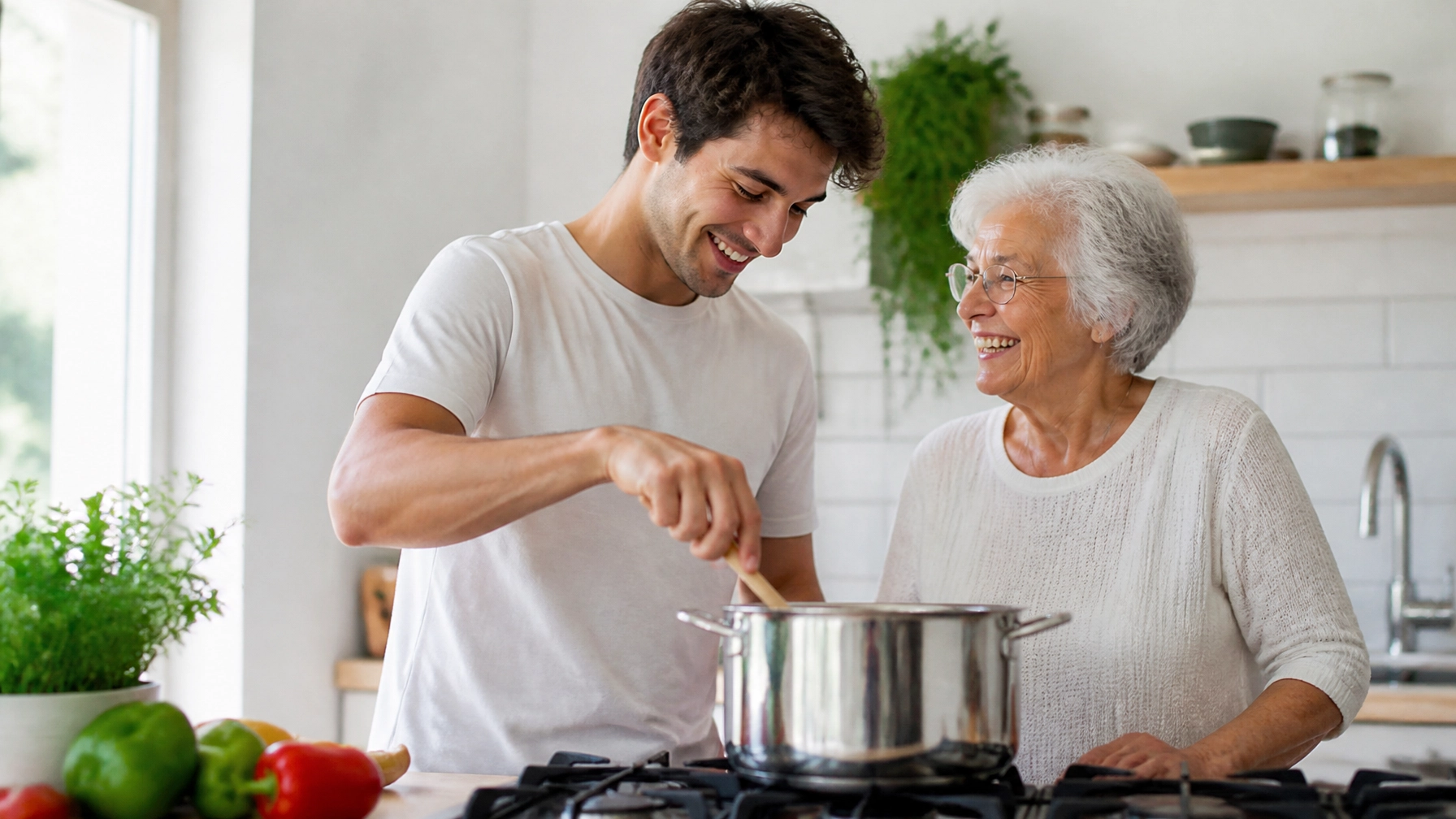
Their first session was tentative. The kitchen, which had seen decades of family dinners but had grown cold and unused in recent years, was suddenly filled with the scent of fresh garlic and olive oil. The younger man arrived with a bag of groceries and a plan to teach a simple pasta dish. For the elderly resident, it was a return to a sensory world he had almost forgotten: the hiss of a pan, the vibrant colour of fresh tomatoes, and the satisfaction of creating something from scratch. This was the beginning of a routine that would see the pair meet every Tuesday evening, turning a routine chore into the highlight of their respective weeks.
Bridging the generational gap through the kitchen
The lessons are far more than a transfer of technical skills. As they work together, the younger man has found himself learning just as much as he is teaching. While he brings modern recipes and nutritional knowledge to the table, his older pupil brings a wealth of life experience, stories of the neighbourhood’s past, and a perspective on patience that is often lost in the fast-paced digital age. They have navigated the complexities of pan-searing fish and the delicate balance of seasoning, but the real progress has been measured in the growing ease of their conversation.
In an era where social isolation amongst the elderly is described by health officials as a growing epidemic, this local initiative highlights a surprisingly simple solution. It bypasses the formal structures of social care and instead relies on the organic development of community spirit. The act of teaching someone to cook is an intimate form of mentorship; it requires trust, patience, and a willingness to make mistakes together. For the elderly neighbour, the kitchen has moved from being a place of functional necessity to a site of creative expression and social connection.
The impact of these sessions has extended beyond the walls of the apartment. As the story of their friendship began to circulate amongst friends and family, it sparked a wider conversation about the role of the individual in supporting their community. It serves as a reminder that meaningful change does not always require large-scale investment or government intervention. Sometimes, it simply requires a spare hour, a bag of vegetables, and the courage to knock on a neighbour’s door. The "students" in this scenario are not just learning how to roast a chicken; they are relearning how to be part of a community.
Nutritious meals and the fight against loneliness
The physical health benefits of this arrangement are undeniable. Shifting away from highly processed, sodium-rich convenience foods toward fresh produce has provided a visible boost to the elderly man’s energy levels. However, the psychological benefits are arguably even more significant. Loneliness has been documented to have the same impact on mortality as smoking fifteen cigarettes a day, and for many seniors, the dinner hour is the loneliest time of the day. By sharing that time, the younger neighbour has effectively dismantled the wall of silence that often surrounds those living alone.
During their time together, they have explored a variety of cuisines, from traditional British roasts to more adventurous Mediterranean salads. Each dish represents a victory over the stagnation that can set in during the later years of life. The older man, who initially claimed he was "too old to learn new tricks," now takes pride in showing off his knife skills and understanding the "why" behind certain culinary techniques. This sense of agency and achievement is vital for maintaining cognitive health and a positive outlook on life.
The lessons have also provided a safety net. By spending several hours together each week, the younger man is able to subtly monitor his neighbour's wellbeing. He notices if the house is being kept warm, if there are any signs of illness, or if the older man seems particularly down. This informal caregiving is a vital component of a resilient society, ensuring that the most vulnerable members are seen and heard rather than disappearing into the background of a busy city.
Building a blueprint for community connection
As word of this unique arrangement has spread, many are looking at it as a potential blueprint for others to follow. In cities across the country, there is a profound disconnect between the generations, with young professionals often living in the same buildings as long-term elderly residents without ever speaking. This story proves that the barriers of age and background can be dissolved with relative ease when there is a shared activity to focus on. Food is the ultimate universal language, providing a neutral ground where both parties can contribute and feel valued.
The success of these cooking lessons has prompted local community groups to consider how they might facilitate similar "neighbourhood swaps." The idea is to match individuals with complementary skills: be it cooking, gardening, or basic technology training: to foster intergenerational friendships. It moves away from the traditional model of "volunteering" toward a more balanced "partnership," where both individuals gain something meaningful from the exchange. It is a transition from charity to true friendship.
For the two men at the heart of this story, the future looks bright and well-fed. They have moved past the initial curriculum and are now experimenting with their own fusion recipes, often inviting other neighbours to join them for the final meal. The kitchen remains the heart of the home, but it has now become the heart of the street as well. Their story is a powerful testament to the fact that while we may live in an increasingly digital world, the most profound connections are still made in the most traditional of ways: over a hot meal and good company.
The journey of these two strangers serves as a poignant reminder that we all have something to offer. Whether it is the knowledge of how to make a perfect roux or simply the willingness to listen, these small acts of kindness are the ingredients for a stronger, more compassionate society. As the younger man prepares for next Tuesday’s lesson, and the older man tidies his counter in anticipation, they are not just preparing a recipe; they are sustaining a friendship that has changed both of their lives for the better. This is the real power of community in action: one meal, one conversation, and one neighbour at a time.