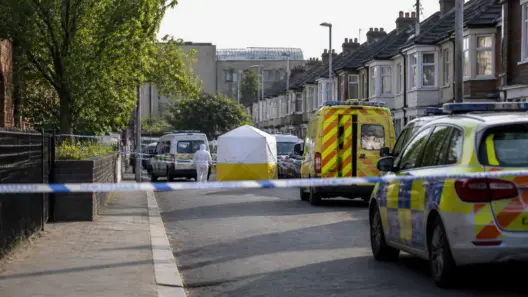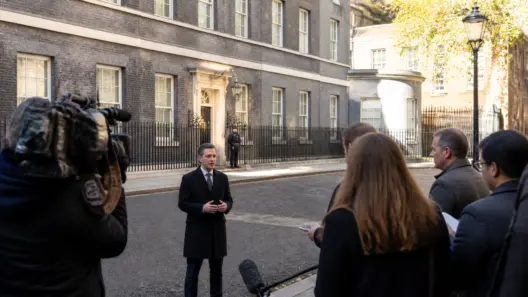










The murder of Henry Nowak has transitioned from a localized tragedy in the heart of Southampton to a national flashpoint, exposing deep-seated fractures within the British policing system. At the centre of this escalating debate is Kemi Badenoch, the Conservative leader, who has formally demanded an urgent and comprehensive review into the police response following the fatal stabbing of the university student. The case, which has already sparked violent unrest and international political commentary, reached a fever pitch following the release of harrowing body-worn camera footage that captured the final moments of Nowak's life.
In December 2025, Henry Nowak, a university student in his early twenties, was stabbed to death by Vikram Digwa. While Digwa has since been sentenced to life imprisonment with a minimum term of 21 years, the legal resolution of the murder has done little to quell the public outcry. Instead, the focus has shifted sharply toward the conduct of the Hampshire Constabulary officers who first arrived at the scene. The footage, played during Digwa's sentencing hearing, revealed a sequence of events that many have described as a catastrophic failure of duty and basic human empathy.
As Nowak lay on the pavement, struggling for breath and repeatedly telling officers he had been stabbed, the response he received was not medical aid, but suspicion. Officers were recorded questioning the validity of his claims, with one officer heard saying, "I don’t think you have, mate." Rather than treating Nowak as a victim in urgent need of trauma care, the officers proceeded to handcuff him. This decision to restrain a dying man, while his killer was still at large, has become the symbol of a policing culture that critics argue has lost its way, prioritising procedural caution and predetermined biases over the immediate preservation of life.
Push for transparency and accountability
The demand for a rapid review, spearheaded by Kemi Badenoch, is not merely a call for a post-mortem of a single incident but a challenge to the entire framework of modern police training. Following a private meeting with the Nowak family, Badenoch expressed her profound concern over the erosion of public trust. She articulated a sentiment held by many: that the police response was influenced by a "nonsense" training regime implemented in the wake of the Black Lives Matter movement. According to Badenoch, this training has forced officers to view every interaction through the lens of race and identity, potentially leading to the very "two-tier policing" that the government has struggled to define or deny.
Badenoch’s intervention is a direct assault on the Diversity, Equity, and Inclusion (DEI) initiatives that have become staples of public sector training. She argued that these policies have inadvertently taught officers to look at the colour of a person's skin when deciding how to treat them, undermining the fundamental principle of race-blind policing. By calling for an investigation into whether these specific training programmes contributed to the dismissive treatment of Henry Nowak, Badenoch is positioning herself as a champion of a more traditional, impartial model of law enforcement.
The political fallout has been swift and broad. While the Labour government has officially rejected the notion of systemic "two-tier policing," Prime Minister Keir Starmer has acknowledged the "difficult questions" raised by the case and welcomed the involvement of the Independent Office for Police Conduct (IOPC). However, the opposition remains unconvinced that a standard IOPC investigation will go deep enough into the ideological roots of the failure. Shadow Home Secretary Chris Philp echoed these concerns in Parliament, suggesting that officers appeared more preoccupied with avoiding accusations of racism than with the life-threatening injuries of a young man bleeding out on the street.
Systemic failures within the investigation process
The scope of the proposed review must address the procedural vacuum that allowed such a response to occur. The "Nowak investigation" now refers not just to the hunt for his killer, but to the internal audit of Hampshire Constabulary’s operational standards. There are growing questions about why the basic protocols for responding to a stabbing: which prioritise immediate first aid and the application of pressure to wounds: were seemingly abandoned in favour of a confrontational interrogation of the victim.
This systemic failure is further complicated by the atmosphere of social unrest that has gripped Southampton. In the days following the sentencing and the release of the footage, the city has been the site of significant disorder. Protests outside Southampton Central Police Station, initially peaceful, escalated into violent clashes as rioters pelted officers with bricks, bottles, and debris. While these riots have been condemned by all sides of the political spectrum, they underscore a dangerous level of community volatility. The presence of high-profile activists, including Tommy Robinson and Laurence Fox, has added another layer of complexity, with critics accusing them of hijacking a family’s grief to further a specific political agenda.
The situation has also been exacerbated by a wave of online misinformation. In one instance, a Hampshire officer was falsely identified on social media as one of the individuals involved in the Nowak case. This led to direct death threats, forcing the officer and his family to relocate for their own safety. This highlights the double-edged sword of the digital age: while body-cam footage provides essential transparency, the vacuum of official information can be filled by dangerous falsehoods that put innocent lives at risk. A comprehensive review must therefore also examine how the police communicate with the public during ongoing investigations to prevent such escalations.
Restoring public trust in the justice system
The international dimension of the case has brought even more pressure to bear on the British government. US Senator JD Vance recently described the Henry Nowak case as a "demonstrable example of structural two-tier policing" and "structural anti-white racism." While Downing Street has hit back at these comments, accusing foreign politicians of stirring up division, the fact that a domestic policing incident has reached the halls of the US Capitol indicates the scale of the reputational damage to the UK’s justice system.
To restore trust, the National Police Chiefs’ Council (NPCC) has announced a review of its "Race Action Plan." The intent is to ensure that the guidance provided to officers is consistent with equal treatment under the law, rather than being perceived as a mandate for differential treatment based on the background of the victim or the suspect. This is a critical step, but for the Nowak family and their supporters, it may feel like too little, too late. The family has been vocal about their belief that the police failed Henry at every turn, and their quest for justice now extends beyond the conviction of Vikram Digwa to a total overhaul of the system that allowed their son to be handcuffed while he was dying.
The path forward requires more than just political rhetoric; it requires a fundamental shift back to the core principles of the Peelian model of policing, where the police are the public and the public are the police. The investigation into the circumstances surrounding Henry Nowak’s death must be transparent, exhaustive, and willing to confront uncomfortable truths about the impact of modern training on officer intuition and empathy. Only through a rigorous and independent review can the authorities hope to bridge the divide that has opened between the law and the communities it is sworn to protect. For Kemi Badenoch and the Conservative Party, this case is the ultimate litmus test for whether the British state can still deliver impartial justice for all its citizens, regardless of the political or social climate of the day.