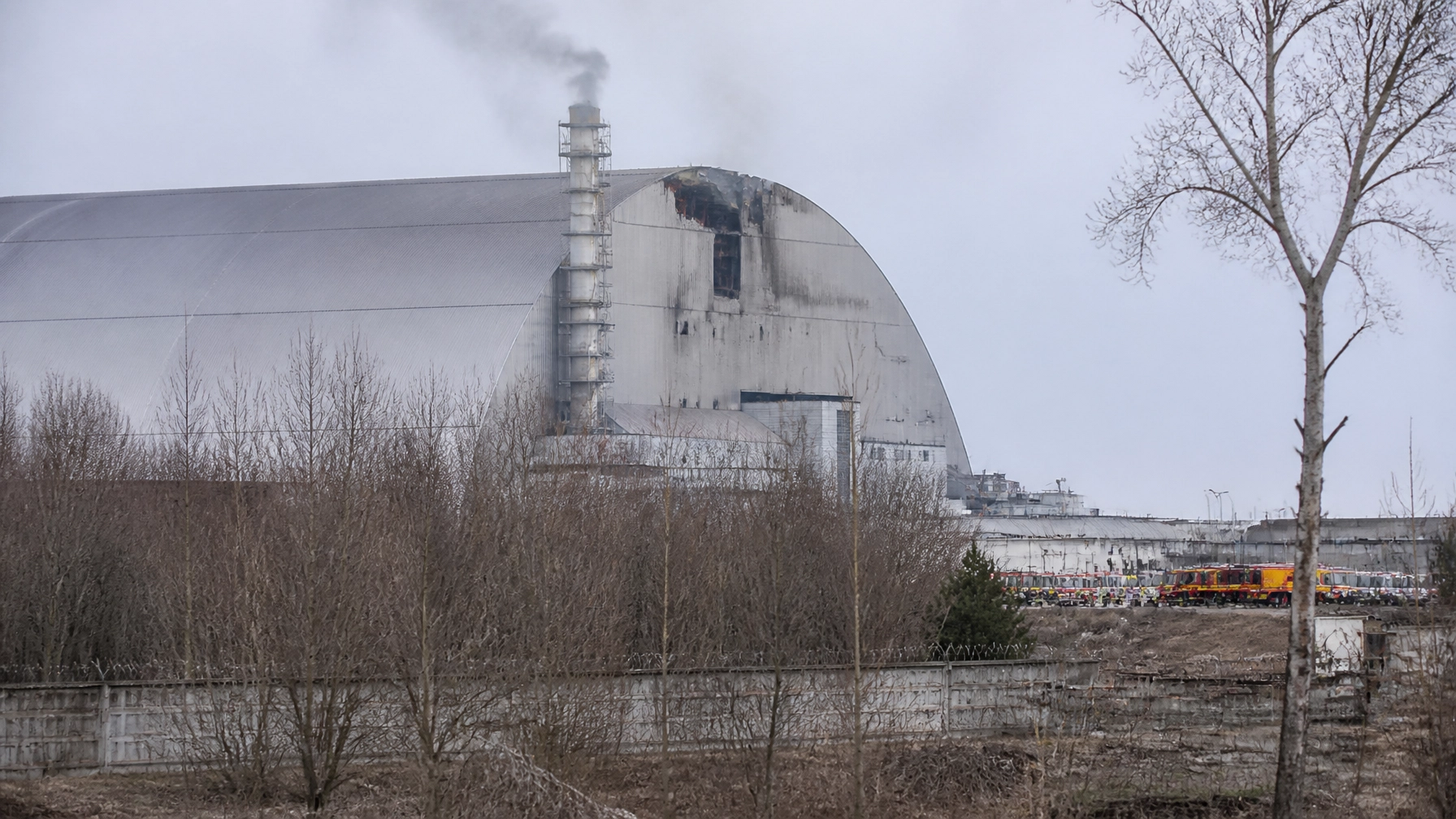
A Russian "Shahed" drone has struck a building at the Centralized Spent Nuclear Fuel Storage Facility in the Chernobyl exclusion zone, marking a significant escalation in the ongoing conflict's proximity to sensitive nuclear infrastructure. The strike, which occurred in the early hours of Monday, targeted a facility situated approximately 15 kilometres from the main Chernobyl nuclear power plant, leading to immediate fears of a potential radiological release. While Ukrainian emergency services were able to extinguish a fire caused by the impact, the proximity of the explosion to stored nuclear waste has reignited international concerns regarding the safety of atomic sites in active war zones.
Monitoring stations across the exclusion zone and the wider Kyiv region were placed on high alert immediately following the blast. Preliminary data from the State Nuclear Regulatory Inspectorate and international monitoring bodies confirm that background radiation levels remain within normal parameters. There has been no detected leakage of radioactive isotopes, and the primary containment structures for the spent fuel appear to have remained intact despite the damage to the peripheral building. However, officials have described the incident as a "direct provocation" that bypasses established international norms regarding the protection of nuclear sites.
The facility in question is a critical piece of infrastructure, designed to store used nuclear fuel from several of the country’s power plants. Unlike the older cooling ponds at the main Chernobyl site, this centralized facility is a more modern installation, yet it was never designed to withstand direct kinetic impact from military-grade loitering munitions. The strike hit a structure used for processing and technical support, narrowly missing the main storage casks which house highly radioactive material. The psychological impact of an explosion so close to the site of the 1986 disaster has resonated globally, serving as a stark reminder of the fragile state of nuclear security in Eastern Europe.
The Security Breach at the Exclusion Zone
The exclusion zone, a 30-kilometre radius of contaminated land that has been largely uninhabited since the 1986 meltdown, has become an unlikely front line in the current conflict. This latest drone strike highlights the persistent vulnerability of the area, which was previously occupied by ground forces during the early stages of the 2022 invasion. Since the withdrawal of those forces, the zone has been monitored by a combination of military patrols and automated sensors, but the arrival of long-range drones has changed the defensive calculus. The drone used in this attack is believed to have been part of a larger wave of munitions launched from across the border, specifically programmed to navigate toward sensitive coordinates.
Local defence analysts suggest that the targeting of the fuel storage site was not accidental. By hitting the infrastructure surrounding the fuel casks, the strike demonstrates a capability to threaten nuclear stability without immediately triggering a catastrophic release. This "nuclear brinkmanship" places immense pressure on the technicians and security personnel who maintain the site under incredibly stressful conditions. The facility's staff, many of whom have worked through both the occupation and the subsequent shelling of the energy grid, now face the task of assessing structural damage while remaining vigilant for follow-up attacks.
The physical damage to the technical building is reported to be substantial, with roof sections collapsed and significant fire damage to the interior. Equipment used for the monitoring and transport of fuel containers was located within the affected area. Although the primary safety systems are automated and decentralised, the loss of this support building complicates the logistical operations of the site. Engineers are currently working to restore full monitoring capabilities to ensure that any delayed structural failures or slow leaks are detected instantly.
International Response and Nuclear Safety Protocols
The International Atomic Energy Agency (IAEA) has issued a stern warning following the strike, with Director General Rafael Grossi describing the situation as "deeply concerning." The agency, which maintains a presence at several nuclear sites across the country, has been advocating for a permanent "safety and security zone" around all nuclear facilities to prevent exactly this type of incident. Grossi confirmed that a team of experts would be dispatched to the Chernobyl exclusion zone to conduct an independent assessment of the damage and to verify the radiation data provided by local authorities.
According to the IAEA, any attack on a nuclear facility: regardless of whether it results in an immediate release of radiation: is a violation of the "seven indispensable pillars" of nuclear safety and security. These pillars include the physical integrity of the facilities, the functionality of safety systems, and the ability of staff to perform their duties without undue pressure. The strike on the spent fuel facility is seen as a direct hit against these principles. The international community is now being urged to reconsider the enforcement of no-fly zones or more robust air defence systems specifically dedicated to protecting nuclear assets.
The strike has also drawn condemnation from the highest levels of the Ukrainian government. President Volodymyr Zelenskyy addressed the incident in a public statement, describing the attack as an act of "despicable" insolence that exceeds even the previous height of tensions. He emphasised that the world cannot afford to be complacent when it comes to nuclear infrastructure, noting that a single miscalculation or a stray fragment could lead to a disaster that knows no national borders. Diplomacy is currently focused on pressuring international bodies to take more decisive action against the targeting of energy and nuclear infrastructure.
The Long-Term Risks of Targeted Nuclear Infrastructure
This incident raises profound questions about the long-term viability of nuclear fuel storage in areas of active conflict. The Centralized Spent Nuclear Fuel Storage Facility was intended to be a secure, decades-long solution for the country's atomic waste, providing independence from external processing services. However, the transformation of the exclusion zone into a potential target for drone warfare has complicated this mission. The "Shahed" drones, while relatively slow, are difficult to intercept when launched in swarms, and their low cost makes them an effective tool for harassing high-value infrastructure.
The environmental implications of a major strike on the storage facility would be catastrophic, not just for the local area but for much of the continent. The spent fuel stored there remains thermally hot and highly radioactive for thousands of years. While the dry storage casks are designed to be incredibly robust, a sustained or precision attack using larger warheads could potentially breach their shielding. Even a non-radiological fire at such a site, as seen in this latest strike, poses risks; the smoke and debris from burning industrial materials in a contaminated zone can carry legacy radioactive particles from the 1986 disaster back into the atmosphere.
As the conflict continues, the protection of the Chernobyl site remains a logistical and military priority. The exclusion zone is more than just a historical monument to a past tragedy; it is a live industrial site with active risks. This latest drone strike serves as a wake-up call to the reality that "safe" radiation levels today provide no guarantee for tomorrow if the targeting of nuclear facilities continues. The focus now shifts to the rapid repair of the facility and the reinforcement of air defences to ensure that the next drone does not find a more vulnerable path to the heart of the world's most sensitive graveyard.