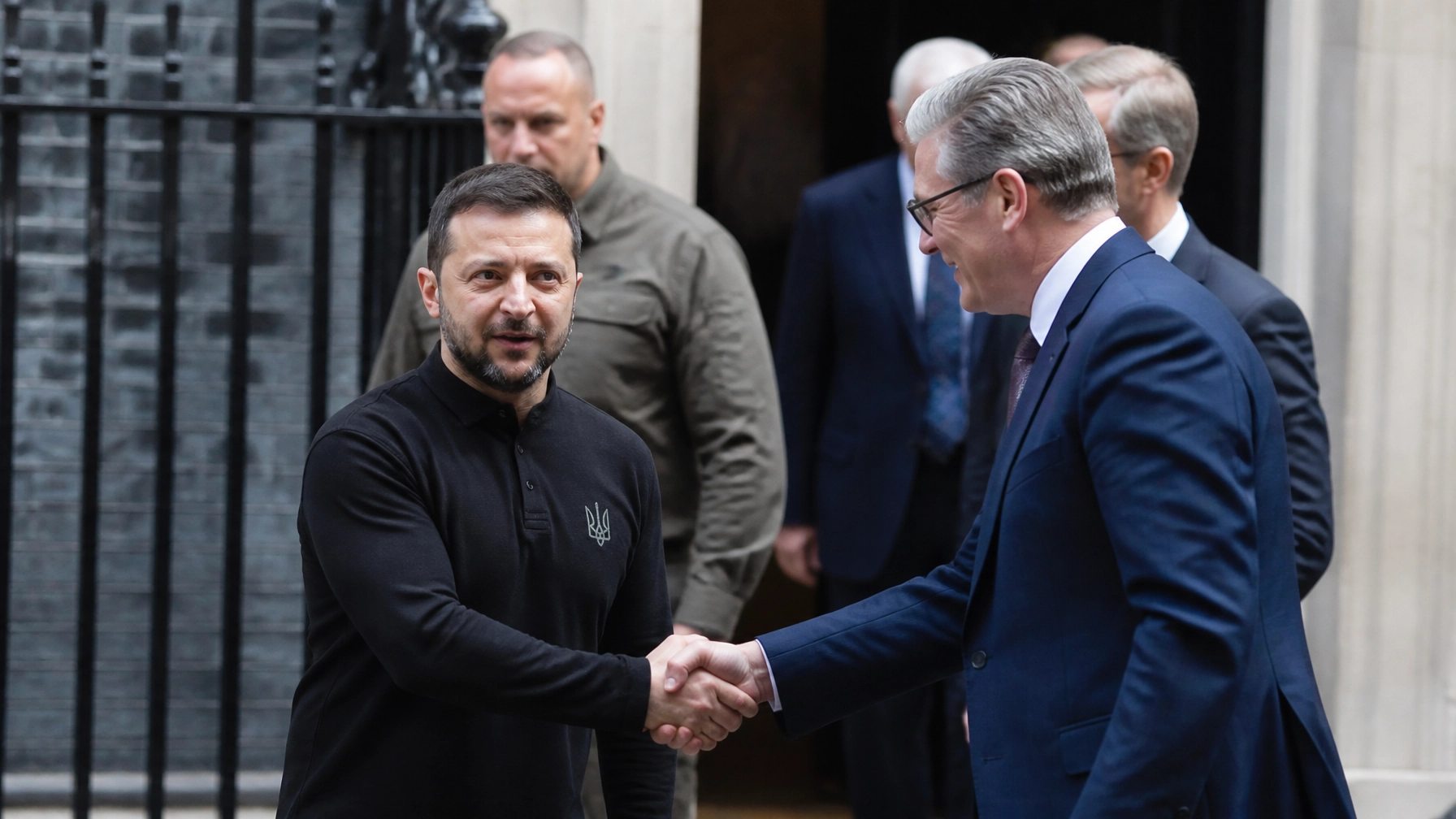
President Volodymyr Zelensky has arrived in London for a series of high-level meetings aimed at securing a definitive peace roadmap for Ukraine.
The visit, which comes at a pivotal moment in the ongoing conflict, marks a significant shift in diplomatic strategy as Kyiv moves from defensive requirements to a proactive negotiation framework. Welcomed by senior British officials, the President’s arrival was met with a sense of cautious optimism, reflecting a broader European desire to see a sustainable resolution to the hostilities that have shaped the continent's security landscape for years.
The atmosphere in the capital was one of intense focus as the motorcade made its way through the historic streets towards central government buildings. This is not merely a courtesy call; it is a calculated effort to align Western allies behind a unified vision for a post-war Europe. For the British government, the hosting of these talks reinforces its position as a key mediator and a primary supporter of Ukrainian sovereignty. The discussions are expected to cover not only the immediate tactical needs of the Ukrainian military but, more crucially, the long-term diplomatic concessions and security guarantees required to bring all parties to the table.
Inside the ornate halls of the meeting venue, the focus remained squarely on the future. Sources close to the discussions suggest that the Ukrainian delegation has brought a refreshed ten-point peace plan, one that emphasizes economic reconstruction and the restoration of international law. The positive reception of these points by the British leadership suggests a growing consensus that the time for a breakthrough is approaching. As the day progressed, the initial formalities gave way to rigorous, detailed planning sessions, with both sides expressing a commitment to finding a path that ensures lasting stability rather than a temporary ceasefire.
A New Chapter in Strategic Diplomacy
The shift in tone during this visit has been palpable. Where previous meetings often focused on the urgent procurement of hardware, the current dialogue is centred on the architecture of peace. This transition indicates a maturity in the diplomatic relationship between Ukraine and its closest allies. The London meetings serve as a testing ground for ideas that will likely be presented at the next global summit. By engaging directly with British leadership, President Zelensky is ensuring that the UK’s influential voice remains a cornerstone of the international coalition. The emphasis is on building a robust framework that can withstand the pressures of domestic politics in various allied nations, ensuring that the support for a peaceful resolution remains steadfast.
Central to this new chapter is the concept of 'peace through strength'. The Ukrainian delegation has been clear that any diplomatic overture must be backed by a credible security apparatus. This has led to detailed discussions regarding the future of the Ukrainian armed forces and their integration into the wider European security fold. The mood in the meeting rooms has been described as constructive, with a clear focus on the 'how' rather than just the 'why'. There is a shared understanding that a fragmented peace is no peace at all, and that the London talks are a critical step in weaving together the various threads of international support into a coherent and durable strategy.
Furthermore, the economic dimension of the peace push cannot be understated. London, as a global financial hub, plays a vital role in the plans for Ukraine’s reconstruction. The discussions have touched upon the creation of international investment funds and the legal frameworks necessary to attract private capital back into the region. By framing peace as a prerequisite for economic revival, the delegates are appealing to the long-term interests of the global community. The positive feedback from the City and from government departments suggests that the blueprint being developed in London could serve as the standard for international recovery efforts in the years to come.
Securing a Framework for Lasting Stability
The second phase of the London talks shifted towards the specific mechanisms of a ceasefire and the subsequent transition to a formal peace treaty. This is where the diplomacy gets most intricate, involving detailed maps, security corridors, and the role of international monitors. The British side has offered its extensive expertise in conflict resolution and peacekeeping, providing a valuable resource for the Ukrainian team. The goal is to create a set of conditions that are both ambitious and achievable, providing a clear path for all stakeholders to follow. The positivity radiating from these sessions stems from a shared belief that the current proposal is the most comprehensive to date.
Security guarantees remain the most significant hurdle, yet the London meetings have seen progress in defining what these look like in a modern context. Rather than relying solely on traditional alliances, the proposed framework explores a multi-layered approach involving intelligence sharing, rapid reaction capabilities, and technological cooperation. This forward-looking stance has resonated well with the British hosts, who are keen to see a security model that reflects the realities of 21st-century warfare. The ability of President Zelensky to articulate this vision has been a key factor in the successful progress of the day’s agenda, demonstrating his evolution from a wartime leader to a statesman of peace.
Moreover, the discussions have also addressed the humanitarian aspects of the peace process. This includes the return of displaced persons, the exchange of prisoners, and the restoration of essential services in affected areas. The commitment shown by both sides to prioritise these human elements has added a moral weight to the diplomatic proceedings. It is not just about lines on a map; it is about the lives of millions of people. The London meetings have highlighted that a successful peace roadmap must be holistic, addressing the social and emotional scars of the conflict alongside the political and military ones. This comprehensive approach is what sets the current initiative apart from previous attempts.
The Road Ahead and Global Implications
As the London summit concludes, the focus now shifts to how these proposals will be received on the wider international stage. The 'London Accord', as some are already calling the preliminary findings, will be shared with other European capitals and across the Atlantic. The positive momentum generated here is intended to act as a catalyst for other nations to step up their diplomatic efforts. The British government has pledged to use its diplomatic network to champion the framework, ensuring that the progress made today is not lost in the coming weeks. The sense of purpose leaving the meetings is clear: the groundwork has been laid, and the path to peace is now visible.
The global implications of a successful peace process initiated in London are profound. A resolution to the conflict would not only bring relief to Ukraine but would also stabilise global energy and food markets, which have been volatile for several years. It would mark a triumph for international diplomacy and a reaffirmation of the rules-based order. For the people of the UK and the wider world, the news coming out of London today offers a much-needed glimmer of hope. It suggests that even the most entrenched conflicts can be moved towards a resolution when there is a clear vision and a united front among allies.
In the coming days, the details of the discussions will be further refined by technical teams, but the high-level agreement on the direction of travel is a major win for President Zelensky’s diplomatic drive. The visit to London has achieved its primary goal: to re-energise the international community and provide a concrete, positive plan for the future. As the President departs, he does so with the knowledge that the UK remains a steadfast partner in the pursuit of a peace that is both just and enduring. The diplomatic drive continues, but after the events in London, the destination feels significantly closer than it did before.