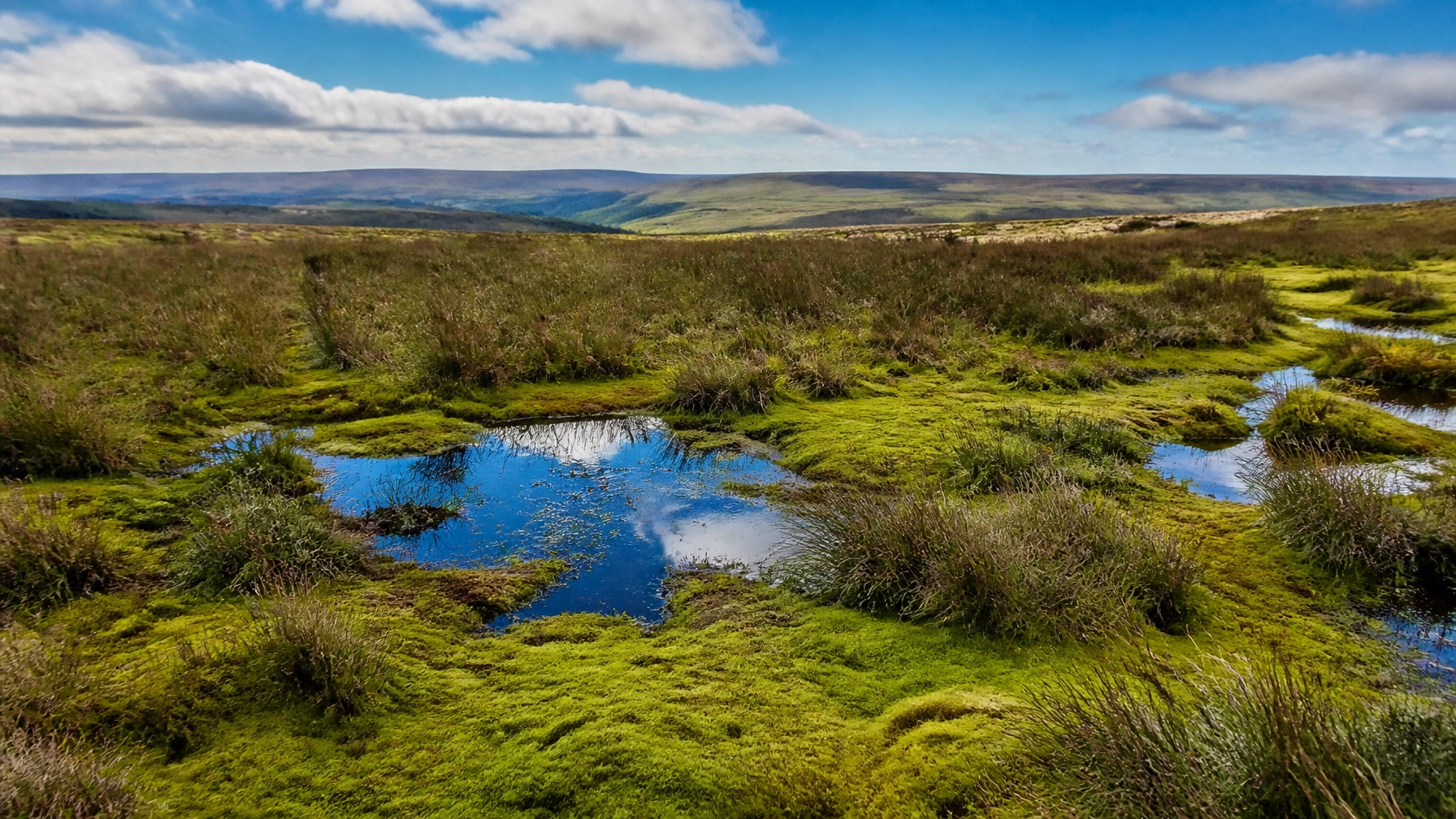
The rugged expanse of the Peak District is undergoing a profound environmental transformation as a major £25 million restoration project begins to bear fruit.
The initiative, known as Moor Resilience 2030, represents a significant investment in the ecological health of the Dark Peak and the Southern Pennines. By focusing on the restoration of degraded blanket bogs, the project aims to reverse decades of environmental decline, turning barren, eroding landscapes back into thriving, carbon-sequestering ecosystems. This large-scale intervention is being delivered through a collaborative partnership involving major regional water companies and conservation specialists, marking a pivotal moment for British upland conservation.
For centuries, the moorlands of Northern England have suffered from the dual pressures of industrial pollution and intensive land management. High levels of atmospheric deposits during the Industrial Revolution killed off sensitive mosses, leaving the peat exposed to the elements. Once the protective layer of vegetation is lost, the peat begins to dry out and wash away, creating deep gullies known as grips. This degradation not only destroys vital habitats but also releases vast quantities of stored carbon into the atmosphere and compromises the quality of raw water entering the region's reservoirs. The current restoration effort seeks to break this cycle of decay by using innovative techniques to stabilise the ground and reintroduce the specialist flora that defines a healthy peatland.
A Landscape Transformed by Investment
The financial backbone of this revival is a multi-million-pound commitment that spans the next five years. This funding provides the resources necessary to operate at a landscape scale, moving beyond small, isolated pockets of restoration to tackle entire hillcrests and valleys. The work is physically demanding and logistically complex, often requiring the use of helicopters to transport materials to remote, inaccessible parts of the National Park. Stone, timber, and peat are used to create thousands of small dams across the moorland. These structures are designed to slow the flow of water, preventing it from scouring the landscape and allowing it to settle in shallow pools.
By "rewetting" the moors, the project creates the specific conditions required for Sphagnum moss to thrive. This moss is the architect of the peatland; as it grows, it absorbs water and creates an acidic environment that prevents organic matter from fully decaying. Over thousands of years, this process creates peat. In the shorter term, the reintroduction of Sphagnum provides an immediate "green carpet" that protects the underlying soil from erosion. The scale of the current project allows for millions of individual moss plugs to be planted by hand, alongside the application of lime, seed, and fertiliser to stabilise the barest areas of peat. This foundational work is essential for the long-term stability of the Peak District’s iconic gritstone plateaus.
The impact of this investment extends beyond the immediate ecological benefits. It supports a specialised workforce of conservationists, contractors, and scientists who are developing world-leading expertise in upland restoration. The data gathered from these sites is used to refine techniques that can be applied to other degraded peatlands across the United Kingdom and beyond. By treating the moorland as a vital piece of national infrastructure, the project acknowledges that the health of the uplands is intrinsically linked to the economic and social well-being of the surrounding lowland communities.
Safeguarding Water and Storing Carbon
One of the primary drivers behind the £25 million investment is the urgent need to protect water resources. The Peak District serves as a massive natural catchment area for millions of people living in the surrounding cities. When peatlands are in a degraded state, heavy rainfall washes "brown water" heavily laden with particulate organic matter into the reservoirs. This requires expensive and energy-intensive treatment processes to remove the sediment and colour before the water is fit for consumption. By restoring the moorlands, the project creates a natural filtration system. Healthy bogs act as a giant sponge, trapping sediment and slowing the movement of water during storm events, which leads to cleaner raw water and reduced treatment costs.
Furthermore, the role of peatlands in climate change mitigation cannot be overstated. Although they cover only a small fraction of the Earth's surface, peatlands store more carbon than all the world's forests combined. However, a damaged peatland does the opposite; it becomes a significant source of greenhouse gas emissions as the exposed carbon oxidises and enters the atmosphere. The work currently being undertaken in the Dark Peak is a direct contribution to the UK's net-zero ambitions. By sealing the peat and encouraging the growth of new moss, the project is effectively "locking in" centuries of stored carbon and enabling the moorland to start sequestering atmospheric carbon once again.
Natural flood management is another critical benefit of the restoration work. In a healthy peatland, the uneven surface of the moss and the presence of numerous small pools significantly increase the "roughness" of the landscape. This creates a natural brake on surface runoff. During periods of intense rainfall, which are becoming more frequent due to shifting climate patterns, the restored moors help to attenuate peak flows. This delay in water reaching the valley floors can reduce the risk of flash flooding in communities downstream, providing a cost-effective and sustainable alternative to traditional hard-engineering flood defences.
Strengthening Local Ecological Resilience
Beyond the practical benefits for water and carbon, the restoration of the Peak District moorlands is a triumph for biodiversity. The Dark Peak is home to a unique array of wildlife that depends on these specialised upland habitats. As the bare peat is covered and the water table is raised, bird species such as the dunlin, golden plover, and curlew are finding better nesting and feeding grounds. These species have seen significant declines across much of their range, making the high-quality habitat provided by the restored moors a vital stronghold for their survival.
The recovery of the vegetation also supports a wider range of invertebrates, which in turn sustain the bird populations. The return of a diverse sward of cotton grasses, heathers, and bilberry creates a complex mosaic of habitats that is far more resilient to environmental shocks than the monocultures often found on degraded land. This ecological diversity is crucial for the long-term health of the National Park, ensuring that the landscape can adapt to future changes in temperature and rainfall. The project also includes measures to control invasive species and manage vegetation to reduce the risk of devastating wildfires, which can destroy decades of restoration work in a matter of hours.
As the Moor Resilience 2030 project progresses, the visual transformation of the Peak District will continue to inspire. The stark, black "hags" of eroding peat are being replaced by a vibrant landscape of greens, purples, and golds. This is a story of hope and renewal, demonstrating that with sustained investment and collaborative effort, it is possible to repair even the most damaged natural environments. The success of the work in the Peak District serves as a blueprint for landscape-scale restoration, proving that protecting our natural assets is not just an environmental necessity, but a sound investment in a more resilient and sustainable future.