A powerful 7.8-magnitude earthquake has struck the southern Philippines, leaving at least four people dead and triggering urgent tsunami warnings across the region.
The seismic event, which occurred late on Monday, centred on the island of Mindanao, sending shockwaves through major coastal cities and causing significant damage to infrastructure. Authorities have confirmed that the tremor was shallow, occurring at a depth of approximately 10 kilometres, which intensified the level of surface shaking and led to the immediate evacuation of thousands of residents from coastal areas.
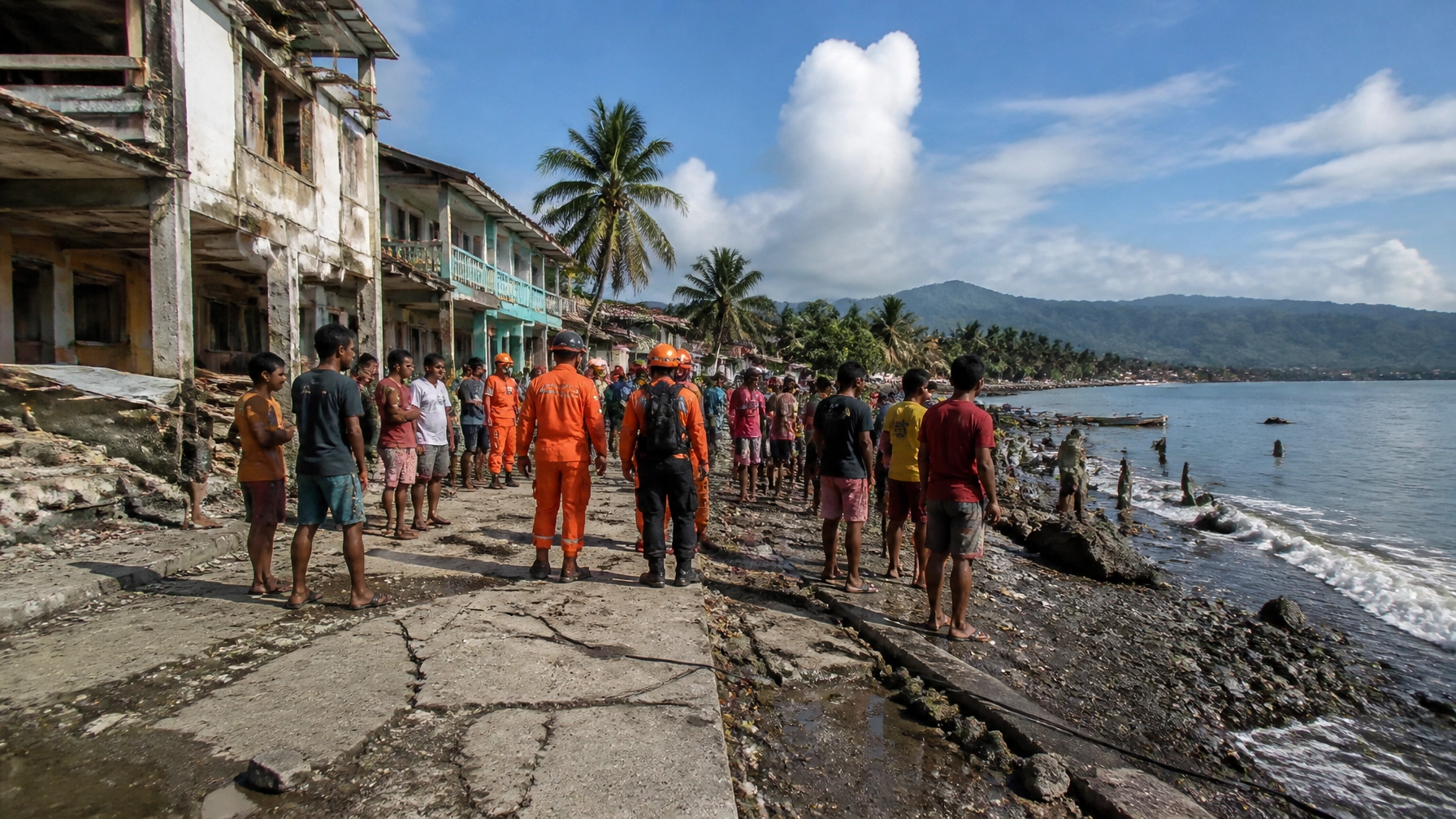
The disaster has once again highlighted the vulnerability of the archipelago, which sits on the Pacific Ring of Fire. In the city of General Santos, reports emerged of collapsed buildings and blocked thoroughfares as emergency services scrambled to reach trapped individuals. Local residents described a scene of panic as the ground began to roll, followed by violent jolts that brought down power lines and cracked road surfaces. The fatalities reported so far include individuals struck by falling debris and one victim of a structure collapse in a residential district. Rescue operations remain ongoing as teams work through the debris in hopes of finding survivors, though the threat of significant aftershocks continues to hamper their efforts.
Immediate Response and the Threat of Coastal Surges
In the immediate aftermath of the quake, the national seismology agency issued a high-level tsunami warning, advising residents in the provinces of Surigao del Sur and Davao Oriental to move to higher ground. The warning cited the potential for "life-threatening" waves that could reach several metres in height. This sparked a mass exodus from seaside villages, with families piling into vehicles or fleeing on foot towards inland hills. The memory of previous devastating tsunamis remains fresh in the minds of the local population, ensuring a rapid, if chaotic, compliance with the evacuation orders.
Coastal monitors reported initial sea level disturbances, though the most catastrophic waves have yet to materialise. Experts suggest that the direction of the fault movement may have mitigated the worst of the potential displacement, but they warned that the danger period could last for several hours. Boats were ordered to stay in deep water, and ports across Mindanao were closed as a precautionary measure. While some residents have begun to cautiously return to their homes as the warnings were downgraded in certain sectors, the government maintains a strict stance on remaining vigilant until all seismic activity subsides. The logistical challenge of managing thousands of displaced people in temporary shelters is now a primary concern for local authorities, who are struggling to provide adequate food and medical supplies.
Infrastructure Damage and the Struggle for Communication
The scale of the physical damage is still being assessed, but early reports indicate that several key bridges and highways have been rendered impassable. In General Santos, a major commercial hub, the damage to a large shopping centre and several government buildings has raised concerns about the structural integrity of older concrete constructions in the region. Images from the scene show deep fissures running through main roads, effectively cutting off some rural communities from emergency aid. Power outages have also been widespread, plunging large parts of Mindanao into darkness and complicating the work of rescue teams operating through the night.
Communication networks were severely disrupted during the peak of the earthquake, leaving many families unable to contact loved ones. While some mobile services have been restored, the bandwidth remains limited, and officials are urging the public to use messaging services rather than voice calls to keep lines open for emergency services. The loss of electricity has also impacted water pumping stations, leading to concerns about the availability of clean drinking water in the coming days. Engineers are currently conducting "stress tests" on dams and power plants across the southern provinces to ensure that no secondary disasters, such as dam failures or major fires, are imminent. The economic impact on the region’s agriculture and fishing industries is expected to be substantial, as many storage facilities and piers have suffered structural failures.
Looking Ahead to Recovery and Regional Stability
As the sun rose over the damaged landscapes of Mindanao, the focus shifted from immediate survival to the long-term recovery of the affected communities. The Philippine government has indicated that it will declare a state of calamity in the hardest-hit areas to facilitate the release of emergency funds. International aid organisations have already begun coordinating with local partners to deliver tents, blankets, and hygiene kits. However, the recurring nature of such events in the Philippines raises difficult questions about urban planning and the enforcement of building codes in earthquake-prone zones.
Geologists have noted that this 7.8-magnitude event is one of the strongest to hit the region in recent years, and it may have shifted the local fault lines in ways that increase the likelihood of future tremors. Community leaders are calling for more robust investment in early warning systems and the construction of more resilient evacuation centres. For many families who have lost their homes, the path to reconstruction will be long and arduous, particularly for those in the informal settlements that were most severely impacted by the shaking. The resilience of the Filipino people is once again being tested, as communities band together to clear rubble and support those who have lost family members. In the coming weeks, the priority will remain on reaching the most isolated villages and ensuring that the health and safety of the displaced population are maintained amidst the ongoing threat of aftershocks.