In a move that further entrenches the geopolitical divide in East Asia, North Korea has issued its most definitive declaration to date regarding its nuclear ambitions.
Kim Yo Jong, the influential sister of leader Kim Jong Un, has publicly vowed that the nation will never surrender its nuclear-armed status. This statement, delivered with the characteristic vitriol of Pyongyang’s state media, signals a calculated rejection of decades of international pressure and confirms that the regime's atomic arsenal is now viewed as a non-negotiable pillar of its national identity.
The announcement follows a series of high-profile visits by Kim Jong Un to various military and industrial sites, including a recently publicised inspection of a facility producing nuclear bomb fuels. The rare glimpse into the North’s nuclear infrastructure was seen by analysts as a deliberate message of technical maturity. By showcasing the machinery used to enrich uranium and expand the country’s stockpile, the leadership in Pyongyang is moving beyond mere rhetorical threats, demonstrating a tangible and growing capability to manufacture high-yield weaponry at an industrial scale.
International observers have noted that this hardline stance arrives at a moment of heightened global instability. As major powers remain focused on conflicts in Europe and the Middle East, North Korea appears to be seizing the opportunity to cement its position as a permanent nuclear state. The refusal to engage in denuclearisation talks is not merely a tactical delay but a strategic shift that seeks to force the international community to accept North Korea as a nuclear peer rather than a rogue state that can be bargained out of its primary deterrent.
A Permanent Nuclear Presence
The shift in North Korean policy has been building for several years, but the latest declarations from Kim Yo Jong represent a formal closing of the door on the era of "complete, verifiable, and irreversible denuclearisation." For the leadership in Pyongyang, the nuclear programme is no longer a bargaining chip to be traded for sanctions relief or diplomatic recognition. Instead, it is the ultimate insurance policy for the Kim dynasty, a lesson drawn from the fates of other regimes that abandoned their weapons programmes only to face Western-led intervention.
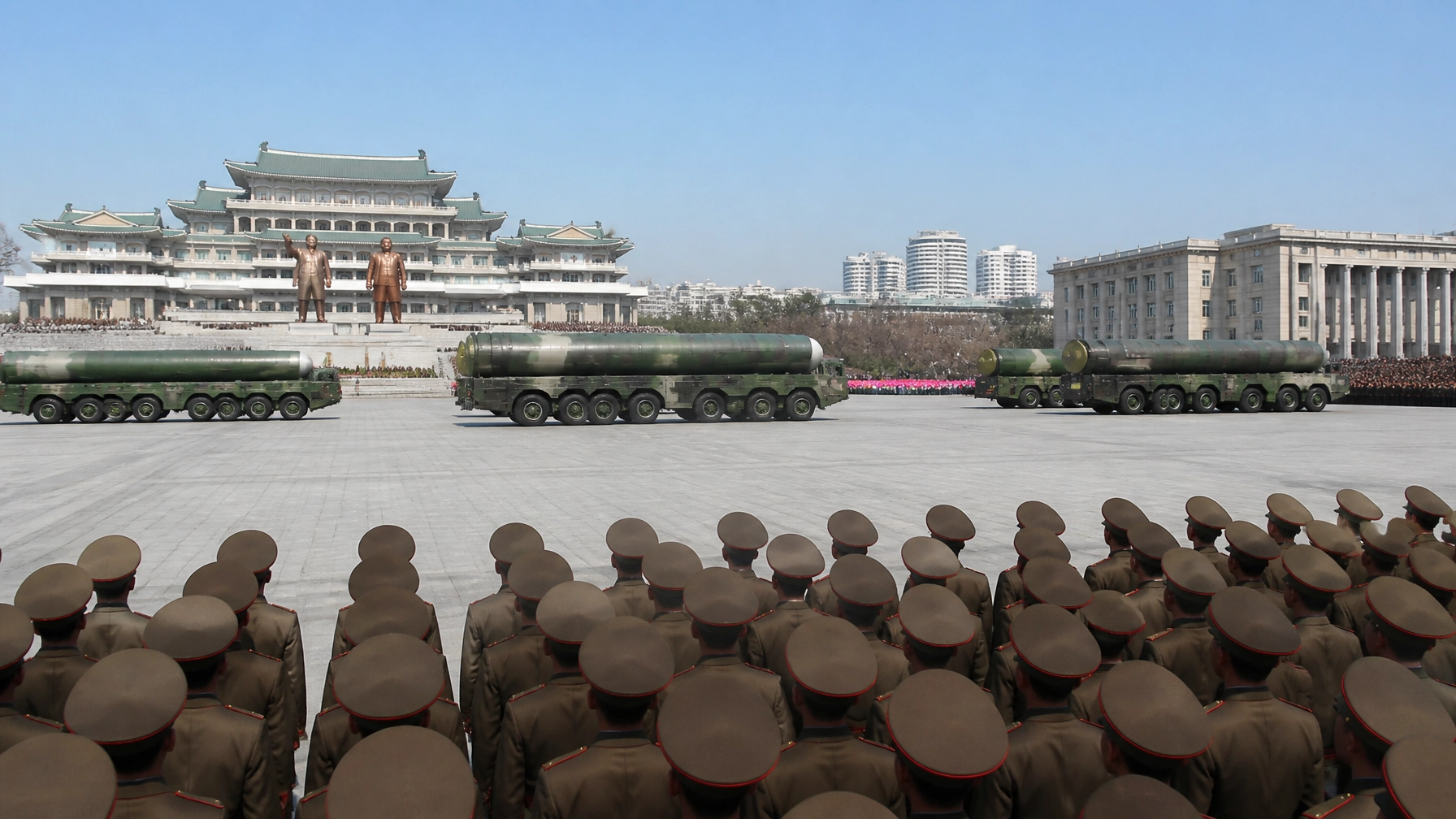
Recent reports from within the secretive state suggest that the expansion of nuclear facilities is proceeding at a rapid pace. The production of fissile material, the "engine room" of the nuclear programme, has been accelerated to meet the demands of a new military doctrine that calls for the mass production of tactical nuclear weapons. These smaller, battlefield-ready warheads are designed to be used against regional targets, such as military bases in South Korea and Japan, significantly lowering the threshold for nuclear employment and complicating the defensive calculations of Western allies.
This transition to a "permanent nuclear presence" is also reflected in the nation's revised constitution. By enshrining its nuclear status in the fundamental law of the land, North Korea has made it legally and politically impossible for any future administration to negotiate away the arsenal without a total collapse of the current political system. This move was intended to send a clear message to the United Kingdom, the United States, and their regional partners: the time for discussing "if" North Korea will denuclearise is over; the international community must now decide how it will live with a nuclear-armed Pyongyang.
The Rhetoric of Resistance
Kim Yo Jong has emerged as the primary mouthpiece for the regime’s most aggressive foreign policy positions. Her latest statements were laced with defiance, characterising the nuclear arsenal as a "sword of justice" that protects the North Korean people from what she described as the hostile policy of imperialist powers. This rhetoric is carefully crafted to foster a siege mentality at home, justifying the immense economic sacrifices required to maintain the military-first policy while the country continues to struggle with chronic food shortages and crumbling infrastructure.
The language used by the regime has become increasingly sophisticated, often turning Western diplomatic terminology on its head. When British and American officials speak of "stability" and "rules-based order," Pyongyang responds by claiming that its nuclear weapons are the only true guarantee of stability in a world where might makes right. This narrative resonates with certain international actors who are sceptical of Western influence, allowing North Korea to find small but significant pockets of diplomatic support that help it bypass the most stringent international sanctions.
Furthermore, the timing of these statements is often synchronised with major political events in the West. By asserting its nuclear dominance now, Pyongyang is attempting to influence the future foreign policy agendas of its adversaries. The message is simple: any attempt to restart diplomatic engagement must begin with the acknowledgement of North Korea’s nuclear reality. This "rhetoric of resistance" serves to demoralise those who hope for a peaceful resolution to the nuclear standoff, replacing hope with the grim reality of a permanent and growing threat that can only be managed, never eliminated.
Global Consequences and Regional Stability
The implications of North Korea’s vow to retain its atomic arsenal extend far beyond the Korean Peninsula. In London, defence experts have warned that the expansion of Pyongyang’s capabilities poses a direct threat to global non-proliferation efforts. If North Korea is allowed to successfully maintain its nuclear status despite unprecedented international sanctions, it may encourage other nations with regional ambitions to pursue their own atomic programmes, leading to a dangerous new era of nuclear proliferation.
For regional neighbours such as South Korea and Japan, the situation is even more pressing. The increase in missile testing and the development of solid-fuel technology: which allows for faster and more covert launches: have forced a rethink of national security strategies. There is growing debate in both Seoul and Tokyo about the reliability of the Western nuclear umbrella. If North Korea can reach the American mainland with an intercontinental ballistic missile, some ask, would the West truly risk San Francisco to save Seoul? This doubt is precisely what Pyongyang intends to sow, hoping to fracture the alliances that have kept the peace in the region since the end of the Korean War.
The response from the international community remains hampered by a lack of unity. While the United Kingdom and its allies continue to call for the strict enforcement of sanctions, other global powers have shown a decreased willingness to pressure the Kim regime. This diplomatic paralysis has provided the space for North Korea to continue its work unabated. As the world watches, the facility for producing nuclear bomb fuels continues to churn, and the missiles remain on their pads, a silent testament to a regime that has chosen to define its future through the power of the atom. The era of defiance has reached a new and more dangerous peak, leaving the global community with fewer options and a much more volatile security landscape.