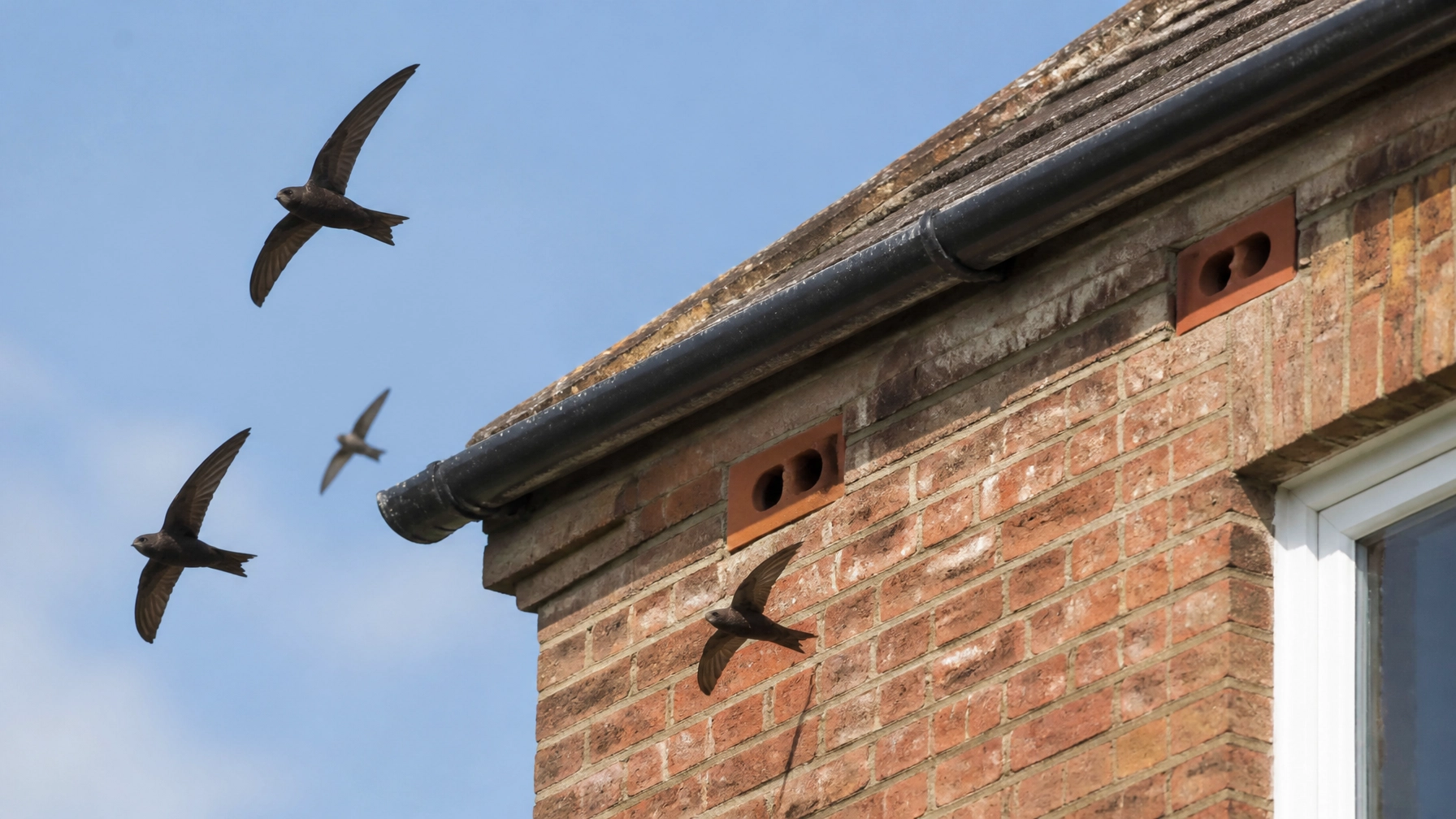
For the first time in more than a decade, the unmistakable silhouette of the common swift has been seen disappearing into specially designed nest bricks on the Isle of Wight. This milestone marks a significant victory for local conservationists who have spent years monitoring the decline of these extraordinary migratory birds. The sight of a swift finally accepting a man-made cavity is not just a local success story; it is a vital sign of hope for a species that has seen its UK population plummet by more than 50 per cent over the last twenty years.
The arrival of the swifts follows an intensive effort to future-proof the island’s architecture. As modern building standards have improved, the nooks and crannies that swifts traditionally relied upon: small gaps under eaves or holes in old masonry: have vanished. By installing "swift bricks" into the fabric of new developments and retrofitting older properties with external boxes, residents and wildlife groups have been attempting to replace these lost homes. For years, many of these boxes remained empty, but the persistence of the local community has finally been rewarded as the first breeding pairs have officially taken up residence.
Swifts are among the most remarkable visitors to British shores. They spend the vast majority of their lives on the wing, eating, sleeping, and even mating while in the air. They only touch the ground to breed, making the availability of safe nesting sites a literal matter of life and death for the continuation of the species. These birds travel thousands of miles from their wintering grounds in Africa, navigating across deserts and seas to return to the exact same nesting spot year after year. When they arrive to find their former home blocked by a new plastic soffit or a fresh layer of pointing, the results are often devastating for the colony.
A Decade of Patience and Planning
The journey to this moment has been one of quiet observation and long-term commitment. On the Isle of Wight, the project began with a handful of volunteers who recognised that the screaming parties of swifts: a characteristic sound of the British summer: were becoming quieter each year. Monitoring efforts revealed that while the birds were returning to the island, they were struggling to find suitable voids in which to lay their eggs. This led to a coordinated campaign to encourage developers and homeowners to view the "swift brick" as an essential component of any building project.
Unlike traditional wooden bird boxes, which can rot or require maintenance, a swift brick is a permanent fixture. It is designed to be built directly into the wall, providing a durable, thermally stable environment that mimics the deep cavities of old stone buildings. For a decade, these bricks were installed across various sites on the island, from private homes in Ventnor to public buildings in Newport. The challenge with swifts is their extreme site fidelity; they are remarkably picky and can be hesitant to explore new, unfamiliar holes.
To speed up the process, some residents used "swift callers": small electronic devices that play the sounds of nesting swifts to attract passing juveniles. Young swifts, known as "prospectors," spend their first few years in the UK looking for potential future homes. By hearing the calls of others, they are more likely to investigate a site. The breakthrough this season suggests that a new generation of birds has finally identified these artificial sites as safe havens. Seeing the birds enter the bricks with nesting material in their beaks is the ultimate confirmation that the plan is working.
The Architectural Gap for Migrating Birds
The decline of the swift is often described as a silent tragedy of the modern housing crisis. As the UK strives to meet ambitious targets for new homes and energy efficiency, the unintentional consequence has been the "sealing up" of our urban environment. Insulation and modern roofing techniques are excellent for reducing carbon footprints, but they are catastrophic for the biodiversity that has lived alongside us for centuries. Swifts, along with bats and house sparrows, have traditionally been "synanthropic" species: animals that benefit from living near humans.
By integrating wildlife-friendly features into the very structure of our buildings, we can bridge the gap between human needs and environmental responsibility. The success on the Isle of Wight demonstrates that when conservationists work alongside local planners, the results can be transformative. It is no longer enough to simply protect existing habitats; we must actively create new ones within our built environment. The cost of a swift brick is negligible in the context of a construction budget, yet its value to the ecosystem is immeasurable.
The Isle of Wight serves as a crucial gateway for many migratory species. Its location off the south coast of England makes it one of the first landfall points for birds crossing the Channel. If the island can provide a network of high-quality nesting sites, it acts as a primary hub for the wider UK population. The data gathered from this project will likely inform similar schemes across the mainland, proving that with enough time and the right infrastructure, even the most sensitive species can adapt to the modern world.
A Future for the Screaming Party
As the summer progresses, the newly settled swifts will be busy raising their chicks. The parents will be seen swooping low over the island’s meadows and gardens, catching thousands of insects every day to feed their hungry brood. This natural pest control is just one of the many benefits these birds bring to our communities. By late August, the adults and their offspring will depart once again for Africa, leaving their Isle of Wight homes empty until next spring.
The success of this year’s nesting season has galvanised local efforts to expand the scheme. There are now plans to ensure that every major new development on the island includes a minimum number of integrated nest bricks. Education programmes are also being rolled out to help homeowners identify if they have swifts nearby and how they can help. The goal is to create a "swift city" atmosphere where these birds are welcomed and protected by the entire community.
The sight of those first swifts entering their new brick homes is a reminder that conservation is often a marathon, not a sprint. It takes years of advocacy, planning, and waiting to see the fruits of such labour. For the people of the Isle of Wight, the return of the swifts is more than just a seasonal event; it is a validation of their hard work and a promise that the sounds of the summer will continue to echo for generations to come. The screaming parties are back, and this time, they have a permanent place to call home.