The sun broke through the clouds over Worcester this week as a dedicated group of volunteers converged on the grounds of Acorns Children’s Hospice. Located on Bath Road, the facility provides essential palliative care and support for children with life-limiting and life-threatening conditions, as well as their families. While the medical and emotional support provided inside the building is of the highest standard, the outdoor spaces often require extra hands to remain the sanctuaries of peace they are intended to be. Recognising this need, a large contingent of volunteers, including local Freemasons, dedicated their time and physical effort to a comprehensive transformation of the hospice gardens, ensuring that the children have a vibrant, sensory-rich environment to explore.
The project began early in the morning, with the garden area buzzing with activity. For many of the volunteers involved, the mission was deeply personal. The gardens at Acorns serve as more than just a decorative backdrop; they are a vital part of the therapeutic process. For children who may spend a significant amount of time indoors or in clinical settings, the ability to sit amongst flowers, feel the texture of different leaves, and hear the rustle of the wind through the trees is a profound sensory experience. The transformation aimed to maximise these benefits by clearing overgrown areas, introducing new planting schemes, and ensuring that every corner of the garden is accessible to children with various mobility needs.
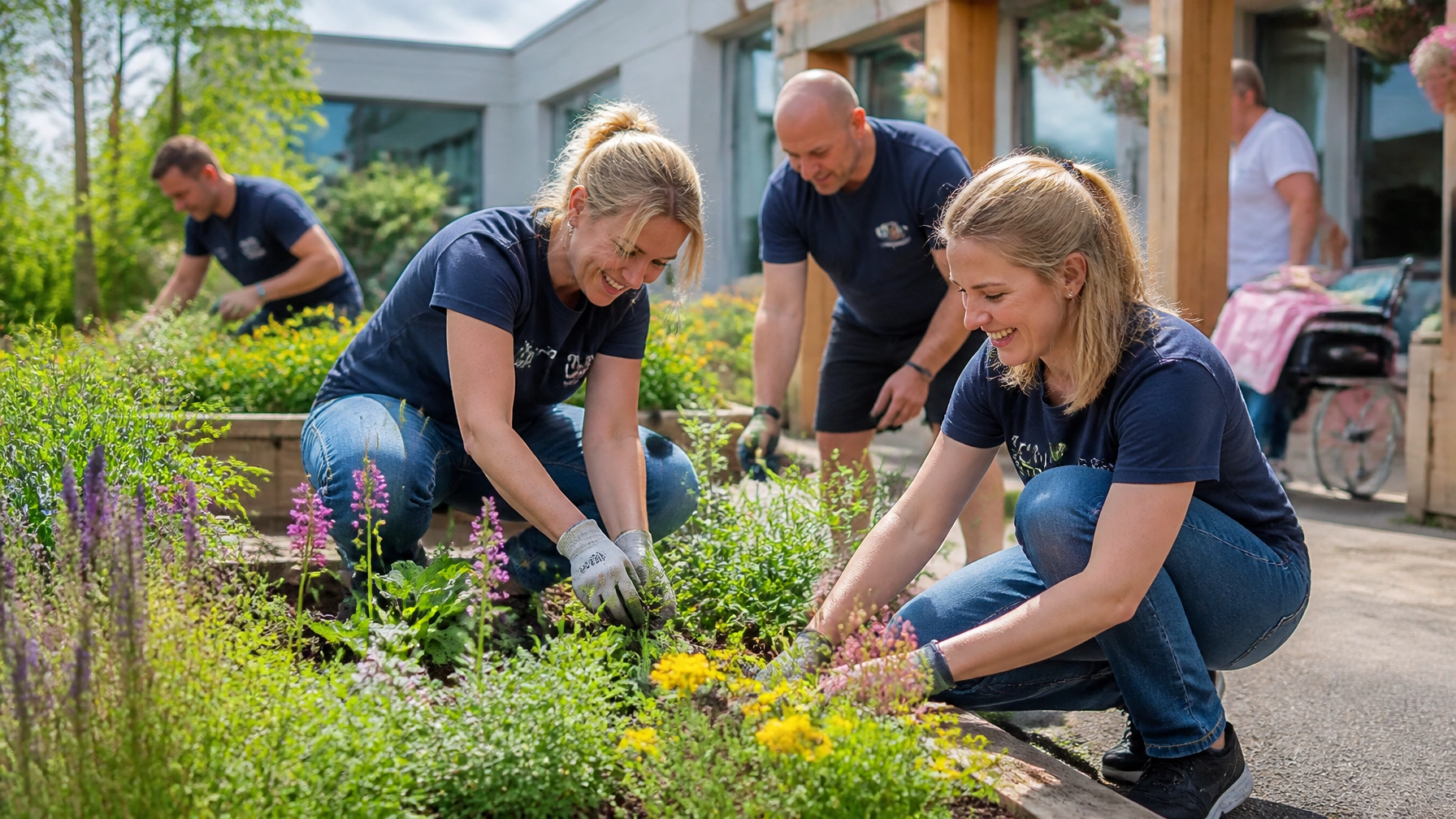
The scale of the task was significant. Over the years, certain areas of the grounds had become difficult to manage, with hardy shrubs and weeds beginning to encroach on the paths and seating areas. The volunteers arrived equipped with a range of tools, from secateurs to heavy-duty garden machinery, ready to reclaim the space. Throughout the day, the transformation was visible. Deadwood was removed, borders were meticulously weeded, and the lawn was restored to a pristine condition. The air was filled with the scent of freshly cut grass and the sound of collaborative effort, as people from different walks of life worked side-by-side for a common cause.
A Collaborative Effort for Local Families
The involvement of the Freemasons was a central component of the day’s success. The organisation has a long history of supporting charitable causes across the country, and their contribution to Acorns in Worcester was a testament to their commitment to community service. By providing both the manpower and the resources required for the garden makeover, they enabled the hospice to complete work that might otherwise have taken months to achieve. This collaborative spirit is a hallmark of the support Acorns receives from the local community, highlighting the deep connection between the hospice and the people of Worcestershire.
The volunteers did not just focus on the aesthetics of the garden; they also paid close attention to the functionality of the space. New raised beds were prepared, designed specifically to allow children in wheelchairs to participate in gardening activities. These beds will eventually be home to a variety of herbs and vegetables, providing a hands-on learning experience for the children. By creating these accessible features, the volunteers have ensured that the garden is a truly inclusive space where every child, regardless of their physical limitations, can find joy and engagement in the natural world.
Beyond the physical labour, the day was also about building connections. The hospice staff expressed their immense gratitude for the influx of support, noting that such large-scale improvements would be impossible without the generosity of volunteers. For the staff, the garden is a place where they can take children for a change of scenery, or where parents can find a moment of quiet reflection away from the pressures of their daily lives. Seeing the community come together to revitalise this space provided a significant boost to the morale of everyone at the hospice, reinforcing the idea that they are not alone in their mission to provide care.
Enhancing the Sensory Experience of Care
One of the primary goals of the transformation was to enhance the sensory qualities of the garden. For many of the children at Acorns, sensory stimulation is a key part of their developmental and therapeutic journey. To achieve this, the volunteers introduced a wide array of plants chosen specifically for their colours, textures, and scents. Lavender, marigolds, and sweet-smelling herbs were strategically placed along the paths, ensuring that a simple walk through the garden becomes a rich tapestry of aromas. The visual impact was equally striking, with the new blooms providing a splash of colour that can be seen from the hospice windows.
The therapeutic benefits of gardening and being in nature are well-documented, particularly in the context of palliative care. The outdoor environment can help to reduce stress, lower blood pressure, and provide a sense of calm and well-being. By creating a beautiful and well-maintained garden, the volunteers have provided a space where families can create lasting memories. Whether it is a quiet afternoon spent in the shade of a tree or a more active session exploring the different plants, the garden offers a variety of ways for families to connect and find comfort during incredibly challenging times.
The maintenance of such a large and complex garden is an ongoing challenge. The work completed by the volunteers has provided a solid foundation, clearing the way for the hospice’s regular gardening team to keep the space in top condition. The removal of the most difficult overgrowth means that future maintenance will be more manageable, allowing the permanent staff to focus on the finer details of the planting and the ongoing engagement of the children. This legacy of the volunteer day will be felt for seasons to come, as the new plants take root and the garden continues to evolve and grow.
Supporting the Vital Work of Acorns
Acorns Children’s Hospice was founded in 1988 with a vision to provide a network of care for children and families across the heart of England. Today, it operates three hospices: in Birmingham, Walsall, and Worcester: and provides a wide range of services including respite care, emergency support, and end-of-life care. The cost of providing these services is immense, with the charity needing to raise over £11 million every year. While government funding provides a portion of this, the majority comes from the tireless fundraising efforts of the local community and the generosity of donors and volunteers.
The garden transformation project is a perfect example of how non-financial contributions can be just as valuable as monetary donations. By giving their time and expertise, the volunteers have saved the hospice significant costs that would otherwise have been spent on professional landscaping services. These saved funds can now be redirected towards the core mission of providing medical and emotional care for the children. It is this combination of financial support and hands-on volunteering that allows Acorns to remain a beacon of hope for hundreds of families across the region.
As the day drew to a close, the transformation was complete. What had been an overgrown and tired-looking patch of land was now a vibrant, welcoming, and accessible garden. The volunteers, though tired, shared a sense of immense pride in what they had achieved. Their efforts have not only improved the physical environment of the hospice but have also sent a powerful message of support to the families who rely on its services. In the heart of Worcester, the spirit of community remains as strong as ever, ensuring that even in the most difficult of times, there is beauty, care, and compassion to be found in the garden.