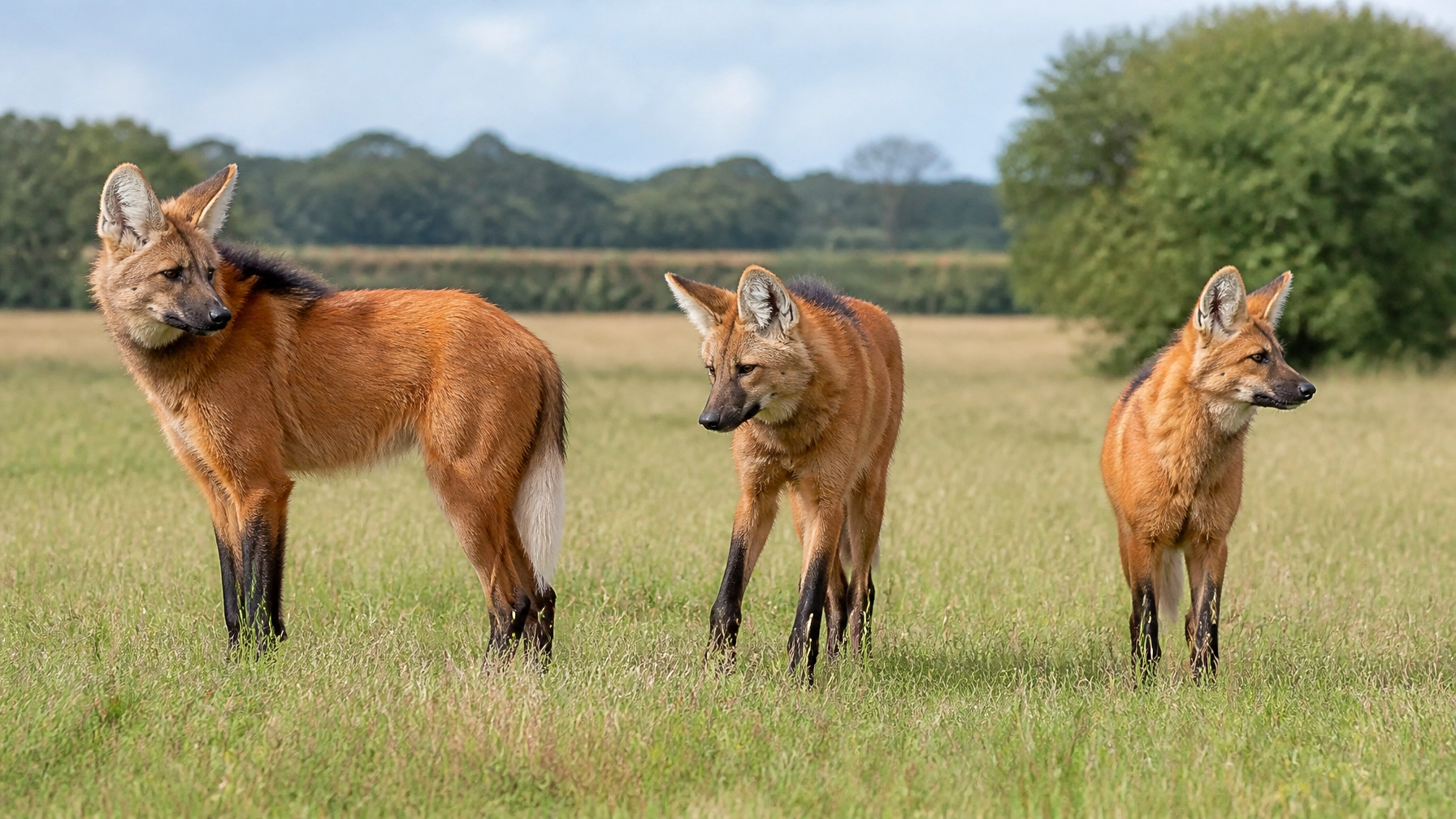
Longleat Safari Park has marked a historic milestone in its conservation and exhibition history with the official introduction of three maned wolves.
The arrivals, named Fleur, Luna, and Arabella, represent the first time this extraordinary species has been housed within the Wiltshire estate. The trio, all female, transitioned to their new home following a carefully managed relocation from Banham Zoo in Norfolk. This move is part of a wider effort to strengthen the presence of the species within British zoological collections, offering a unique opportunity for the public to engage with a predator that remains largely misunderstood by the mainstream.
The introduction of the wolves follows a meticulous six-month period of acclimatisation. During this time, the animals were kept in a specialized off-show facility, allowing them to adjust to the sights, sounds, and scents of the park without the pressure of public observation. This period was also critical for the park’s dedicated husbandry team, who worked closely with the wolves to establish bonds of trust and to monitor their social dynamics. The successful integration of Fleur, Luna, and Arabella into their new custom-built enclosure marks a significant achievement for the park’s wildlife experts, who have spent years planning for the arrival of this specific species.
The arrival of these wolves is not merely an addition to the park’s attractions but a statement of intent regarding the role of safari parks in modern conservation. By providing a home for Fleur, Luna, and Arabella, the park is participating in a co-ordinated effort to ensure the survival of a species that faces increasing threats in its native South American habitats. The wolves are now a key feature of the Drive-Through Safari experience, located near the African Village area, where visitors can observe them in an environment designed to mimic the scrublands and grasslands they would naturally inhabit.
A Significant Milestone for Conservation
The presence of maned wolves at the park signifies a deeper commitment to the preservation of biodiversity. Fleur, Luna, and Arabella were born at Banham Zoo as part of a managed breeding programme aimed at maintaining a healthy and genetically diverse population of maned wolves across Europe. Their transfer to the Wiltshire park is a strategic move, ensuring that different facilities can share the responsibility of caring for these sensitive animals. The transition was handled with extreme care, involving specialized transport and a dedicated team of keepers who ensured the wolves remained calm throughout the journey from Norfolk to their new territory.
During their initial months off-show, the keepers focused on enriching the environment for the trio. Maned wolves are known for their intelligence and cautious nature, requiring a variety of sensory stimuli to keep them engaged. The staff utilized various techniques, including scent trails and hidden food items, to encourage natural foraging behaviours. This preparatory phase was essential for the wolves to feel secure enough to explore their expansive new enclosure once it was opened to the public. The enclosure itself has been designed with the species’ specific needs in mind, featuring high vantage points, dense foliage for cover, and open spaces that allow the wolves to demonstrate their unique gait.
The addition of the maned wolves also provides an invaluable educational platform. Many visitors are unfamiliar with the species, often confusing them with traditional wolves or large foxes. By showcasing Fleur, Luna, and Arabella, the park is able to tell the story of a predator that plays a vital role in its ecosystem but remains on the periphery of public awareness. The educational impact of seeing these animals in person cannot be overstated; it fosters a connection between the public and the natural world that documentaries alone cannot achieve. The park’s commitment to this species is expected to span many years, with the potential for future breeding initiatives that would further contribute to the global population.
Understanding the Unique South American Canid
The maned wolf, or Chrysocyon brachyurus, is one of the most distinctive members of the canid family. Despite its name and appearance, it is not a wolf, nor is it a fox. It is the only species in its genus, representing a unique evolutionary lineage that has adapted specifically to the high grasslands of South America, including parts of Brazil, Paraguay, and Argentina. The most striking physical characteristic of the maned wolf is its extraordinarily long, thin legs. These stilt-like limbs are an evolutionary adaptation to its environment, allowing the animal to see over tall grasses and navigate the uneven terrain of the South American scrublands.
In addition to their height, maned wolves are easily identified by their thick, reddish-orange coats and the black "mane" of fur that runs along their neck and shoulders. This mane can be erected when the animal feels threatened, making it appear larger and more formidable to potential rivals or predators. Unlike many other canid species that hunt in packs, the maned wolf is a solitary hunter. Fleur, Luna, and Arabella, while sharing an enclosure, maintain a degree of independence that is characteristic of the species. They communicate through scent marking and a unique "roar-bark" that can carry across long distances, a sound that visitors to the park may be lucky enough to hear during the quieter hours of the day.
One of the most fascinating aspects of the maned wolf is its diet. While they are technically carnivores, they are highly omnivorous in practice. A significant portion of their diet in the wild consists of the wolf apple, a tomato-like fruit that is essential for their health and helps prevent kidney stones. In the park, the nutritionists have carefully replicated this diet, ensuring the wolves receive a balance of proteins and plant-based matter. This dietary flexibility makes them unique among large canids and is a testament to their ability to adapt to diverse environments. By understanding these biological nuances, the park can provide a level of care that ensures Fleur, Luna, and Arabella thrive in their new home.
Integrating the Pack into the Safari Habitat
The integration of the three females into the public-facing safari area has been a phased process. After the initial six months of seclusion, the gates to their new enclosure were opened, allowing them to explore the African Village section of the park. This area was chosen specifically for its suitability, providing a landscape that encourages the wolves to move and interact as they would in the wild. Observations from the first few weeks of public viewing indicate that the wolves have adjusted well. Fleur is often the most curious, leading the others in exploring the boundaries of their territory, while Luna and Arabella tend to be more reserved, utilizing the shaded areas and tall grasses for cover.
The design of the enclosure ensures that the wolves have a sense of security while still being visible to guests. Strategic planting and the inclusion of natural features like logs and rock formations provide the animals with places to retreat if they feel overwhelmed. For the safari guests, this means that sightings are not always guaranteed, which adds to the authenticity of the experience. It encourages a more patient and observant approach to wildlife viewing, where visitors must scan the landscape to spot the flash of orange fur or the tall ears of a wolf hidden in the scrub. This approach aligns with the park’s philosophy of putting animal welfare at the forefront of the visitor experience.
As Fleur, Luna, and Arabella continue to settle into their roles as ambassadors for their species, the park anticipates that they will become a firm favourite among regulars. Their presence adds a new layer of complexity to the safari, contrasting with the more familiar sights of lions and cheetahs. The success of this introduction serves as a blueprint for future species arrivals, demonstrating the importance of patience, expert care, and high-quality habitat design. The journey of these three wolves from Norfolk to Wiltshire is just the beginning of a new chapter in the park's history, one that celebrates the diversity of the natural world and the ongoing efforts to protect it for future generations.