The emotional weight of a missing pet is a burden carried by millions of households, yet few stories culminate in the extraordinary circumstances surrounding a dog named Loki.
After nearly two years of uncertainty, a routine check at an animal shelter transformed a long-standing tragedy into a celebrated homecoming. The story, which has captured the hearts of audiences across the globe, serves as a poignant reminder of the enduring bond between humans and their animals, as well as the technical safeguards that can make the impossible possible.
Loki, an emotional support animal, vanished from his family nearly twenty-four months ago. For his owner, Samantha, the disappearance was not merely the loss of a pet but the removal of a vital source of stability and companionship. The circumstances of his departure were common enough to be relatable to any pet owner: a momentary lapse in security, a gate left ajar, and a swift disappearance into the surrounding neighbourhood. Despite exhaustive searches, social media appeals, and local enquiries, the trail went cold. Days turned into weeks, and weeks into months, until the prospect of a reunion seemed statistically improbable.
The passage of time usually works against the recovery of lost animals. As seasons changed, the likelihood of Loki being found decreased, leaving his family to grapple with the painful process of moving on while never truly finding closure. The psychological impact of a missing pet is often described as a form of disenfranchised grief: a loss that is not always fully recognised by society but is deeply felt by those at the centre of the storm. For two years, Loki’s bed remained empty, and his collar sat as a silent testament to a chapter that felt permanently unfinished.
The unexpected discovery and the microchip scan
The breakthrough occurred not through a chance sighting by a neighbour or a response to an old flyer, but through the diligent work of animal welfare professionals. Loki was found wandering as a stray, appearing somewhat weathered by his time away but remarkably healthy. When he was brought into the local animal care facility, the staff followed a protocol that is standard in modern veterinary practice: the use of a handheld microchip scanner. It is a process that takes mere seconds but holds the power to bridge years of separation.
As the device passed over Loki’s shoulders, it emitted the characteristic beep that indicates the presence of an internal transponder. The unique identification number linked to the chip was quickly matched against a national database, revealing the contact details that Samantha had kept updated despite the intervening years. The moment the shelter reached out to confirm her identity and inform her that Loki had been located, the two-year silence was shattered. For the staff at the facility, these moments are the highlight of a challenging profession, providing a rare and clear victory in the often-difficult world of animal rescue.
The logistics of the reunion were arranged immediately. While many stray animals are unfortunately never claimed, the existence of a microchip meant that there was no ambiguity regarding Loki's ownership. The data stored on the chip provided an unbreakable link between the dog and his rightful home. When Samantha arrived at the shelter, the atmosphere was thick with anticipation. The staff, who had witnessed countless surrenders and adoptions, prepared for what they knew would be a landmark moment in the facility's history.
A two-year journey from heartbreak to hope
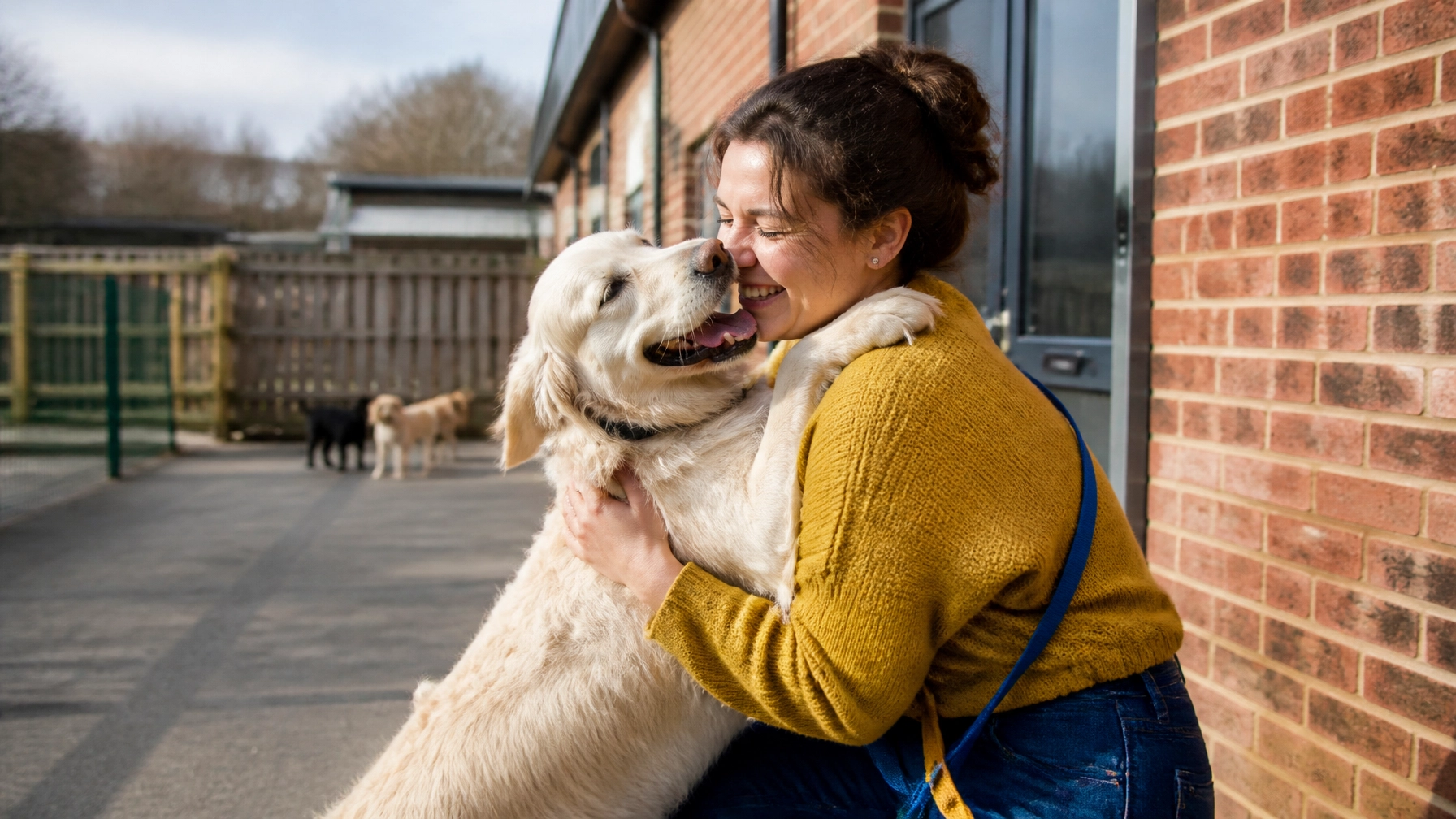
The reunion itself was a spectacle of pure, unbridled kinetic energy. Video footage of the moment shows Loki initially hesitant as he entered the room, his senses overwhelmed by the clinical environment. However, the instant he caught the scent of his owner, his demeanour shifted entirely. The recognition was instantaneous. The dog, who had spent seven hundred days navigating an unknown world, collapsed into a flurry of wagging tails and excited barks, jumping into Samantha’s arms with a level of enthusiasm that suggested he had never forgotten the person who raised him.
For Samantha, the return of her emotional support dog was more than just a happy ending; it was the restoration of a piece of her own well-being. Throughout the two years Loki was missing, she had spoken of the "hollow feeling" that followed his disappearance. Emotional support animals provide a specific type of therapeutic value, offering a non-judgmental presence that helps owners navigate anxiety, depression, and other mental health challenges. The loss of such an animal is doubly traumatic, as the very support system intended to help manage stress is the thing that has been lost.
Observers of the reunion noted that Loki appeared to have been well-cared for during some of his time away, leading to speculation that he may have been taken in by someone else who was unaware of his origins. This is a common phenomenon in the world of lost pets, where well-meaning individuals find a "stray" and keep it without checking for a microchip. This highlights the ethical importance of taking found animals to a vet or shelter for a scan, rather than assuming they have been abandoned. The fact that Loki eventually found his way back into the professional system is what ultimately saved his relationship with his original family.
The vital role of permanent pet identification
The story of Loki is an undeniable victory for the technology of microchipping. While collars and tags are essential, they are easily lost or removed. A microchip, roughly the size of a grain of rice, is a permanent form of identification that remains with the animal for life. In the United Kingdom, it has been a legal requirement for dogs to be microchipped since 2016, and similar legislation for cats has recently come into force. Loki’s case serves as the ultimate case study for why these regulations are so critical to public and animal welfare.
Beyond the legalities, there is a significant responsibility on the part of the owner to ensure that the database records are kept current. Samantha’s foresight in maintaining her contact details, even when hope was at its lowest, was the final link in the chain. Had she changed her phone number or moved house without updating the registry, the shelter’s scan would have led to a dead end. This administrative task, though often overlooked, is the difference between a lifetime of wondering and a joyful afternoon at a rescue centre.
As Loki settles back into his old life, the focus remains on the resilience of the canine spirit. He has reclaimed his favourite spots in the house and resumed his role as a constant companion. The two-year gap in his history may never be fully explained, but for those involved in his return, the "how" is less important than the "here." His story has become a beacon of hope for thousands of other families currently searching for missing pets, proving that time is not always an insurmountable barrier. In the world of animal rescue, stories like Loki’s remind us that persistence, technology, and a bit of luck can eventually lead every lost soul back to where they belong.