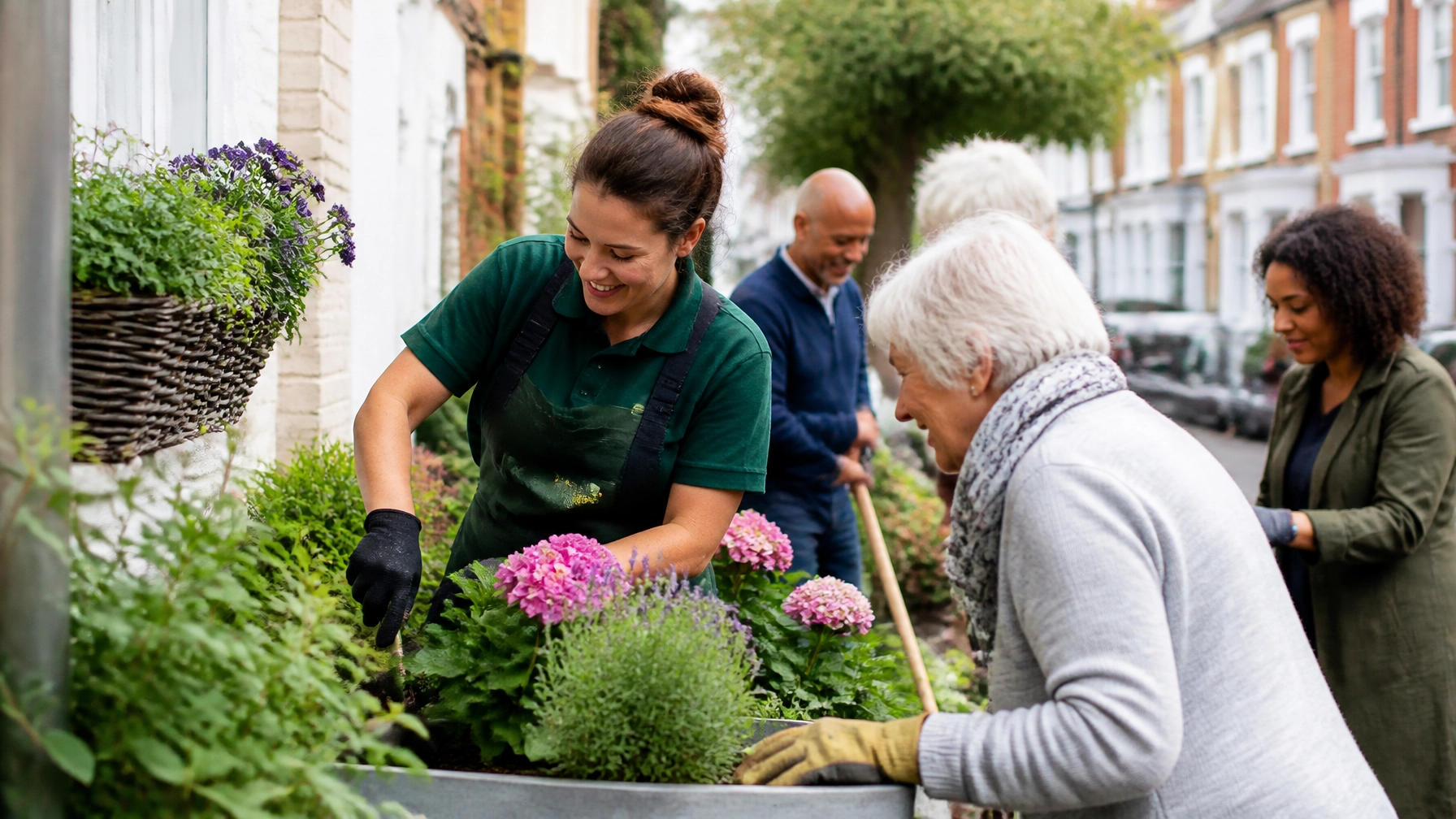
Across the grey stretches of Britain’s most built-up urban centres, a quiet revolution is taking root.
It is not led by grand government schemes or multi-million-pound infrastructure projects, but by individuals with shovels, seeds, and a shared vision for their streets. The Postcode Gardener initiative, a concept once relegated to the fringes of environmental activism, has blossomed into a national movement, proving that the simple act of planting a marigold or tending to a communal planter can be a powerful antidote to the modern epidemic of loneliness and stress. As the concrete heat of summer begins to settle over the country, these green pioneers are demonstrating that the health of our communities is inextricably linked to the health of our local ecosystems.
The premise is deceptively simple. In areas where private gardens are a luxury and public parks are often far-flung or neglected, residents are pooling their resources to hire a professional gardener for their specific postcode. For the price of a cup of coffee per week, neighbours who might have lived side-by-side for years without ever exchanging a word are now meeting over compost bags and watering cans. This is more than just a beautification project; it is a fundamental shift in how we inhabit our cities. By reclaiming the narrow strips of land between pavements and front doors, or the forgotten corners of social housing estates, these gardeners are creating "living corridors" that support both human and wildlife health.
The impact on biodiversity is immediate and measurable. In streets where the Postcode Gardener has been active, bird populations have seen a marked increase, and the hum of pollinators has returned to areas that were previously ecological deserts. But it is the human impact that is perhaps most profound. For many residents, the arrival of a gardener in their postcode represents the first time they have felt a sense of agency over their physical environment. In a world where global environmental crises can feel overwhelming and abstract, the ability to plant a tree or nurture a flowerbed offers a tangible, local way to make a difference.
Reviving the Social Fabric of the City
The true power of the Postcode Gardener lies in its ability to bridge social divides. In the diverse boroughs where these schemes have taken off, the garden serves as a neutral ground where people of all ages, backgrounds, and walks of life can connect. The gardener themselves acts as a social catalyst, a community leader whose tools are as much about communication as they are about cultivation. They are not just there to maintain the plants; they are there to teach residents how to maintain them, fostering a sense of collective responsibility and pride.
This social cohesion is a critical component of community resilience. In postcodes with active gardening schemes, residents report feeling safer and more connected to their neighbours. The presence of green space and active community members on the street acts as a natural deterrent to anti-social behaviour, while the shared task of gardening provides a regular reason for people to check in on one another. For the elderly, who are often at the highest risk of social isolation, these projects provide a vital link to the outside world. For young families, they offer a safe, educational space where children can learn about the natural world without having to travel to the countryside.
The economic model of the scheme is also a testament to community spirit. Rather than relying on dwindling local authority budgets, the Postcode Gardener is funded directly by the people who benefit from it. This ensures that the projects are sustainable and deeply rooted in the needs of the local area. Each garden is a reflection of the people who live there, featuring everything from medicinal herbs and edible vegetables to wildlife-friendly native wildflowers. This bespoke approach ensures that the greening of the postcode is not a top-down imposition, but a bottom-up expression of local identity.
The Scientific Link Between Soil and Soul
The benefits of nature on mental health are no longer just anecdotal. A growing body of scientific research confirms what many of these postcode gardeners have known instinctively for years: spending time in green space is essential for our psychological well-being. Studies have shown that even fifteen minutes of interaction with nature can significantly lower cortisol levels, reduce blood pressure, and improve mood. In the context of the UK’s current mental health crisis, where one in three adults reports using nature as a primary tool to manage their stress, the importance of accessible urban green space cannot be overstated.
Gardening, in particular, offers a unique form of therapy. The physical activity involved: digging, planting, weeding: provides a low-impact workout that releases endorphins. The sensory experience of being outdoors, with the smell of damp earth and the sight of vibrant colours, helps to ground individuals in the present moment, offering a respite from the "digital fatigue" of modern life. For those struggling with anxiety or depression, the slow, rhythmic pace of the seasons provides a comforting sense of continuity and hope. Watching a seed grow into a flourishing plant is a powerful reminder of the potential for growth and renewal in one's own life.
Furthermore, the "biophilia hypothesis" suggests that humans have an innate, evolutionary need to connect with other forms of life. In our increasingly urbanised world, this connection is often severed, leading to what some experts call "nature deficit disorder." The Postcode Gardener addresses this directly by bringing nature to the doorstep. It transforms the mundane commute or the walk to the shops into an opportunity for nature connection. This "micro-dosing" of greenery throughout the day can have a cumulative effect on a person's overall mental resilience, helping them to better cope with the pressures of urban living.
A Sustainable Blueprint for Urban Living
As we look to the future, the Postcode Gardener model offers a compelling blueprint for how we can adapt our cities to the challenges of the 21st century. Beyond the social and psychological benefits, these green corridors play a vital role in climate adaptation. In a warming world, urban areas are prone to the "heat island effect," where concrete and asphalt absorb and radiate heat, making city temperatures significantly higher than the surrounding countryside. By introducing more vegetation, postcode gardeners are helping to cool our streets through natural shading and evapotranspiration.
These gardens also serve as a crucial defence against the increasing risk of flash flooding. In many UK cities, the sheer volume of non-porous surfaces means that heavy rainfall quickly overwhelms drainage systems. By replacing paving with soil and plants, postcode gardeners are creating natural "sponges" that can soak up excess water, reducing the pressure on our infrastructure. These small-scale interventions, when multiplied across thousands of postcodes, can have a significant impact on a city's overall flood resilience.
Ultimately, the success of the Postcode Gardener movement signals a shift in our collective priorities. It suggests a move away from the idea of the city as a purely functional, grey machine, towards a vision of the urban environment as a living, breathing ecosystem. It challenges us to rethink how we use our common spaces and how we relate to our neighbours. By investing in our local postcodes, we are not just planting gardens; we are planting the seeds of a more sustainable, more connected, and more compassionate society. The work of these gardeners is a reminder that even in the heart of the city, nature is never far away: and it is exactly what we need to thrive.