The landscape of oncology is shifting beneath our feet as new data from a landmark clinical trial reveals a survival rate that has left the medical community both stunned and optimistic.
A personalised mRNA vaccine, designed specifically for individuals battling high-risk melanoma, has demonstrated a staggering 96% survival rate in patients followed over a two-and-a-half-year period. This figure represents a significant benchmark in the fight against one of the most aggressive forms of skin cancer and signals a potential revolution in how we approach the treatment of solid tumours. Unlike traditional therapies that take a broad-spectrum approach, this new intervention is bespoke, crafted from the genetic blueprint of a patient’s own tumour to train the immune system for a precise, lethal strike against malignant cells.
For decades, the standard of care for melanoma that has been surgically removed but remains at high risk of returning involved the use of immunotherapy drugs. While these treatments have saved countless lives, the risk of recurrence has always loomed large. The introduction of mRNA technology: the same platform that allowed for the rapid development of global vaccines in recent years: has provided a new tool for oncologists. By combining these personalised vaccines with existing immunotherapy, researchers are seeing results that were once considered the stuff of science fiction. The 96% survival rate recorded in this mid-stage trial is not just a number; it is a testament to the power of precision medicine and the incredible adaptability of the human immune system when given the right instructions.
The trial focused on patients whose melanoma had been surgically resected but who were considered to be at a high risk of the cancer returning. Participants were divided into groups, with one receiving the standard immunotherapy treatment and the other receiving the standard treatment plus the personalised mRNA vaccine. The results were clear: those who received the dual therapy had a significantly higher chance of remaining cancer-free and alive compared to those on the standard regimen alone. The data indicates that the vaccine reduced the risk of recurrence or death by nearly half, a result that researchers describe as a "game-changer" for the field of oncology.
The precision of genomic sequencing
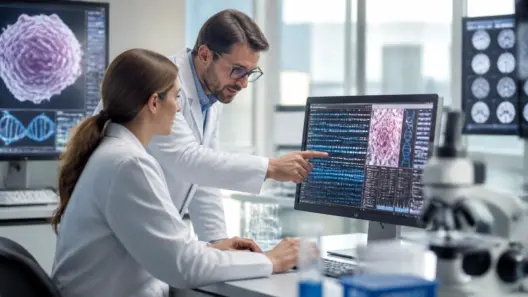
The magic of this breakthrough lies in the process of creation. Every cancer is unique, a chaotic mess of genetic mutations that vary from one person to the next. Traditional chemotherapy or even broad immunotherapies can sometimes miss the mark because they are not specifically tailored to the unique "fingerprint" of an individual's tumour. This new personalised vaccine changes that dynamic by starting with a biopsy. Scientists take a sample of the patient’s tumour and a sample of their healthy blood, then use advanced genomic sequencing to compare the two. This allows them to identify the specific mutations, known as neoantigens, that are present only in the cancer cells.
Once these mutations are identified, sophisticated AI algorithms are used to predict which of them are most likely to trigger a strong immune response. From there, a custom mRNA sequence is manufactured. This sequence acts like a "most wanted" poster for the immune system, providing the precise coordinates of the cancer cells. When the vaccine is injected, it teaches the patient’s T-cells: the body’s natural defenders: to recognise and destroy any cell carrying those specific mutations. This level of precision ensures that the treatment is as effective as possible while minimising the collateral damage to healthy tissue that often accompanies more aggressive cancer treatments.
The manufacturing process itself is a feat of modern engineering. In the past, creating a bespoke treatment for a single patient would have taken months, by which time the cancer might have already returned. Today, thanks to advancements in laboratory technology and data processing, these vaccines can be produced in a matter of weeks. This speed is critical for patients with high-risk melanoma, where every day counts. The ability to move from biopsy to injection in such a short window is a key factor in the high survival rates seen in the latest clinical data.
Clinical trials and survival benchmarks
The 96% survival rate at the 30-month mark has provided a new benchmark for what is possible in cancer care. In the clinical trial, patients who received the combination of the personalised vaccine and pembrolizumab showed a remarkable resilience against the disease. The primary goal of the study was to measure recurrence-free survival: the length of time a patient lives without the cancer coming back. The data showed that the combination therapy significantly extended this period, but it was the overall survival figure that truly caught the attention of the world. Seeing almost every patient in the vaccine group alive and well after more than two years is an extraordinary outcome for high-risk melanoma.
Researchers noted that the vaccine appeared to be well-tolerated by most participants. The side effects reported were largely consistent with those seen in other mRNA vaccines, such as fatigue, mild fever, and soreness at the injection site. This safety profile is incredibly encouraging, as it suggests that the treatment could be integrated into existing clinical pathways without adding an undue burden of toxicity for the patient. For those who have endured the harsh side effects of traditional chemotherapy, the prospect of a treatment that is both more effective and less taxing on the body is a massive step forward.
The trial results also shed light on the long-term durability of the immune response. Because the vaccine trains the immune system to "remember" the specific mutations of the cancer, there is a hope that it provides a form of long-lasting surveillance. If any stray cancer cells attempt to grow back months or even years after the initial treatment, the immune system should, in theory, be primed to recognise them immediately and wipe them out. This "memory" effect is what scientists believe is contributing to the sustained survival rates observed in the study, and it is a major focus of ongoing research as the trial moves into its next phases.
The expanding horizon of mRNA technology
While the current success is centred on melanoma, the implications of this 96% survival breakthrough reach far beyond skin cancer. The same technology is already being adapted and tested for a variety of other solid tumours, including lung, bladder, and colorectal cancers. Because the platform is based on the genetic code of the individual tumour, it can, in theory, be applied to almost any type of cancer that produces identifiable mutations. We are witnessing the birth of a new era in medicine where the "one size fits all" approach is replaced by a truly individualised strategy.
The success of the melanoma trial is acting as a catalyst for a surge in investment and research into mRNA-based oncology. Pharmaceutical companies and academic institutions around the world are racing to refine the technology, looking for ways to make the vaccines even more potent and the manufacturing process even faster. There is also a significant effort to understand why some patients respond better than others, with the goal of ensuring that as many people as possible can benefit from these life-saving breakthroughs. The path from clinical trials to widespread availability in hospitals is still being forged, but the direction of travel is clear.
As we look toward the future, the integration of AI, genomic sequencing, and mRNA technology promises to redefine the prognosis for millions of people diagnosed with cancer each year. A diagnosis that was once seen as a death sentence is increasingly becoming a manageable condition, and in many cases, one that can be successfully kept at bay for years on end. The 96% survival benchmark set by this personalised vaccine is a beacon of hope, proving that when we decode the unique language of a patient’s cancer, we can give them their life back. The work continues, but the milestone reached today will be remembered as a turning point in medical history.