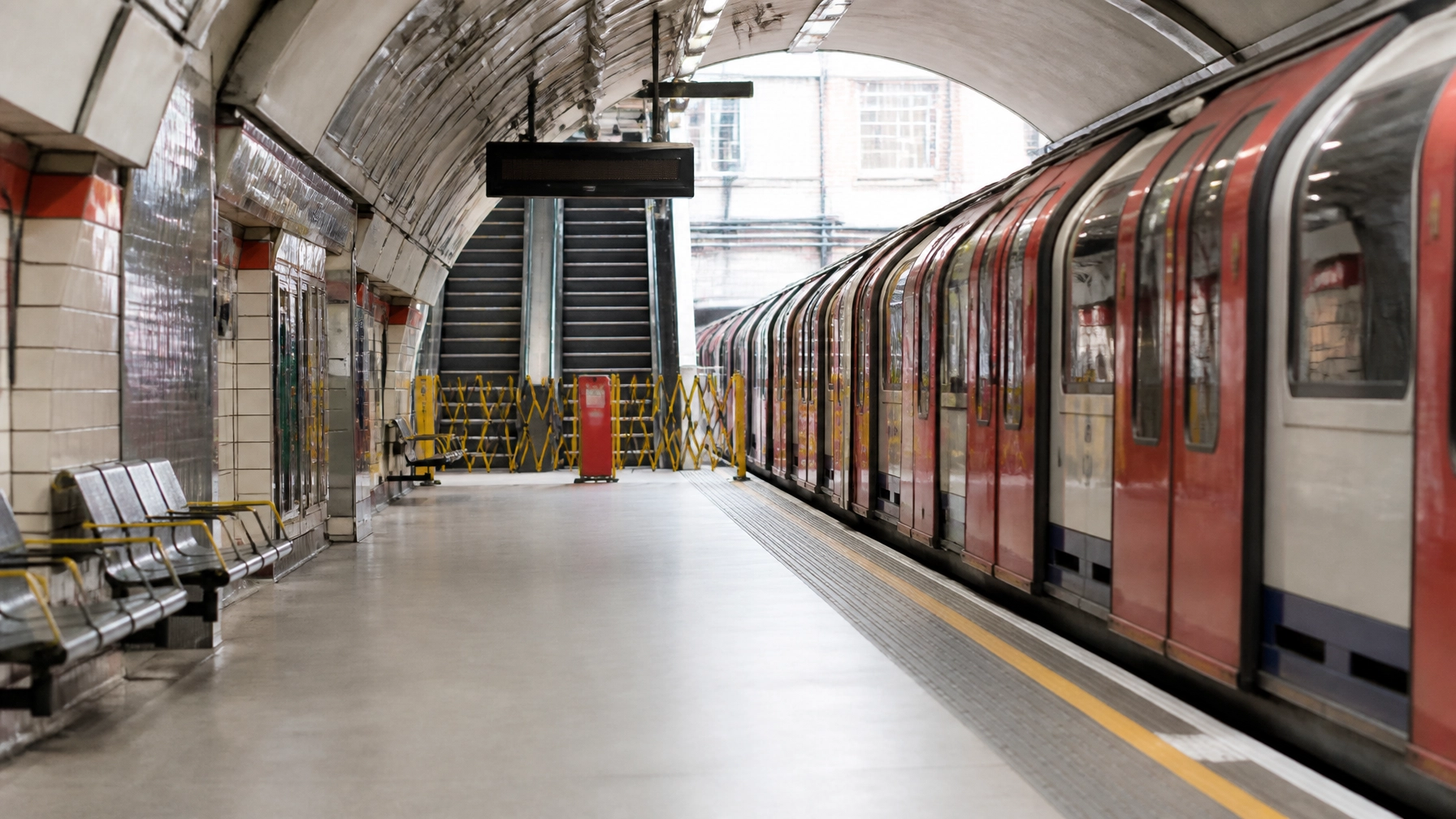
London has woken up to a silence that is as eerie as it is expensive.
For those who usually spend their mornings tucked under the armpit of a stranger on the Central Line, today offers a very different kind of commute. The metal shutters are down, the digital displays are frozen in a state of perpetual apology, and the usual subterranean hum of the city has been replaced by the frantic clicking of heels on pavement. As of this morning, Friday, 5 June 2026, the London Underground is effectively a ghost town below ground, while above ground, the city is wrestling with a logistical puzzle of epic proportions.
The strike, the latest in a series of escalations between driver unions and transport authorities, has left millions of commuters scrambling for alternatives. But while the headlines often focus on the frustration, there is a strangely British sense of "making do" that has permeated the capital’s streets. Reports describe a surge in cycle-hire usage and a sudden, desperate interest in the city’s canal paths. It turns out that when the iron worm stops turning, Londoners rediscover that they actually have legs.
The atmosphere in the city is a bizarre cocktail of 70% community spirit and 30% pure, unadulterated chaos. On one hand, you have the "Strike Day Warriors": those optimistic souls who have dusted off bicycles not seen since the last pandemic, wobbling precariously through Trafalgar Square with a map taped to their handlebars. On the other, you have the gridlock. The roads are currently a sea of red brake lights, with buses so packed they look like they’ve been vacuum-sealed. It is a hard-hitting reminder of just how much this city relies on its subterranean arteries to keep the heart beating.
Coverage has highlighted the human side of the disruption. In the absence of the Tube, the Overground and DLR are bearing the brunt of the load, with platforms resembling scenes from a particularly stressful disaster movie. Yet, even in the crush, there are flashes of that famous London wit. One bus driver in South London was heard over the tannoy informing his packed passengers that if they all exhaled at once, the bus might actually gain enough buoyancy to float over the traffic in Brixton. It is this kind of resilience that defines the city when the infrastructure decides to take a day off.
The Great Pedestrian Migration and the Joy of the Scenic Route
There is something almost poetic about watching thousands of people walk across London Bridge in the early morning sun. Without the rattle of the Northern Line, the city sounds different. You can hear the birds in the parks and the splashing of the Thames. For many, the forced walk has turned into an accidental wellness retreat. Commuters who usually spend forty minutes staring at a faded advertisement for dental insurance are now noticing the architecture of the City or the hidden greenery of tucked-away squares.
The local coffee shops, far from the usual station hubs, are seeing a roaring trade. With the "usual" route blocked, people are venturing into side streets and discovering independent businesses they’ve walked past for years without a second glance. It is a temporary shift in the city’s geography, moving the focus away from the major interchanges and back into the neighbourhoods. While the walk might be long, the lack of a stuffy carriage at 8:45 AM is being seen by some as a refreshing, if inconvenient, change of pace.
However, the positivity only stretches as far as your footwear allows. By the time the third mile hits and the blisters start to form, the novelty begins to wear thin. The reality of the strike is that for many low-income workers, these walkouts aren't an opportunity for a scenic stroll; they are a direct hit to their pockets and their time. The disparity in how these strikes affect the city has become impossible to ignore. For those who can work from home, it’s a minor annoyance. For the cleaners, hospitality staff, and shift workers who keep London running, it’s a logistical nightmare that starts at 4.00am.
The Hard Reality of the Deadlock and the Economic Toll
Behind the camaraderie and the clever bus drivers lies a very grim reality. This isn't just a one-off inconvenience; it is a symptom of a deeply fractured relationship between the workforce and the management. The 30% of this story that is hard-hitting revolves around the total breakdown in communication that has led us here. Negotiations have stalled, and both sides seem dug into positions that offer very little room for compromise. The unions argue that the demands on drivers have reached a breaking point, while the authorities point to a budget that is already stretched to its absolute limit.
The economic impact is staggering. When the Tube stops, the city’s productivity doesn't just dip; it falls off a cliff. Retailers in the West End are reporting footfall drops that rival the worst days of the mid-2020s. Small businesses, particularly those located inside or near stations, are facing another day of zero revenue while still having to pay London’s eye-watering rents. This is the side of the strike that isn't solved by a brisk walk or a witty remark. It is a structural failure that leaves the capital’s economy gasping for air.
Furthermore, the pressure on the remaining transport networks is reaching a dangerous level. The sheer volume of people trying to squeeze onto the bus network has led to several reports of minor scuffles and significant safety concerns at major interchanges. It is increasingly clear that while the city tries to put on a brave face, the infrastructure is being pushed to a point where it simply cannot cope. The gridlock isn't just on the roads; it’s in the very system that is supposed to govern the city’s movement.
Finding a Way Forward in a City That Never Stops
Despite the frustration and the very real economic pain, there is a sense that London will, as it always does, find a way to keep moving. The strike is a reminder of our collective dependence on a system that we often take for granted. It highlights the invisible workers who navigate the tunnels beneath our feet and the delicate balance required to keep a global hub like London operational. As the sun begins to set on this day of disruption, the conversation is already shifting from "how do I get home?" to "how do we stop this from happening again?"
There is a growing call for a new approach to these disputes: one that prioritises the stability of the city without ignoring the genuine grievances of the workforce. The current cycle of walkouts followed by temporary fixes is clearly not working for anyone. It leaves commuters in limbo and the economy in a state of constant uncertainty. What is needed is a long-term vision for London’s transport that moves beyond the immediate crisis and looks at the sustainability of the network for the next decade.
As we look toward tomorrow, there is a hope that the metallic shutters will rise once more and the familiar "mind the gap" will echo through the stations. Until then, Londoners will continue to walk, cycle, and joke their way through the chaos. The city is at a standstill, but its spirit is anything but. Through the lived experience of the person walking five miles to work, the story of today is one of a city that refuses to be defeated by a closed gate and a cancelled train. The gridlock is real, the problems are hard-hitting, but the resilience of the people remains the most powerful engine the capital has.