The intelligence community and political leaders across the globe have begun paying their respects to Sir Alex Younger, the former Chief of the Secret Intelligence Service, following the announcement of his death at the age of 62. Sir Alex, who served as the head of MI6 during one of the most turbulent periods in modern British history, passed away in Boston surrounded by his family. His tenure as 'C' was marked by a fundamental transformation of the service as it moved from a primary focus on counter-terrorism to addressing the sophisticated threats posed by hostile states and the rapid evolution of digital technology.
Colleagues and contemporaries have described Sir Alex as a man of immense integrity and strategic vision. He was the longest-serving chief of the agency in over half a century, a testament to the stability he provided during the complexities of the Brexit negotiations and the height of international tensions regarding state-sponsored aggression. Throughout his thirty-year career, he remained a steadfast defender of national security, often operating in the shadows but emerging in his later years as a thoughtful advocate for greater transparency and public understanding of the work performed by the intelligence services.
A Career Defined by Discretion and Dedication
Born in Westminster in 1963, Alexander William Younger was educated at Marlborough College before pursuing an economics degree at the University of St Andrews. His path into the world of intelligence was preceded by a distinguished period of military service. Having been sponsored through university by the British Army, he was commissioned into the Royal Scots before later transferring to the Scots Guards. This military foundation provided the discipline and operational awareness that would define his subsequent three decades within the Secret Intelligence Service.
Sir Alex joined MI6 in 1991, at a time when the geopolitical landscape was shifting rapidly following the end of the Cold War. His early career saw him deployed to some of the world's most volatile regions. He served in the Balkans during the Yugoslav wars of the 1990s and held postings in Vienna, Dubai, and across the Middle East. It was during these years that he honed his skills as an intelligence officer, reportedly being recruited into the service while working for the Halo Trust in Afghanistan: a country that would later become a focal point of his leadership.
By the late 2000s, Sir Alex had risen to the upper echelons of the service. He served as the senior MI6 officer in Afghanistan, overseeing all SIS operations in the country during a period of intense conflict and reconstruction. His ability to navigate complex tribal dynamics and maintain operational integrity under extreme pressure led to his appointment as Director of Counter-Terrorism in 2009. In this role, he was instrumental in the UK's response to the evolving threat of Islamist terrorism. Most notably, he led the intelligence work that ensured the security of the London 2012 Olympic Games, a monumental task that required seamless cooperation between domestic and international security agencies. His success in this role cemented his reputation as a formidable leader capable of managing high-stakes national security priorities.
Navigating the Challenges of a Digital Age
In November 2014, Sir Alex was appointed Chief of the Secret Intelligence Service, succeeding Sir John Sawers. His appointment came at a time when the digital revolution was fundamentally altering the nature of espionage. Sir Alex recognised early on that the traditional methods of intelligence gathering were no longer sufficient in a world where data was becoming the new battlefield. He famously spoke about the "fourth generation of espionage," arguing that the service had to fuse its traditional human intelligence skills with world-class technical capabilities to remain effective.
One of the defining moments of his leadership was the response to the Salisbury Novichok poisoning in 2018. Under his guidance, MI6 played a crucial role in identifying the Russian state actors responsible for the attack on Sergei Skripal and his daughter, Yulia. This event marked a significant shift in the UK's security posture, as the focus moved decisively towards countering the subversive activities of hostile states. Sir Alex was a vocal critic of the "hybrid warfare" tactics employed by adversaries, which included cyber-attacks, the spread of disinformation, and the undermining of democratic institutions.
Sir Alex also broke with tradition by becoming one of the most publicly visible chiefs in the history of MI6. He believed that for a secret service to maintain its "social licence" in a modern democracy, it needed to be more open about its values and the challenges it faced. In a rare public speech at the University of St Andrews in 2018, he spoke candidly about the need for the intelligence community to engage with the public and to attract a more diverse range of recruits. He argued that the best way to defend British values was to ensure that the service reflected the society it was sworn to protect. This commitment to modernisation and diversity is seen by many as one of his most enduring legacies in the agency.
National Recognition for a Lifetime of Duty
The impact of Sir Alex’s service was recognised through numerous honours. He was appointed a Companion of the Order of St Michael and St George (CMG) in 2011 and was later promoted to Knight Commander (KCMG) in 2019 for his services to national security. Even after stepping down as 'C' in 2020, he remained an active and influential voice in foreign policy and security debates. He served as a senior adviser to various organisations and continued to warn about the long-term strategic threats posed by global instability and technological competition.
Despite his professional successes, Sir Alex's life was also marked by deep personal tragedy. In March 2019, while he was still serving as Chief, his son Sam died in a car accident in Scotland. Those close to him noted the immense fortitude he showed during this period, continuing to lead the service through a time of significant political upheaval while privately grieving. His ability to maintain his focus on the nation's security during such a difficult time earned him even greater respect among his peers and the government officials he advised.
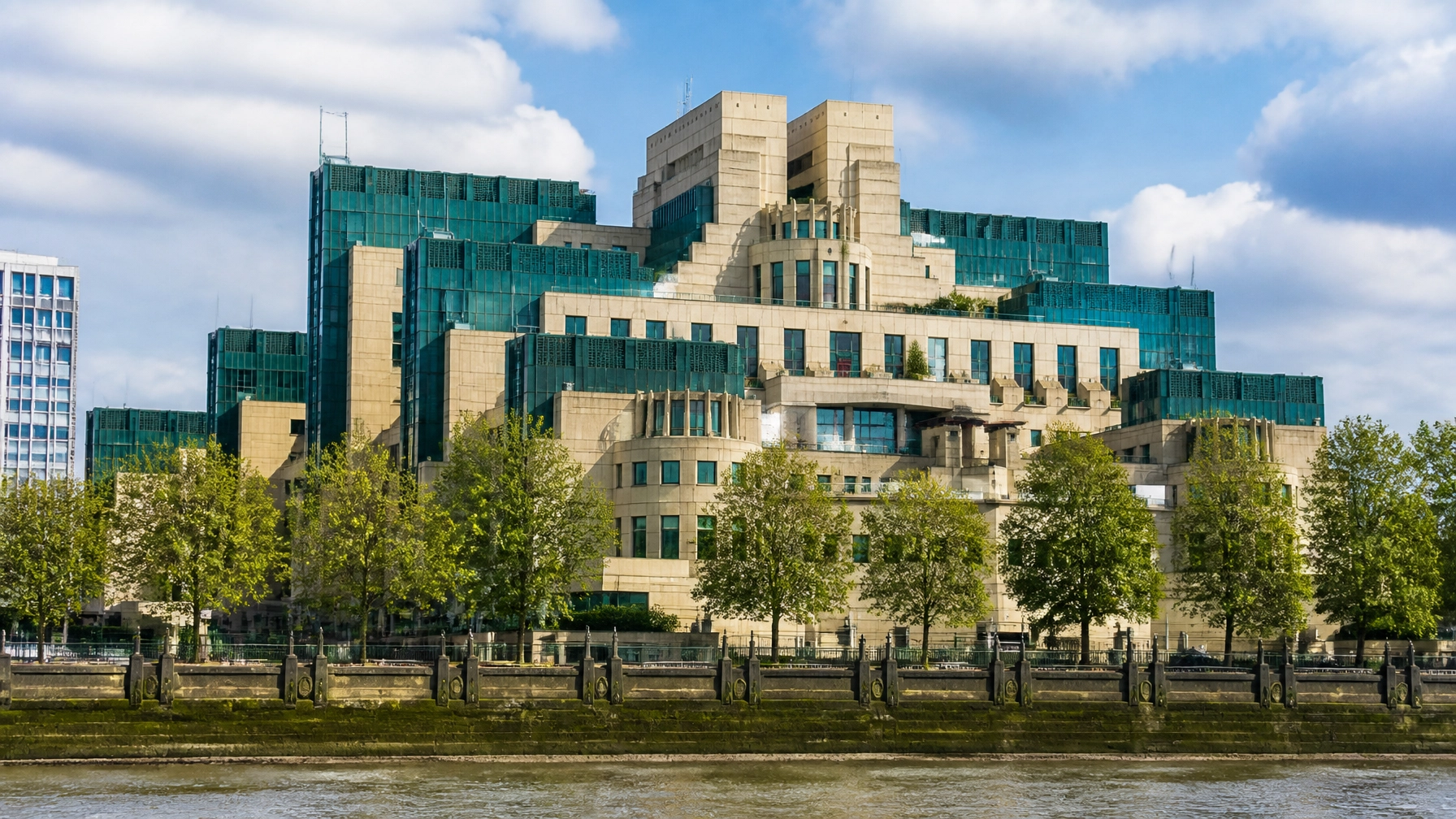
In his final years, Sir Alex faced his health challenges with the same quiet dignity that had characterised his professional life. Tributes from across the political spectrum have highlighted his "exemplary" life and the "utmost dedication" he showed to the British public. Prime ministers and foreign leaders have joined former colleagues in expressing their gratitude for his decades of service. As the SIS building on the Thames stands as a symbol of the nation's security, those who worked alongside Sir Alex remember him as a leader who not only protected the country from immediate threats but also built the foundations for its future defence in an increasingly complex world. His legacy is one of a service that is more open, more technically advanced, and more resilient, ensuring that the work he dedicated his life to will continue long after his passing.