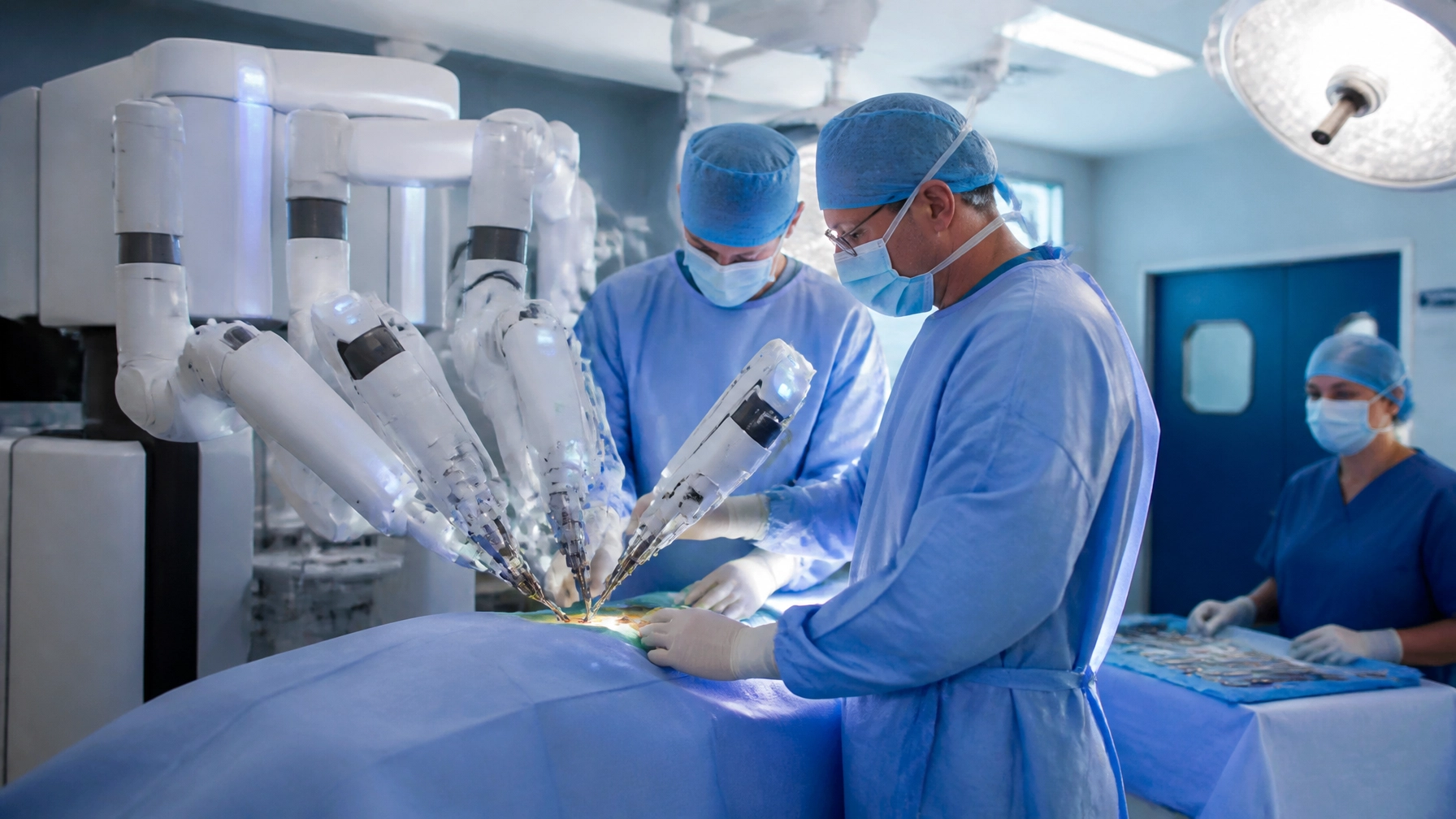
For Andy Sturrock, a 69-year-old grandfather from Wincobank, the prospect of surgery was met with the usual mixture of trepidation and necessity.
However, his recent gallbladder procedure at a Sheffield hospital was anything but routine. It marked a significant milestone in regional medical history, as Sturrock became the first patient in the area to undergo a gallbladder removal facilitated by a state-of-the-art robotic system. This leap in surgical capability has been met with widespread acclaim, not just for the technical achievement it represents, but for the tangible benefits it provided to the patient’s recovery time and overall experience.
The procedure, known as a cholecystectomy, is a common intervention for those suffering from the painful complications of gallstones. Traditionally, this is performed via laparoscopic surgery, often referred to as keyhole surgery. While effective, the introduction of robotic assistance elevates the level of precision available to surgeons, allowing for greater dexterity and visualization within the cramped confines of the human abdomen. For Sturrock, the result was a recovery that defied his expectations, leaving him back on his feet far sooner than traditional methods might have allowed.
This development is being hailed as a triumph of local innovation, but it also casts a spotlight on the evolving landscape of the healthcare system in the United Kingdom. While the clinical success is undeniable, the journey to this moment involves more than just software and steel; it is a story of community generosity and a shifting paradigm in how advanced medical technology is integrated into local trusts.
A New Frontier in Local Healthcare
The introduction of robotic surgery in Sheffield represents a significant shift in the standard of care available to patients. The technology involves a surgeon sitting at a console a few feet away from the patient, operating four robotic arms that hold the surgical instruments and a high-definition camera. This setup provides a 3D view of the surgical site, magnified many times, which offers a level of clarity that standard laparoscopic monitors simply cannot match. The instruments themselves are designed to mimic the movements of the human wrist but with a range of motion and stability that surpasses human capability. This eliminates the microscopic tremors that can occur even in the steadiest of hands, ensuring that every incision and suture is placed with absolute accuracy.
For the surgical team, the benefits are as much about ergonomics as they are about precision. Traditional keyhole surgery can be physically demanding for surgeons, who often have to stand in awkward positions for hours at a time. The robotic console allows them to operate from a seated, comfortable position, reducing fatigue and potentially improving outcomes for patients during longer, more complex procedures. This ergonomic advantage is not merely a luxury for the staff; it translates directly into a more focused and controlled environment for the duration of the operation.
The implications for the patient are profound. Because the robotic system allows for smaller, more precise incisions and less trauma to the surrounding tissue, the physiological stress of the surgery is significantly reduced. This often results in less post-operative pain, a lower risk of infection, and a faster return to daily activities. In the case of Andy Sturrock, the speed of his recovery was a primary point of praise. The ability to return to a normal life without the lingering discomfort associated with more invasive techniques is the ultimate goal of any surgical advancement, and in this instance, the technology delivered exactly what was promised.
The Thin Line Between Charity and Necessity
While the technological prowess of the robotic system is a cause for celebration, the method by which it arrived in Sheffield invites a more critical examination of the current state of healthcare funding. The acquisition of this pioneering equipment was made possible by a staggering £1.45 million charitable donation. This raises a pressing question about the sustainability and equity of medical advancement in the British healthcare landscape. When the cutting edge of surgical technology is dependent on the generosity of donors rather than a centrally funded strategic rollout, it creates a patchwork of care where a patient’s access to the best possible treatment can be a matter of geography and local fundraising success.
There is a hard-hitting reality to the fact that without this massive influx of charitable cash, patients in Sheffield might still be waiting years for access to such advanced interventions. The reliance on charity to fund core surgical equipment is a growing trend that highlights the immense pressure on the national budget. It suggests a future where "extra" levels of care, which quickly become the new standard, are treated as optional extras rather than essential upgrades. While the local community and the donors are to be commended for their foresight and generosity, the situation underscores a systemic gap between the rapid pace of medical innovation and the ability of the state to keep up.
Furthermore, the introduction of such technology brings with it the need for extensive staff training and ongoing maintenance costs. While a one-off donation can buy the hardware, the long-term integration of robotic surgery into a hospital’s workflow requires a commitment of resources that goes far beyond the initial purchase price. There is a risk that by relying on charity for the 'glamorous' high-tech purchases, the underlying infrastructure of the healthcare service becomes increasingly reliant on external whims rather than a cohesive, long-term plan for modernization. It is a brilliant success story for Sheffield, but it also serves as a stark reminder of the financial tightrope that many local trusts are forced to walk.
Recovery and the Future of Robotic Intervention
The success of Andy Sturrock’s surgery is likely to be the first of many. As the surgical team in Sheffield becomes more accustomed to the robotic system, its application is expected to expand beyond gallbladder removals into more complex oncological and urological procedures. The data gathered from these early cases will be vital in proving the long-term cost-effectiveness of the technology. While the initial investment is high, the reduction in hospital stay duration and the decrease in complication rates can lead to significant savings for the healthcare trust over time.
For Sturrock, the "robotic" nature of his surgery was initially a point of curiosity, but the results have turned him into an advocate for the technology. His experience mirrors a growing sentiment among patients who are increasingly well-informed about their surgical options and are seeking out centers of excellence that offer the least invasive treatments. This creates a competitive pressure on hospitals to modernize, further driving the adoption of robotic systems across the country.
The future of surgery is undeniably leaning toward increased automation and robotic assistance. We are moving toward an era where the surgeon’s role is augmented by artificial intelligence and real-time data overlays, further enhancing the safety and efficacy of operations. However, as we embrace this brave new world, it is essential that the human element remains at the forefront. The success in Sheffield was not just about the machine; it was about the skill of the surgeons who used it and the patient who trusted it. As we celebrate this milestone, the focus must remain on ensuring that such "world-first" or regional-first achievements eventually become the everyday reality for every patient, regardless of where they live or the depth of their local charity’s pockets. The progress seen in Sheffield is a beacon of what is possible, but the challenge remains to make it a universal standard rather than a localized triumph.