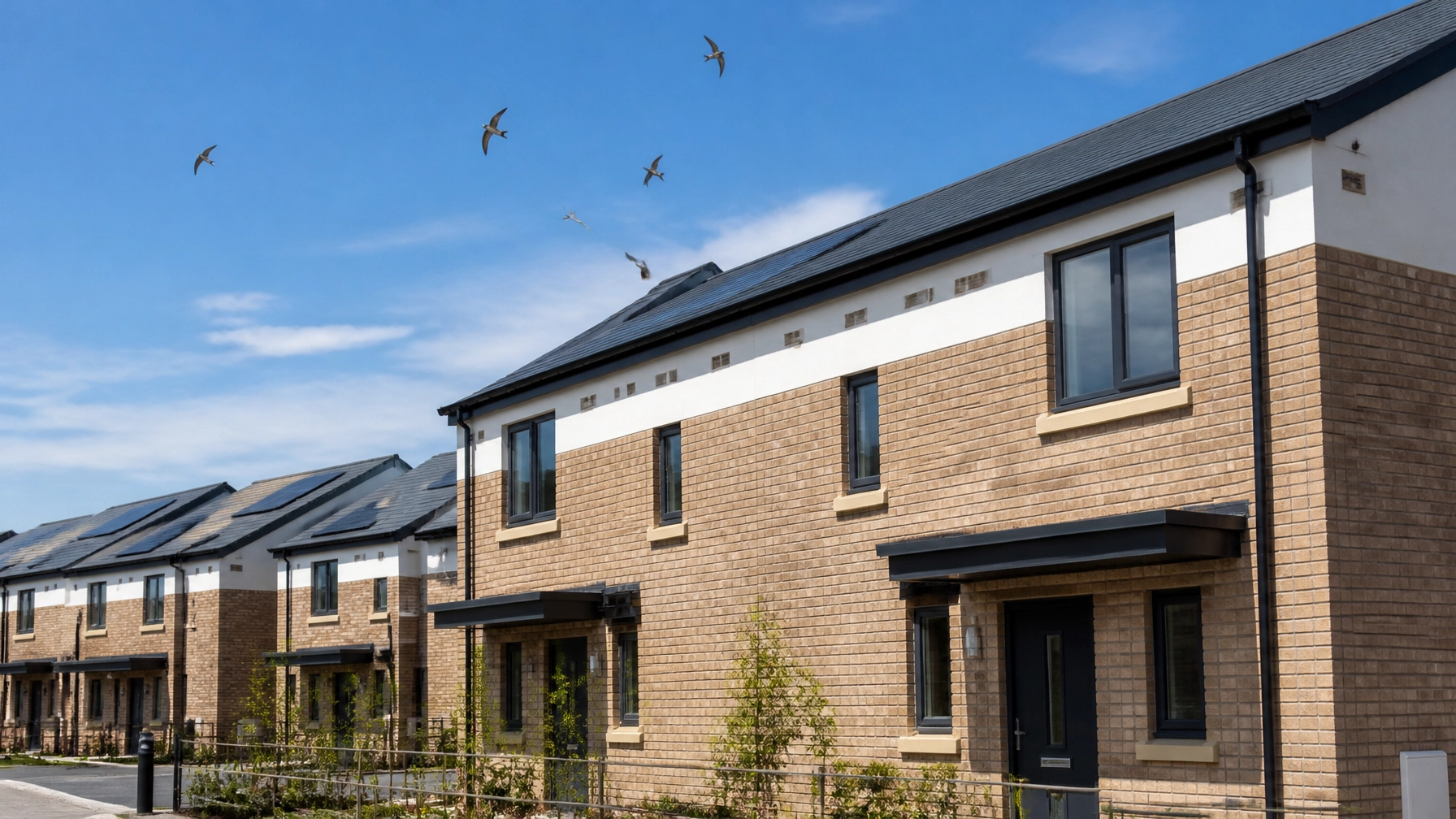
Scotland has taken a significant step towards reversing the decline of urban bird populations by becoming the first nation in the United Kingdom to mandate the installation of nesting bricks in new housing developments.
The landmark decision, integrated into the Natural Environment Bill, requires developers to incorporate internal nesting spaces, commonly known as swift bricks, into the fabric of new buildings.
This move is designed to provide permanent sanctuaries for swifts, house sparrows, and starlings, species that have seen their traditional nesting sites vanish due to modern construction techniques and the renovation of older properties.
The legislation follows years of advocacy from conservationists who have highlighted the plight of the swift, a bird that spends almost its entire life on the wing, only landing to breed. Historically, these migratory birds nested in the small gaps found under eaves or in the masonry of older buildings. However, as modern building standards have improved energy efficiency and airtightness, these accidental entry points have been sealed off, leaving returning birds with nowhere to raise their young. By making these nesting bricks a legal requirement, the Scottish Government aims to ensure that biodiversity is woven directly into the urban landscape, rather than being treated as an afterthought.
Industry experts suggest that the cost of implementing these bricks is negligible compared to the overall budget of a housing project, yet the ecological benefits are profound. Unlike external boxes, which can decay over time and require maintenance, swift bricks are designed to last the lifetime of the building. They are effectively hollowed-out blocks that replace standard bricks or stones, providing a cool, safe, and durable cavity for birds to nest. This approach not only supports the local ecosystem but also fosters a closer connection between residents and the natural world, as the sight and sound of swifts returning each spring become a staple of new communities.
Addressing the Loss of Natural Habitats
The rapid decline of the swift population in Britain, estimated to have fallen by more than half in the last two decades, is largely attributed to the loss of suitable nesting sites.
As cities expand and old structures are demolished or modernised, the "cracks and crevices" that once supported a vast array of urban wildlife have disappeared. This legislative change in Scotland acknowledges that the climate and nature emergencies are interlinked, and that providing space for nature within the built environment is a critical component of sustainable development.
Urban areas have often been viewed as biological deserts, but the introduction of mandatory nesting sites challenges this perception. Swifts are particularly suited to urban living as they do not require local foraging grounds in the immediate vicinity of their nests, often travelling miles to find the insects they need. By securing the nesting site, the law addresses the primary bottleneck in their lifecycle. The requirement is expected to result in thousands of new nesting opportunities created annually across Scotland, providing a vital lifeline for a species that is currently on the red list of conservation concern.
Furthermore, the benefits of these bricks extend beyond a single species. While designed with swifts in mind, they are frequently colonised by other red-listed birds such as house sparrows and starlings. These birds play a crucial role in urban ecology, including natural pest control. The mandate represents a shift toward "nature-positive" construction, where the goal is not merely to minimise the negative impact of a new building, but to actively contribute to the recovery of the local environment.
Implementation and the Role of Developers
The transition to this new standard will require close collaboration between architects, planners, and construction firms. Under the new regulations, ministers will have the power to set specific requirements for the number and placement of swift bricks based on the scale and location of a development. For many in the industry, this is seen as a straightforward adjustment to existing design workflows. The bricks themselves are available in a variety of finishes to match the aesthetic of different buildings, ensuring that ecological requirements do not compromise architectural integrity.
There is also an educational component to the rollout. Developers are being encouraged to see biodiversity features as a selling point for new homes. Buyers are increasingly looking for properties that align with their environmental values, and a "home with a view" of returning swifts can add a unique charm to a residential street. Planning departments will be tasked with ensuring that the bricks are placed at the correct height and orientation, typically at least five metres above the ground and away from direct sunlight, to ensure they are attractive and safe for the birds.
Resistance from the construction sector has been minimal, largely because the financial burden is low. A single swift brick typically costs around thirty pounds, a fraction of the cost of other environmental mitigations like solar panels or heat pumps. By embedding these requirements into the primary planning process, the Scottish Government has removed the uncertainty that often surrounds voluntary conservation efforts. This creates a level playing field where all developers are contributing to the national biodiversity targets as a standard part of doing business.
A Catalyst for Wider Ecological Recovery
The decision has sent a strong signal to the rest of the United Kingdom and beyond. By leading the way with a statutory requirement, Scotland has provided a template for how national governments can use planning policy to drive large-scale environmental change. Conservation groups are now looking toward other devolved administrations and the Westminster government to follow suit. The success of the Scottish model will be closely monitored, with early indicators suggesting that a widespread rollout could significantly stabilise bird populations within a generation.
This law also opens the door for other integrated biodiversity measures. Discussions are already taking place regarding the potential for mandatory "bee bricks" to support solitary bees, or integrated bat roosts in specific geographic areas. The underlying principle is that buildings should be multi-functional, serving as human habitats while also supporting the wider web of life. As the climate changes, providing these stable, thermally regulated nesting environments becomes even more important for the survival of migratory species.
Ultimately, the "swift brick" law is about more than just birds; it is about the kind of future we want to build. It reflects a growing understanding that human prosperity is dependent on a healthy natural world. By ensuring that our homes also provide a home for the creatures we share our environment with, we are building more resilient, vibrant, and sustainable communities. In the Highlands and across Scotland’s growing urban centres, the return of the swift will soon be a guaranteed herald of summer, protected by the very walls of the buildings we inhabit.