Walking down a narrow stretch of concrete in the heart of Southampton used to be a task many locals avoided after dark.
For years, the alleyway connecting a busy residential block to the local high street was synonymous with broken glass, fly-tipping, and an atmosphere that felt anything but safe. Today, that same path is unrecognisable. It has become a vibrant focal point for local teenagers, thanks to the vision and persistence of 16-year-old Ibrahim, a resident who decided that enough was enough.
Ibrahim grew up watching his peers drift between street corners with nowhere to go. The lack of youth-focused spaces in this part of Southampton meant that many young people felt pushed to the margins, often ending up in the very alleyways that residents feared. Rather than waiting for local authorities to intervene, Ibrahim took the lead. He spent months gathering support from neighbours and local businesses to reclaim the space. His goal was simple: turn a place of neglect into a place of opportunity.
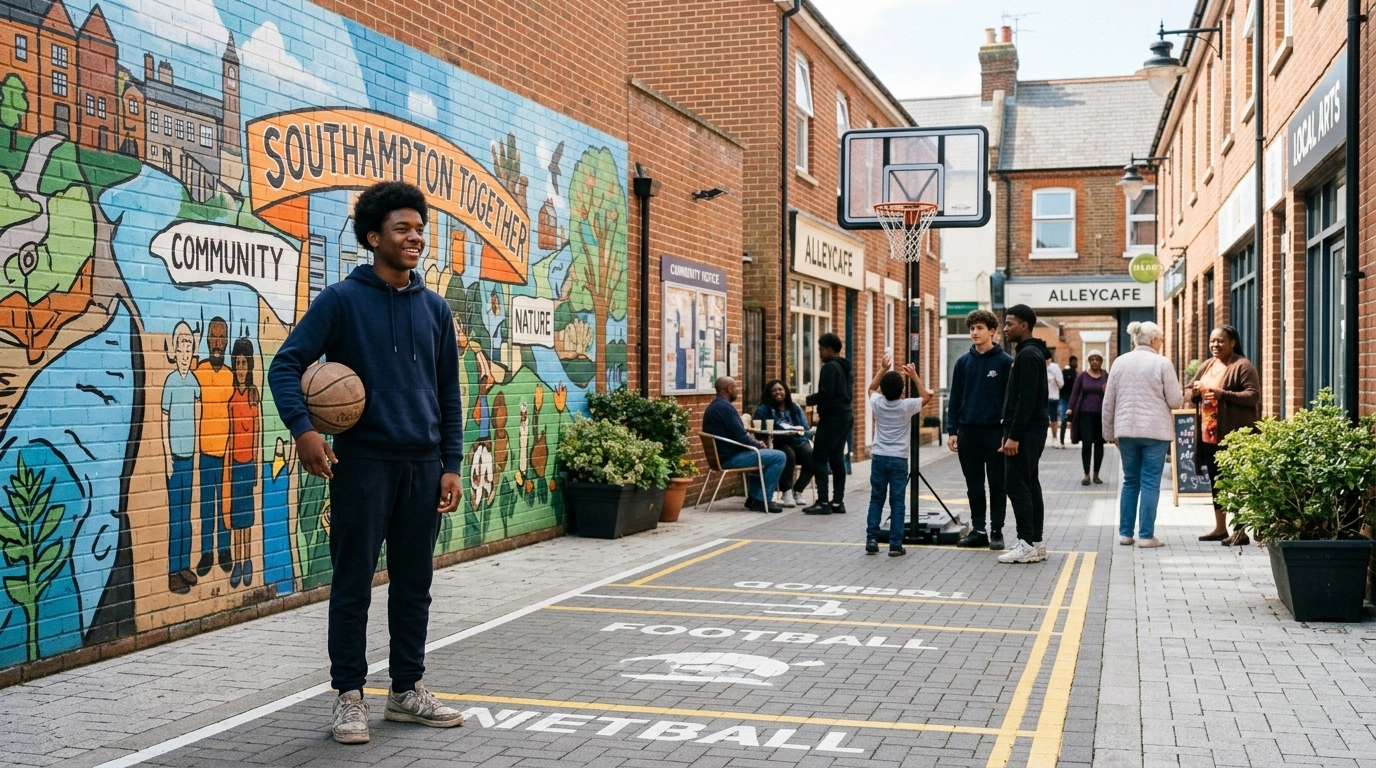
The transformation began with a massive clean-up operation. Ibrahim organised a group of volunteers to clear decades of rubbish, scrub away graffiti, and repair broken lighting. Once the physical foundations were set, the creative work began. Vibrant murals now line the walls, reflecting the diverse culture of the Southampton community. What was once a dark corridor is now a brightly lit, colourful thoroughfare that feels alive and welcoming at any time of day.
The Vision for Change
The project was never just about aesthetics. Ibrahim understood that for the space to remain safe, it needed to be used consistently and positively. He introduced a portable basketball hoop and marked out mini-pitches for football and netball on the newly cleaned pavement. By providing the equipment and a dedicated time for organised play, he successfully drew young people out of the shadows and into a structured environment. This shift in usage has significantly reduced the instances of anti-social behaviour in the immediate area, as the community now feels a sense of ownership over the site.
Local residents who previously avoided the route now stop to watch the games. The intergenerational bridge being built is one of the most significant, though perhaps unintended, successes of the project. Older residents have reported feeling safer and more connected to the youth in their neighbourhood. Ibrahim’s initiative has proven that when young people are given the tools and the permission to lead, they can solve problems that have stumped adult committees for years. The “dodgy alley” is now officially referred to by locals as the Community Hub, a name that reflects its new role in the social fabric of the city.
The funding for the equipment and paint didn’t come from a large government grant. Instead, Ibrahim used social media to run a local crowdfunding campaign. He also approached small businesses on the nearby high street, explaining how a safer alleyway would benefit their footfall and security. The response was overwhelming. Shopkeepers donated everything from lighting fixtures to sports bibs, seeing the direct correlation between a thriving youth space and a more prosperous local economy.
More Than Just a Games Pitch
As the sports sessions grew in popularity, Ibrahim noticed that many of the older teenagers were asking for advice about more than just their jump shots. They were worried about their futures, specifically finding work and navigating the complex world of post-16 education. Sensing another gap that needed filling, Ibrahim expanded the Hub’s offerings. Every Tuesday and Thursday afternoon, the basketball hoop is moved aside to make way for the Career Support Group.
This segment of the project brings in local mentors: professionals from across Southampton who volunteer their time to help young people with CV writing, interview techniques, and apprenticeship applications. The casual setting of the alleyway removes the intimidation factor often associated with formal career offices. Sitting on benches under the colourful murals, teenagers talk through their ambitions with people who have successfully navigated the local job market. It is a grassroots approach to professional development that meets young people exactly where they are.
The impact of this career support has been immediate. Several local youths have already secured part-time jobs or placements through the connections made at the Hub. Ibrahim himself manages the schedule, ensuring that there is always a variety of mentors available. By integrating career advice into a space primarily used for recreation, Ibrahim has made professional growth feel like a natural part of the community’s daily life. The Hub has become a one-stop-shop for both physical activity and personal advancement.
A Blueprint for Youth Empowerment
What Ibrahim has achieved in Southampton is being looked at by other community leaders as a potential model for urban regeneration. The project demonstrates that massive budgets and lengthy bureaucratic processes aren’t always necessary to make a tangible difference. By focusing on a specific, high-impact location and engaging the people who use it most, Ibrahim has created a sustainable and scalable solution. The key to the project’s success is its authenticity; it was built for the youth, by the youth.
The sustainability of the Hub is maintained through a rota of young volunteers. Ibrahim has stepped back from micromanaging every detail, instead empowering others to lead the sports sessions and coordinate the mentor visits. This leadership training is another layer of the project’s success. The teenagers involved are gaining practical experience in event management, communication, and community organising: skills that will serve them well long after they leave the Hub.
As the project enters its second year, there are plans to introduce more workshops, including digital literacy and mental health awareness sessions. The success of the Southampton alleyway has inspired similar discussions in neighbouring districts, with Ibrahim often invited to share his story and advise on how to start similar initiatives. He remains humble about his achievements, insisting that he simply did what needed to be done for his friends and his neighbourhood.
The transformation of this small patch of Southampton serves as a powerful reminder of the potential locked within local communities. When a 16-year-old can turn an avoided alleyway into a celebrated hub of activity and support, it challenges the narrative of youth disengagement. Ibrahim’s work is a testament to the idea that real change often starts with a single person deciding that their environment can, and should, be better. The Hub stands today not just as a place for sports or career advice, but as a symbol of what is possible when a community invests in its own future.
Southampton’s youth population now has a blueprint for how to reclaim their streets. The once-dodgy alley is a beacon of safety, proving that the best way to tackle urban decay is through active, positive participation. As the sun sets over the Hub, the sound of basketballs bouncing and teenagers laughing has replaced the silence of a space once left to rot. Ibrahim played a crucial part in that change, and his city is all the better for it.