As the Orion spacecraft begins its steady trek back towards Earth, the four-person crew of the Artemis II mission has entered a reflective phase of their historic journey. Now on day four of the mission, the adrenaline of the initial launch and the high-stakes lunar flyby has given way to a profound sense of awe. Floating more than 400,000 kilometres away from the familiar blue marble of home, the crew members have spent the last several hours processing the surreal experience of being the first humans in over half a century to witness the lunar surface from such close proximity. This stage of the mission is not merely about technical data and trajectory corrections; it has become a deeply personal chapter in the story of human exploration, marked by moments of quiet contemplation and shared wonder.
The transition from the intense activity of the lunar encounter to the relative calm of the return leg has allowed the crew to begin documenting their experiences. After successfully navigating the spacecraft around the far side of the moon, a region shrouded in mystery and hidden from Earth's view, the astronauts found themselves in a unique position to observe the cosmos without the interference of planetary light. It was during these hours that the weight of their isolation truly settled in, balanced by the knowledge that they were paving the way for future generations to walk upon the lunar soil once again.
The Human Experience of the Lunar Flyby
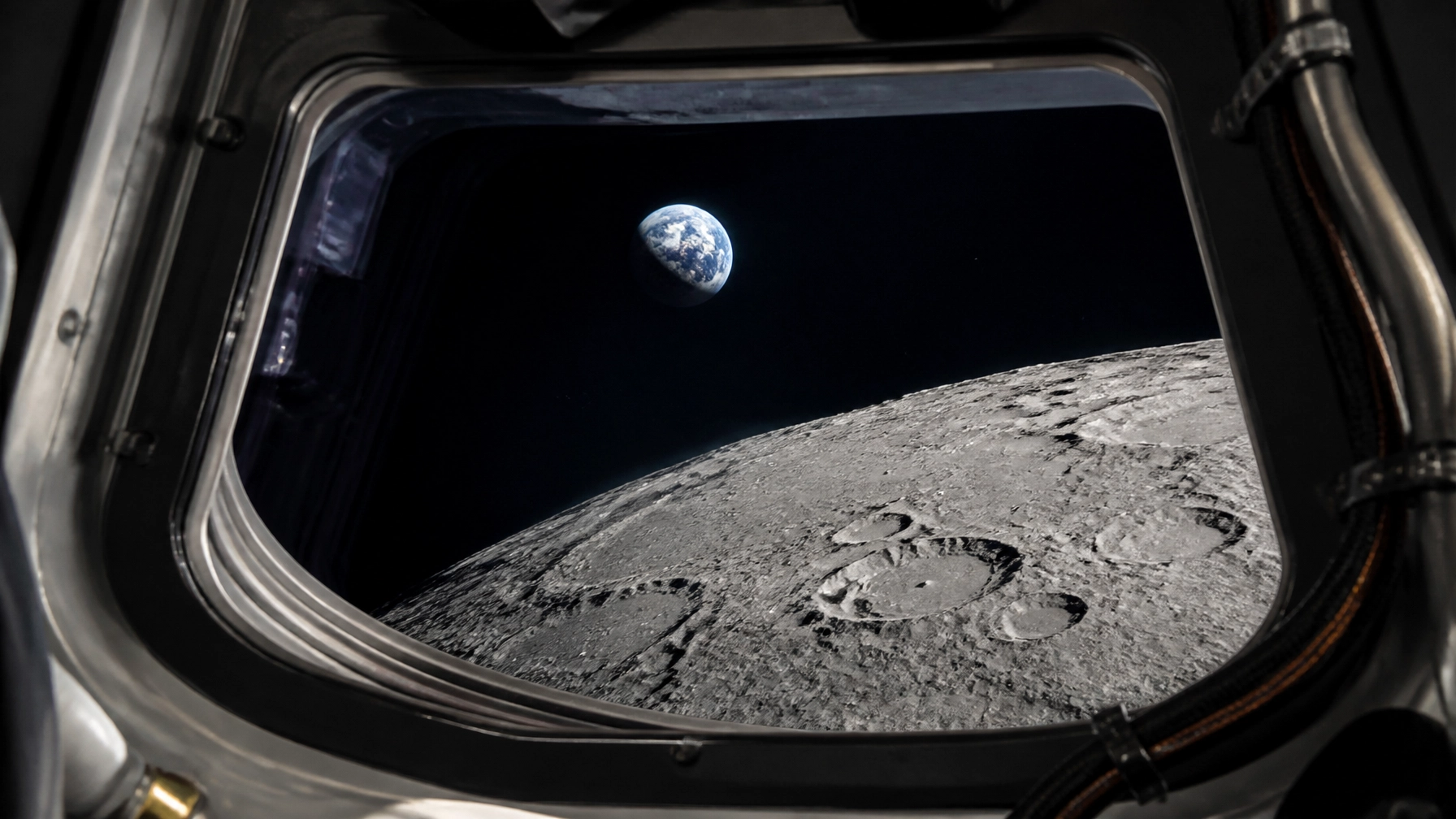
The mission reached its most dramatic point as Orion swept around the lunar far side, briefly severing communication with mission control on Earth. For those forty minutes of silence, the crew was truly alone, surrounded by the stark, cratered landscape of the moon. They described the vista as "spine-tingling," noting that the sheer scale of the craters and the intensity of the lunar shadows were far more vivid than any high-resolution photograph could convey. One crew member remarked that the moon appeared almost alive in its desolation, a silent witness to billions of years of cosmic history.
Witnessing the solar eclipse from deep space was another highlight that left the crew speechless. As the spacecraft, the moon, and the sun aligned, the crew observed the celestial dance from a perspective never before granted to human eyes. The alignment created a spectacular ring of light, a halo that seemed to crown the moon against the absolute blackness of the void. This moment was not just a scientific curiosity but a visceral reminder of the precision of orbital mechanics and the fragility of our place in the solar system. The visual impact was so profound that several crew members were seen embracing after the event, a spontaneous display of camaraderie and relief after the tension of the flyby.
The psychological impact of seeing the Earth as a tiny, fragile disc in the distance cannot be overstated. From their vantage point, the entire history of humanity, every conflict, and every achievement was contained within a small, glowing sapphire hanging in the dark. This perspective, often referred to as the "overview effect," has become a central theme of their communications back to the ground. They spoke of a renewed sense of responsibility towards our home planet, noting how thin and delicate the atmosphere appeared from several hundred thousand kilometres away.
Silence and Solitude in the Vast Void
With the primary mission objectives of the lunar flyby completed, the crew has been granted a period of much-needed downtime. This "rest day" is a crucial component of the flight plan, designed to allow the astronauts to recover from the physical and mental demands of the first three days. During this time, the internal atmosphere of Orion has shifted from a bustling laboratory to a space of quiet reflection. Crew members have been encouraged to use this time for personal pursuits, listening to music, watching films, or simply staring out of the windows at the passing stars.
Journaling has become a significant activity for the four explorers. Each member is keeping a detailed record of their thoughts and emotions, capturing the nuances of life in deep space that technical sensors might miss. These journals are expected to provide invaluable insights into the human condition during long-duration spaceflight. The crew has shared that they are finding solace in these moments of privacy, using their headphones to create a small personal bubble within the confines of the spacecraft. Whether it is a favourite song or a recorded message from family, these connections to Earth serve as vital anchors during their journey through the vacuum.
The physical sensations of living in microgravity for an extended period are also beginning to settle into a new "normal." The crew has adjusted to the rhythm of life aboard Orion, from the way food is prepared to the procedures for maintaining physical fitness. However, the mental adjustment remains an ongoing process. The lack of a traditional day-night cycle and the constant hum of the life support systems create a unique environment that requires constant adaptation. Despite these challenges, the morale remains exceptionally high, bolstered by the success of the mission so far and the shared bond that has formed between the four individuals.
Charting the Homeward Journey
As the spacecraft continues its long arc back towards the Atlantic Ocean, the focus is gradually shifting towards the complexities of re-entry. However, the significance of what has already been achieved is not lost on anyone involved. A high-profile call with the head of state served as a reminder of the global impact of the Artemis II mission. During the conversation, the crew expressed their gratitude for the support they have received and their excitement about the future of the lunar exploration programme. They highlighted that while they are the ones currently on board, they represent the hard work and dedication of thousands of people back on Earth.
Technical evaluations of the Orion systems have shown that the spacecraft is performing flawlessly. The manual piloting tests conducted earlier in the mission provided the crew with a hands-on understanding of the vehicle's capabilities, proving that human intervention remains a critical element of deep-space exploration. These tests have cleared the way for future missions to attempt more complex manoeuvres, including docking with the planned lunar gateway and, eventually, landing on the surface itself. Every kilometre travelled on this return journey is a testament to the engineering prowess that has made this flight possible.
Looking ahead, the final phase of the mission will involve a high-speed plunge through the Earth's atmosphere, a test of the heat shield's durability that will be as intense as any part of the journey. For now, however, the crew remains focused on the present. They are soaking in the last few days of their unique perspective, knowing that soon the blackness of space will be replaced by the familiar blue of the sky and the splash of the ocean. The reflections shared on day four serve as a bridge between the moon and the Earth, a reminder that while we reach for the stars, our hearts and our history remain firmly rooted on the ground. The stories they bring back will undoubtedly inspire a new generation to look up at the night sky with a sense of possibility and purpose.