Hull is a city known for its maritime heritage and its resilient spirit, but recently, its most famous landmark has taken a silent leap forward in making the mysteries of the ocean accessible to everyone. The Deep, the city’s iconic submarium, has officially introduced 87 new British Sign Language signs specifically for marine species. This move is not just a nod to inclusivity; it is a fundamental shift in how the deaf community interacts with the natural world. For too long, visitors who rely on BSL have had to rely on fingerspelling complex Latin or common names for fish, a process that can be slow and often fails to capture the essence of the creature being described. By working with linguistic experts and members of the deaf community, the aquarium has created a visual vocabulary that matches the majesty of its inhabitants.
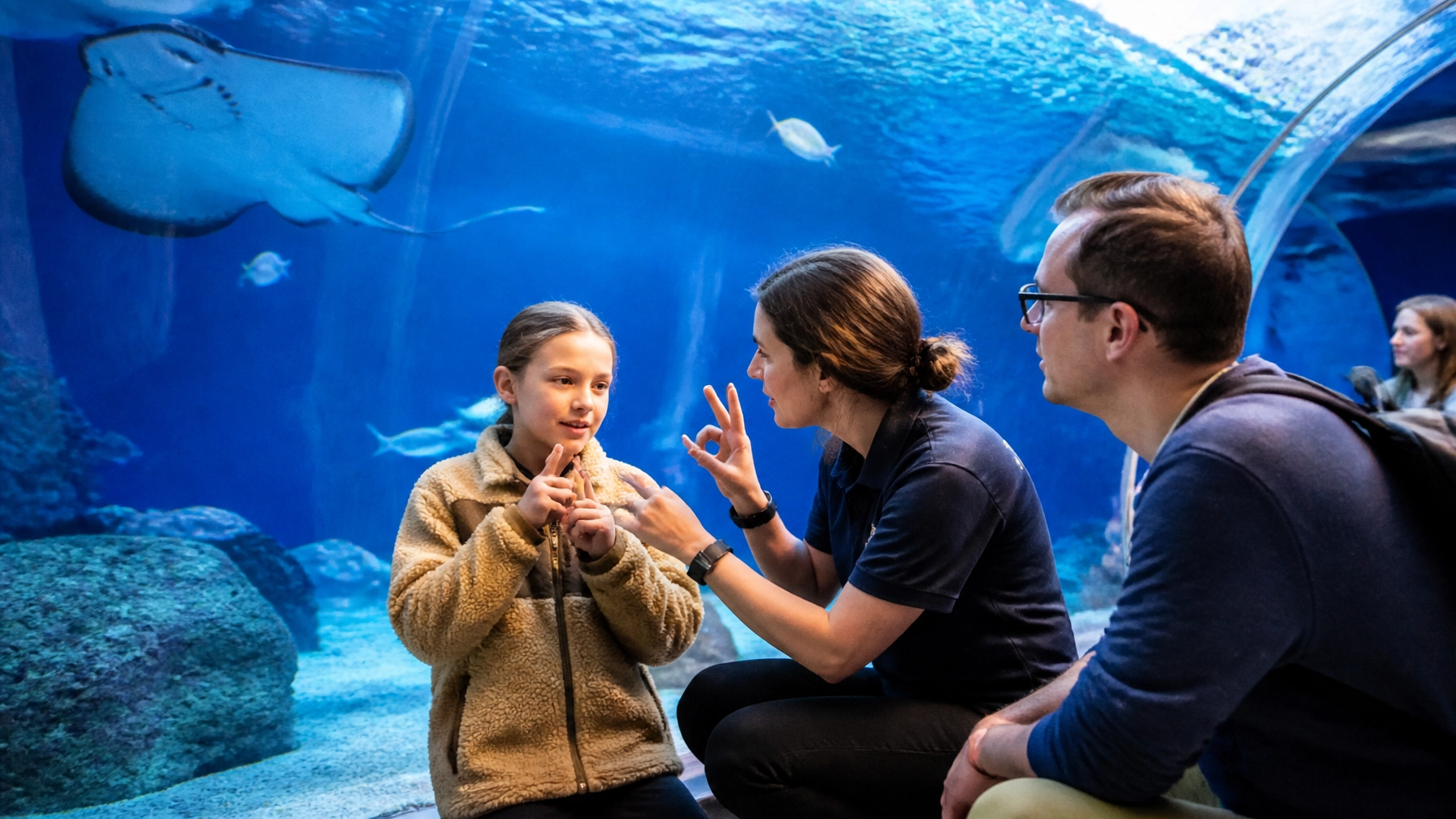
This project was launched in conjunction with World Ocean Day, a moment when the global community reflects on our relationship with the sea. In Hull, this reflection took a practical turn. The new signs cover everything from the majestic sawfish to the delicate clownfish, ensuring that the educational mission of the aquarium is not lost in translation. Inclusion in public spaces has often been relegated to ramps and lifts, but true accessibility involves the mind and the heart. When a deaf child can see a shark glide past and immediately have a specific, evocative sign to describe it, rather than a series of individual letters, the connection to the animal becomes more visceral and immediate. This is about more than just naming; it is about belonging in a space that celebrates life on Earth.
Breaking the barrier of fingerspelling in marine biology
The technical challenge of creating 87 new signs is significant. British Sign Language is a rich, nuanced language with its own grammar and syntax, and it is not simply a signed version of English. To create these signs, the team at the aquarium had to consider the physical characteristics and movements of the animals. How does a particular ray move through the water? What is the defining feature of a gentoo penguin? The resulting signs are often descriptive and intuitive, allowing for a more fluid conversation between visitors. Before this initiative, a visitor might have had to spell out 'S-T-I-N-G-R-A-Y' letter by letter, which interrupts the flow of observation. Now, a single, fluid motion can convey the creature’s identity, allowing more time for looking and learning.
This development is also a vital step for deaf people interested in STEM subjects. Science communication is often heavily reliant on spoken or written word, which can create a glass ceiling for those who communicate differently. By formalising these signs, the aquarium is helping to build a bridge into the world of marine biology. It provides a standardised way for deaf students and hobbyists to discuss complex ecosystems and conservation efforts. When we expand the language we use to describe the world, we expand our collective understanding of it. The Deep has effectively updated the dictionary of the sea, making sure that 87 more entries are available to those who use their hands to speak.
A new standard for inclusive tourism in the United Kingdom
The impact of this initiative extends beyond the walls of the aquarium. It sets a high bar for other tourist attractions across the United Kingdom. Often, 'accessibility' is treated as a box-ticking exercise, but here it has been treated as a creative and collaborative project. The Deep has long been a pioneer in this field, hosting 'Quiet Days' and 'Tranquil Experiences' for those who find the typical museum environment overwhelming. By adding a comprehensive BSL vocabulary to their repertoire, they are acknowledging that the deaf community is not a monolith and that their needs for engagement are as diverse as any other group of visitors.
The city of Hull itself has seen a transformation over the last decade, evolving from an industrial port to a cultural hub. The Deep, with its striking architecture and commitment to conservation, has always been at the heart of this change. This latest project reinforces the idea that culture and education should be democratic. It is not enough to simply open the doors; the content within must be presented in a way that is truly digestible. The success of the BSL project suggests that other institutions, whether they be art galleries, history museums, or science centres, should look at their own vocabularies and ask what is being lost in the gaps of communication.
Fostering a deeper connection to ocean conservation
Conservation is the silent heartbeat of everything the aquarium does. The world's oceans are facing unprecedented threats from climate change, pollution, and overfishing. To solve these problems, we need every mind at the table. By engaging the deaf community more deeply, the aquarium is recruiting a new generation of ocean advocates. When someone can name a species in their native language, they are more likely to care about its survival. The 87 new signs are not just labels; they are tools for advocacy. They allow deaf visitors to discuss the plight of the sawfish or the importance of coral reefs with the same passion and precision as hearing visitors.
The feedback from the initial Deaf Community Event was overwhelmingly positive. Families reported that for the first time, they felt the educational talks were truly designed with them in mind, rather than being a hearing experience with an interpreter added as an afterthought. This shift from 'accommodation' to 'integration' is what makes the project significant. As the signs become more widely used and recognised, they will likely find their way into classrooms and homes across the country. The Deep has started a ripple effect that could change how the natural world is taught to deaf children nationwide. In the end, the goal is simple: to ensure that when we look into the dark, mysterious waters of our planet, we all have the words, or the signs, to describe the wonder we see.