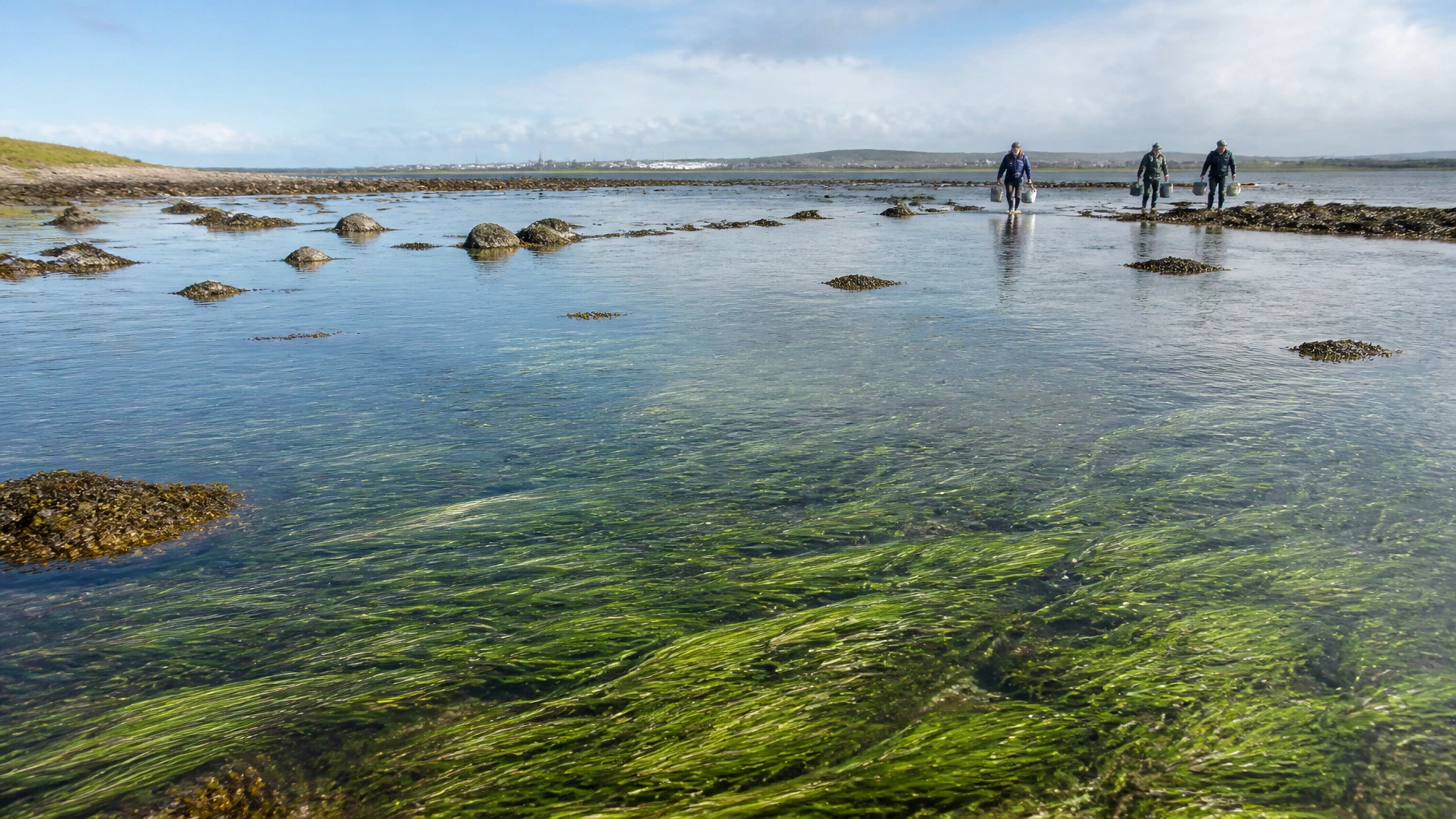
Along the rugged periphery of the Walney Channel, where the Irish Sea meets the industrial skyline of Barrow-in-Furness, a quiet revolution is taking root beneath the waves.
For decades, the coastal waters of Cumbria have faced the dual pressures of industrial runoff and shifting maritime temperatures, leading to a significant decline in the region's natural underwater habitats. However, recent reports from the Cumbria Wildlife Trust indicate a remarkable turnaround for one of the ocean's most vital, yet overlooked, ecosystems: the seagrass meadow. At Roa Island, a dedicated team of conservationists and volunteers is successfully spearheading a restoration project that aims to return these "underwater forests" to their former glory, providing a blueprint for coastal resilience across the United Kingdom.
Seagrass is the only flowering plant in the world capable of living in seawater. Far from being a mere marine weed, it forms complex, carpet-like meadows that serve as the nursery for a vast array of marine life. In the Walney Channel, the focus is specifically on Zostera marina, a species of seagrass that thrives in the intertidal zones. For years, these beds were at risk of disappearing entirely, but through a meticulous process of seed harvesting, processing, and replanting, the tide is finally turning. The restoration work involves volunteers trekking across the muddy sands of Roa Island during low tide to collect seeds, which are then carefully nurtured in a dedicated storage facility before being reintroduced to the seabed in small, biodegradable bags. This hands-on approach is beginning to yield visible results, with new shoots emerging to stabilise the sediment and clear the water.
The Blueprint for a Resilient Irish Sea
The restoration of seagrass at Roa Island is not merely an exercise in gardening beneath the waves; it is a fundamental reconstruction of a broken ecosystem. When seagrass meadows flourish, they act as a natural buffer, protecting the coastline from erosion by dampening the energy of incoming waves. In an era of increasingly volatile weather patterns and rising sea levels, these organic barriers are becoming indispensable. The physical structure of the seagrass blades slows down water currents, allowing suspended particles to settle on the seafloor. This process not only clarifies the water but also traps nutrients and organic matter, creating a nutrient-rich environment that supports a staggering diversity of species.
In the Irish Sea, these meadows are the primary nursery grounds for commercially important fish species such as cod, plaice, and pollock. Juvenile fish find refuge among the swaying green blades, where they are protected from larger predators and have access to an abundant supply of food. Without these nurseries, the local fishing industry and the broader marine food web face a precarious future. Furthermore, the beds at Roa Island provide a home for rare seahorses, pipefish, and a multitude of invertebrates that form the foundation of the marine ecosystem. By restoring the seagrass, conservationists are effectively rebuilding the "cradle of the sea," ensuring that the biodiversity of the Cumbrian coast can recover and thrive for generations to come.
The success at Roa Island is also a testament to the power of collaborative conservation. Funding for the project has come from a diverse range of sources, including tech firms and government environmental agencies, highlighting a growing recognition of the economic and ecological value of "blue" infrastructure. The work is physically demanding, often requiring volunteers to work in challenging conditions, navigating slippery mudflats and racing against the incoming tide. Yet, the commitment of the local community has been unwavering. This collective effort is not just about planting seeds; it is about reclaiming a sense of stewardship over the local environment and proving that targeted, well-funded conservation projects can reverse decades of ecological decline.
A Natural Solution to the Global Climate Crisis
While the local benefits of seagrass restoration are clear, the implications for the global climate are even more profound. Seagrass meadows are among the most effective carbon sinks on the planet, capable of capturing carbon dioxide up to 35 times faster than tropical rainforests. This "blue carbon" is stored within the plants themselves and, more importantly, in the thick layers of sediment that their roots help to trap and stabilise. Because these sediments are often anaerobic (lacking oxygen), the carbon can remain locked away for centuries, preventing it from entering the atmosphere and contributing to global warming.
The Roa Island project represents a critical piece of the puzzle in the UK's broader strategy to reach net-zero emissions. While much of the public discourse around carbon capture focuses on planting trees on land, the potential of the ocean to sequester carbon is immense. In the Walney Channel, the restored meadows are already beginning to function as active carbon stores. Scientists involved in the project are closely monitoring the rate of carbon accumulation, providing vital data that could influence national environmental policy. By expanding these underwater forests, Cumbria is positioning itself at the forefront of natural climate solutions, demonstrating how local action can have a measurable impact on a global scale.
The efficiency of seagrass as a carbon sink is largely due to its longevity and the stability of the marine environment when undisturbed. Unlike terrestrial forests, which are vulnerable to wildfires and land-use changes that can release stored carbon back into the atmosphere, healthy seagrass beds offer a more secure long-term storage solution. However, this potential is entirely dependent on the health of the ecosystem. Pollution, coastal development, and destructive fishing practices can easily damage these fragile meadows, causing them to release their stored carbon and turning a vital sink into a source of emissions. This is why the restoration work in Cumbria is so urgent; it is not just about growth, but about securing and protecting the carbon already held within the seabed.
Community Roots and the Future of Coastal Conservation
The long-term success of the Roa Island seagrass project hinges on more than just biology and climate science; it is deeply rooted in the engagement of the local community. The project has transformed the way residents of Barrow and the surrounding areas interact with their coastline. Through volunteer programmes and educational outreach, people who once saw the Walney Channel as merely an industrial waterway are beginning to view it as a precious natural resource. This shift in perception is vital for the continued protection of the site, as a community that values its environment is far more likely to advocate for its preservation against future threats.
As the project moves into its next phase, the focus is shifting toward scaling up the restoration efforts. The lessons learned at Roa Island are already being shared with other conservation groups across the UK, creating a network of knowledge that can be applied to other depleted coastal areas. The use of a dedicated seagrass seed storage facility in Cumbria is a particularly significant development, allowing for the large-scale processing of seeds that was previously impossible. This facility acts as a "bank" for the future, ensuring that restoration work can continue even in years when natural seed production might be low.
The future of the Cumbrian coast looks significantly greener than it did a decade ago. While challenges remain, particularly from the ongoing effects of climate change and the need for sustained funding, the progress made at Roa Island offers a powerful message of hope. It serves as a reminder that nature has an extraordinary capacity for recovery if given the right support and protection. The "seeds of change" planted in the mud of the Walney Channel are growing into a resilient, carbon-rich underwater forest that will support marine life and protect the coast for decades to come. This is a story of local action yielding global benefits, proving that even the most industrialised coastlines can be reclaimed by the wild.