Karl Williams knew that the journey he was about to undertake was more than just a long drive across the British countryside. For many, a five-hundred-mile round trip from Stockport is a chore, a necessary evil for a holiday or a business meeting. But for Karl, every mile covered was a tribute to a man who had shaped his life and whose name was now permanently etched onto the hull of a vessel designed to save lives in the harshest conditions imaginable. The destination was not a scenic landmark or a bustling city, but a specific RNLI lifeboat: 'Eric’s Legend'.
The name is a direct homage to Karl’s grandfather, Eric Hester. For the Williams family, Eric was more than just a patriarch; he was a symbol of resilience and a lifelong supporter of the maritime community. While Eric himself may not have been a lifeboatman by trade, his spirit and his deep-seated respect for the sea left an indelible mark on his descendants. When the opportunity arose to have his name associated with the Royal National Lifeboat Institution, it felt like the most natural progression of a legacy that had always been anchored in the values of bravery and service.
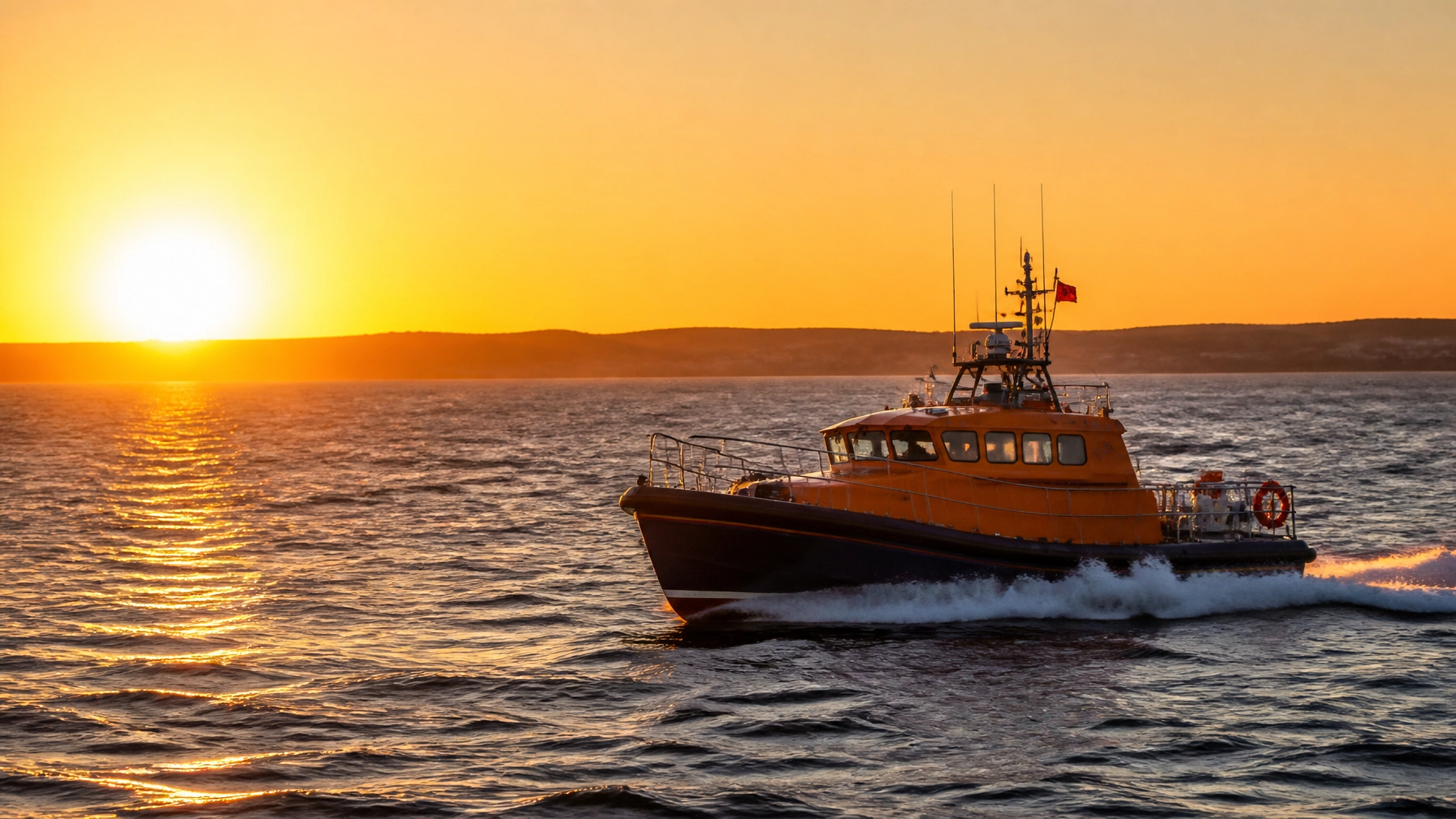
Standing on the dock and seeing the orange and blue livery of the lifeboat for the first time was an overwhelming experience for Karl. The RNLI is a British institution like no other, funded almost entirely by donations and manned largely by volunteers who drop everything to head into the teeth of a storm. To see his grandfather’s name: 'Eric’s Legend': standing out against the stark, functional beauty of the boat was a moment of profound emotional connection. It wasn't just a label; it was a promise that Eric’s name would be present during some of the most critical moments of other people’s lives, offering hope when the horizon looks its darkest.
A tradition of remembrance on the waves
The RNLI has a long-standing tradition of naming its vessels after individuals who have made a significant impact or through legacy gifts that fund the construction of these life-saving machines. Each boat carries a story, often one of loss or a lifetime of dedication, and 'Eric’s Legend' is no exception. The process of naming a boat is a meticulous one, ensuring that the vessel is not just a tool for rescue but a floating memorial. For Karl, the choice of the name was a reflection of the stories he grew up with: the 'legends' of his grandfather’s life that were told and retold during family gatherings in Stockport.
For many supporters of the RNLI, leaving a legacy in their will is the ultimate way to ensure that the charity can continue its mission. These donations are the lifeblood of the service, paying for everything from the high-tech Shannon-class lifeboats to the protective gear worn by the crews. When a name is chosen for a new addition to the fleet, it undergoes a period of reflection by both the family and the institution. In the case of Eric Hester, the name 'Eric’s Legend' was selected to capture the essence of a man whose influence reached far beyond his immediate circle. It represents a bridge between the past and the future, where the memory of a loved one is translated into the physical act of saving a stranger at sea.
The emotional weight of such a tribute cannot be understated. As Karl walked along the side of the boat, touching the cold metal of the hull, he wasn't just looking at a piece of modern engineering. He was looking at his grandfather's enduring presence. The RNLI often speaks of the 'lifeboat family,' a term that encompasses the crew, the shore staff, the fundraisers, and the families of those whose names are carried on the boats. By making this 500-mile journey, Karl was officially stepping into that family, witnessing the tangible result of a legacy that will span decades.
The long road from Stockport to the coast
The logistics of the trip required a fair amount of planning, but Karl was determined to see the boat in its home environment. Driving from the heart of the North West to the coast is a journey that takes you through the changing face of Britain, from the industrial heritage of the towns to the rugged, salt-sprayed beauty of the shoreline. Throughout the drive, Karl found himself reflecting on the man Eric was: a man who valued hard work and had a quiet, steady strength. These are the same qualities required by the volunteers who man the very boat that now bears his name.
Upon arrival, the scale of the RNLI’s operation became clear. These stations are hubs of the community, often situated in remote areas where the sea is both a source of livelihood and a constant threat. The crews who operate 'Eric’s Legend' are aware of the history behind the name on their bow. They understand that when they launch into a gale, they are carrying the hopes and the memories of families like the Williamses. For Karl, meeting some of the people who would be responsible for the boat was a vital part of the trip. It allowed him to see that his grandfather’s name was in good hands: manned by professionals who treat the equipment and the legacy it represents with the utmost respect.
The journey was also a moment of personal closure and pride. In a world that often moves too fast, taking the time to travel 500 miles for a single moment of reflection is a rare thing. It served as a reminder that some things are worth the effort, and that the connections we forge with our ancestors are not easily severed by time or distance. Karl’s trip was a pilgrimage of sorts, a way to say a final, public thank you to a man who had meant so much to him, ensuring that the 'legend' of Eric Hester would continue to grow with every successful launch and every life saved.
Ensuring the future of coastal rescue
The story of 'Eric’s Legend' is just one of many across the British Isles, but it highlights a crucial aspect of how the RNLI survives. Without the personal connections and the deep-seated desire of families to honour their loved ones, the charity would struggle to maintain its fleet of over 400 lifeboats. Every name on a hull represents a story, a donation, and a commitment to the safety of anyone who ventures onto the water. Karl’s journey brings this into sharp focus, showing that the RNLI is not just a clinical rescue service, but a tapestry of human emotion and history.
As the sun began to set over the harbour during Karl's visit, the orange hue of the RNLI lifeboat seemed to glow against the darkening water. It was a visual representation of the 'bright' future that such legacies provide. While the technology on board 'Eric’s Legend' is cutting-edge: featuring advanced radar, powerful engines, and self-righting capabilities: its heart is decidedly old-fashioned. It is built on the same principles of bravery and self-sacrifice that have defined the RNLI since its inception over 200 years ago.
Karl Williams eventually headed back to Stockport, the 250-mile return leg of his journey ahead of him. But he didn't leave empty-handed. He carried with him the memory of the boat, the sound of the water lapping against its hull, and the sight of his grandfather’s name standing tall. He knew that while he was back in the suburbs of Greater Manchester, a part of his family history was out there on the water, ready to face whatever the ocean could throw at it. 'Eric’s Legend' was no longer just a story told in a living room; it was a living, breathing part of the British coastline, a silent guardian watching over the waves.