Nature has a remarkable way of reminding us that even in an increasingly urbanised world, the wild is never far away.
From the deep, cold stretches of the Baltic Sea to the leafy suburban streets of New Jersey, two extraordinary stories have recently captured the hearts of onlookers and wildlife experts alike. These tales of a stranded humpback whale and a wandering black bear offer a poignant look at the challenges facing wildlife today and the lengths to which people will go to offer a second chance.
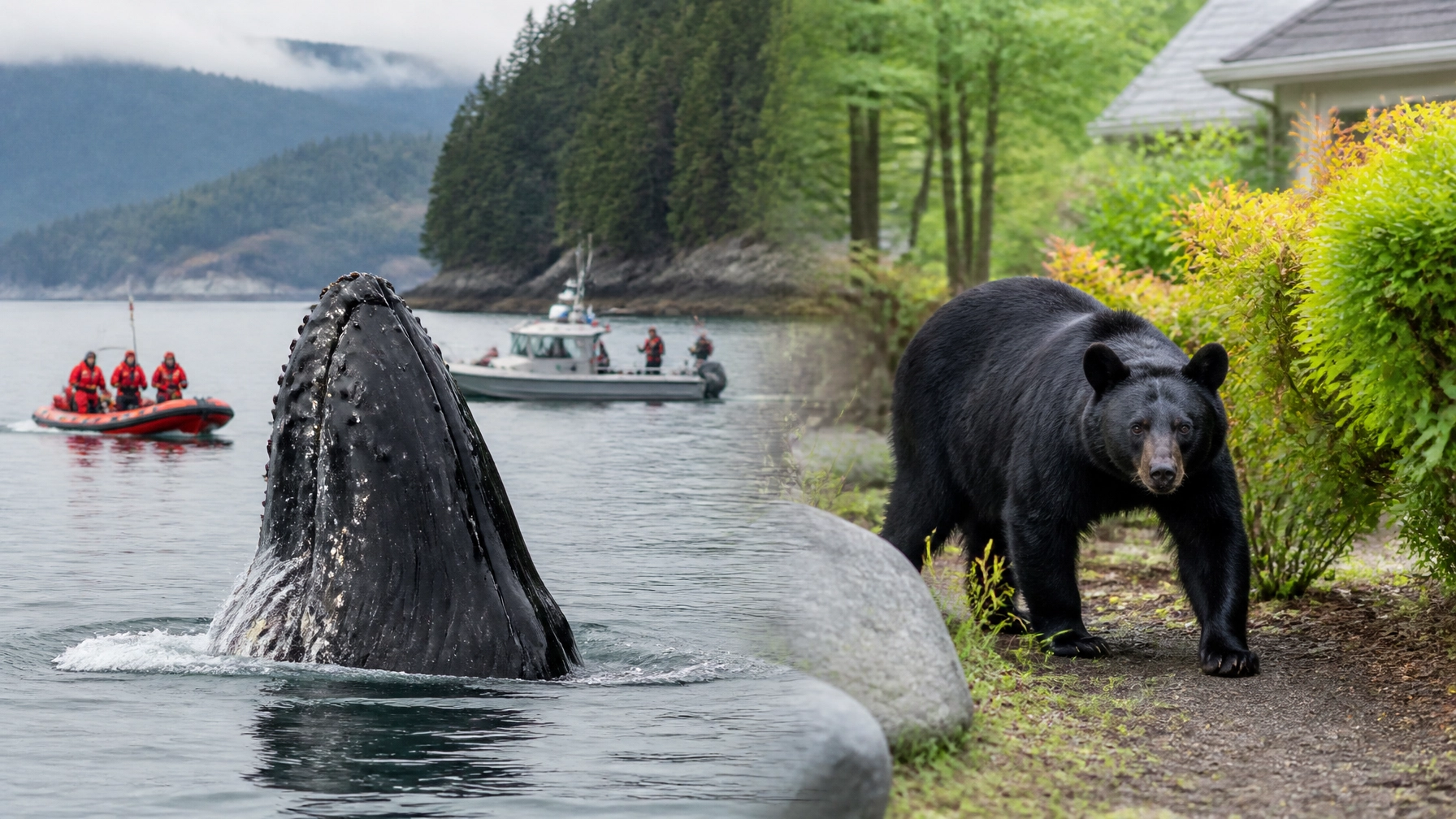
The first of these narratives began in the unlikeliest of places for a giant of the deep: the shallow, brackish waters off the northern coast of Germany. A thirty-two-foot humpback whale, a species more commonly associated with the vast expanses of the Atlantic, found itself hopelessly out of its depth. The creature had become a focal point of intense concern after it was spotted struggling in the Baltic Sea, a body of water that, while large, is notoriously difficult for such a massive mammal to navigate due to its restricted exits and varying depths.
The situation was already dire before the whale even reached the shore. Experts revealed that the animal had been trailing an active gill-net for several weeks, a ghost-like weight that had undoubtedly sapped its energy and made every mile of its journey a struggle. By the time it was discovered in the shallows, its condition was described as deteriorating rapidly. The sight of such a magnificent beast pinned against the coastline, unable to right itself or find its way back to deeper water, sparked a massive response from marine biologists and rescue teams.
Across the Atlantic, a different kind of drama was unfolding in a residential neighbourhood. In Elizabeth, New Jersey, residents woke to find a 160-pound black bear roaming their streets. While bear sightings are not unheard of in certain parts of North America, this particular visitor decided that the best vantage point for his urban tour was forty feet up a tree on a quiet residential street. The sight of a fully grown bear napping in the branches of a suburban tree was as surreal as it was dangerous, leading to a swift lockdown of the area and a delicate operation to bring the animal down safely.
A Battle Against Time in the Baltic Shallows
The rescue of the humpback whale was not just a physical challenge but an emotional rollercoaster for those involved. In the cold waters of the Baltic, rescuers faced the grim reality of the animal’s health. Large whales, once stranded, face a ticking clock. Without the buoyancy of the ocean to support their massive weight, their internal organs begin to fail under the pressure of gravity, and suffocation becomes a real and terrifying possibility.
Marine experts on the scene worked tirelessly to assess whether the whale could be towed back to the open sea or if the kinder, though heart-breaking, option would be to end its suffering. The entanglement in the gill-net had left deep scars, both literal and metaphorical. It was a stark reminder of the impact human activity, specifically commercial fishing, has on even the most remote parts of the ocean. The logistical nightmare of moving a creature of that scale is immense. Every movement must be calculated to avoid further injury to the whale or the rescue team.
Despite the odds, the presence of the whale in the Baltic served as a powerful catalyst for a broader conversation about marine conservation. It highlighted the need for better protection against discarded fishing gear and the importance of monitoring migratory patterns as climate change shifts the routes these animals have followed for millennia. The sheer resilience of the whale, continuing to fight even as its strength waned, provided a flicker of hope for the onlookers who lined the coast, many of whom stayed late into the night, hoping for a miracle.
The Sweet Solution to a Suburban Standoff
Back in New Jersey, the situation with the black bear required a more unconventional approach. Tranquilising a bear that is forty feet up a tree is a risky manoeuvre; the animal could fall and sustain life-threatening injuries. Instead, the local authorities and wildlife experts decided to play on the bear's most famous characteristic: its insatiable appetite.
The rescue team set up a large cage trap at the base of the tree and began a baiting process that sounded more like a dessert menu than a wildlife operation. They used a combination of day-old donuts, peanut butter, and apples, all topped off with a generous spritz of caramel spray. The sweet aroma wafted up into the branches, and it didn't take long for the bear to take notice. After a few hours of consideration and a long nap, the bear finally descended, lured by the promise of the sugary treats waiting below.
The bear walked calmly into the trap, where it was safely sedated and examined by veterinarians. At 160 pounds, the bear was young and healthy, likely just a wandering adolescent looking for a new territory. The success of the "donut lure" became a local sensation, but the serious side of the story was the efficiency and care with which the authorities handled the situation. Within a few hours, the bear was being transported away from the asphalt and concrete of Elizabeth back to the safety of the New Jersey wild, far from the temptations of suburban gardens and high-altitude naps.
Reflections on Resilience and the Human Spirit
What connects these two seemingly disparate events is the profound sense of empathy they evoke. In both cases, the animals were in positions of extreme vulnerability through no fault of their own: one caught in the literal nets of human industry, the other caught in the metaphorical net of urban expansion. The response in both Germany and the United States showed a common thread of human compassion. People were willing to donate their time, resources, and expertise to ensure these animals had a chance to survive.
These rescues also underscore the complex relationship we have with the natural world. As we continue to build and expand, the lines between "the wild" and "the civilised" are increasingly blurred. We are seeing more instances of wildlife entering human spaces, and more instances of human activity disrupting wildlife habitats. The humpback whale in the Baltic and the black bear in Elizabeth are symbols of a world in transition, where the survival of a species often depends on the quick thinking and kindness of the people they encounter.
The hope found in these stories isn't just about the survival of two individual animals; it's about the collective will to do better. Each successful rescue is a small victory against the tide of environmental degradation. They remind us that while the problems facing our planet are vast and often overwhelming, individual actions still matter. Whether it's a team of scientists working in freezing water to free a whale or a group of officers using donuts to save a bear, the spirit of the wild rescue remains a powerful testament to our better nature. In the end, both the whale and the bear were given a chance to return to where they belong, leaving behind a legacy of hope for all those who followed their journeys.