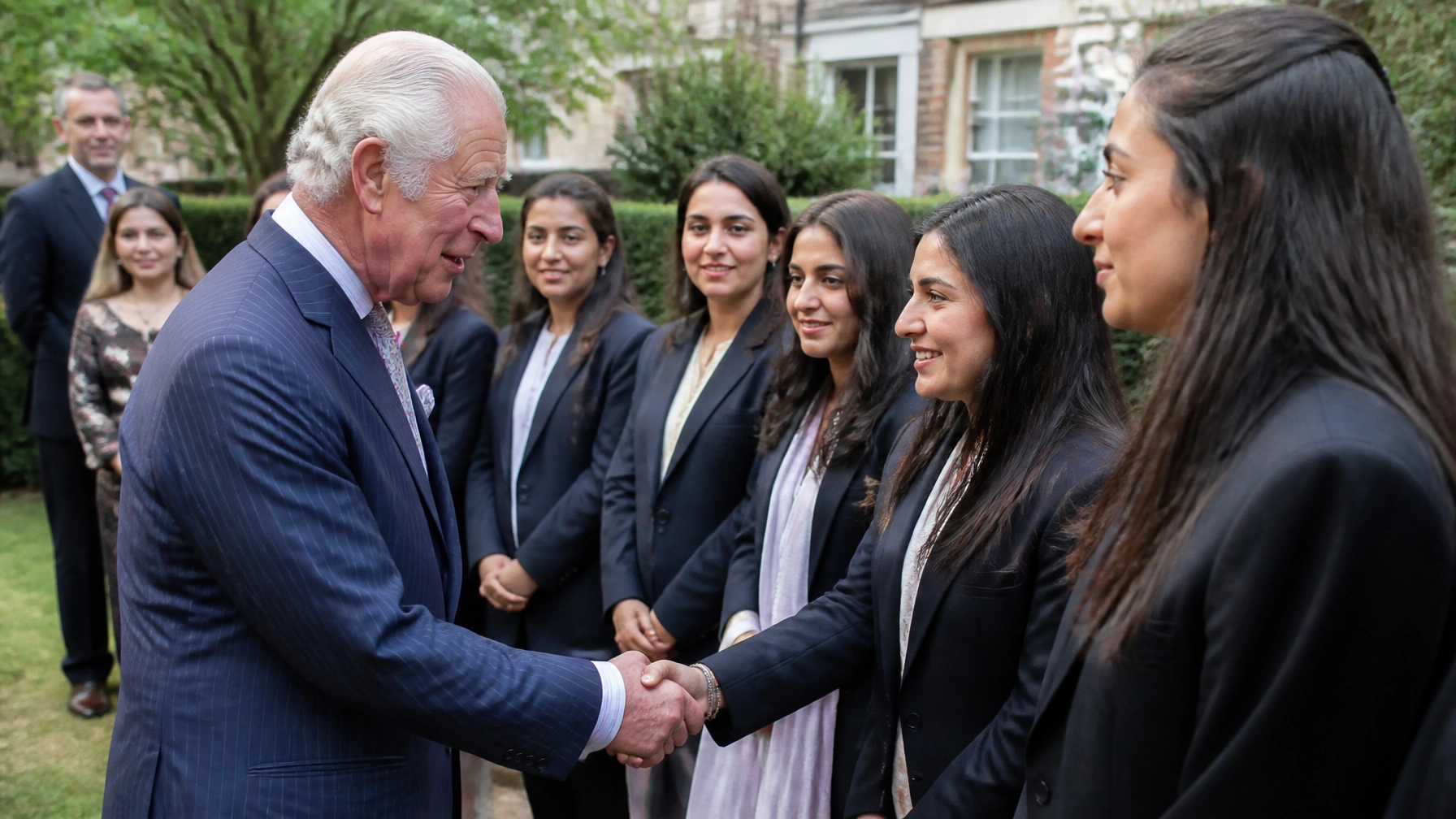
In a poignant display of solidarity and sportsmanship, King Charles has hosted the exiled Afghan women's cricket team at Clarence House, marking a significant milestone in the players' ongoing struggle for international recognition.
The meeting, which took place in the serene gardens of the King's London residence, provided a high-profile platform for a group of athletes who have become symbols of resistance and resilience since the Taliban's return to power in 2021. The team, now primarily based in Australia, is currently in the midst of a historic tour of the United Kingdom, supported by the England and Wales Cricket Board.
During the reception, the King engaged in warm and lengthy conversations with the players, many of whom shared harrowing accounts of their escape from Kabul. The monarch was seen listening intently as the cricketers described the challenges of maintaining their professional careers in exile while their counterparts back home remain barred from participating in any form of public sport. In a gesture of mutual respect, the team presented the King with a signed cricket shirt and a collection of autographs, gifts that represent more than just sporting memorabilia; they are tokens of a national identity that continues to thrive outside the borders of its homeland.
The visit comes at a critical juncture for the team. Since the Taliban takeover, women's sport in Afghanistan has been effectively dismantled, with training facilities closed and athletes forced into hiding or exile. Despite this, these women have refused to let their passion for the game be extinguished. Their presence at Clarence House underscores the British monarchy’s interest in supporting human rights and the empowerment of women through sport, even as the global cricketing community grapples with the complexities of official recognition.
The Royal Reception at Clarence House
The atmosphere at Clarence House was one of quiet dignity as the King moved between groups of players, showing a keen interest in their personal journeys. He reportedly inquired about the different languages spoken by the team members and expressed his admiration for their courage in the face of immense personal risk. The players, dressed in their team blazers, spoke of the honour of being received by the British Sovereign, a moment they hope will send a powerful message to the International Cricket Council and the wider world.
This engagement was not merely a formal handshake; it was a curated opportunity for the athletes to voice their aspirations. The team members recounted the dangerous journey they undertook to reach safety, navigating Taliban checkpoints and the chaos of the Kabul airport evacuation. For many, cricket was the catalyst for their escape, as their status as high-profile athletes made them targets under the new regime. By hosting them, the King has placed a spotlight on the intersection of sport and human rights, highlighting the plight of millions of Afghan women who have seen their fundamental freedoms stripped away over the last three years.
The King’s interest in the team’s welfare extended to their current lives in Australia, where they have been supported by Cricket Australia and local communities to continue their training. The conversation touched upon the difficulties of living as refugees while carrying the weight of being the sole representatives of Afghan women’s cricket on the global stage. This royal audience serves as a significant endorsement of their legitimacy, providing a morale boost that the players believe will be instrumental as they continue their tour across the United Kingdom.
From Kabul to Canberra: A Journey of Survival
The story of the Afghan women's cricket team is one of extraordinary survival. Before the fall of Kabul, the team was a burgeoning symbol of a modernizing Afghanistan, with young women across the country picking up bats and balls for the first time. However, the rapid shift in the political landscape in August 2021 turned these athletes into fugitives overnight. Many were forced to burn their kits and delete photos of themselves playing to avoid detection by the Taliban. The journey from those desperate weeks in Kabul to the manicured lawns of Clarence House is a testament to their unwavering resolve.
Most of the squad members eventually found sanctuary in Australia, where they were granted humanitarian visas. Resettling in cities like Canberra and Melbourne, they had to rebuild their lives from scratch while dealing with the trauma of displacement and the fear for family members left behind. Despite the immense pressure, they reformed as a unit, training whenever possible and advocating for the right to represent their country. They have become a team in exile, a unique entity in the world of professional sport that exists without a physical home but possesses an unbreakable spirit.
The current UK tour, which runs from late June through early July, includes matches at prestigious venues such as the Wormsley Cricket Ground and Cambridge University. These fixtures are not just about the scoreline; they are a showcase of talent that has been denied a stage. For the players, every run scored and every wicket taken is an act of defiance against a regime that seeks to make them invisible. The support from the England and Wales Cricket Board has been vital in facilitating this tour, allowing the team to demonstrate that Afghan women’s cricket is not only alive but capable of competing at a high level.
The Campaign for Global Recognition
The ultimate goal for these athletes remains official recognition by the International Cricket Council. Currently, the ICC’s regulations require a national governing body to oversee both men’s and women’s cricket for a country to maintain its full membership status. Because the Taliban-controlled Afghanistan Cricket Board does not recognize or support a women's team, the side remains in a bureaucratic limbo. They are a national team without a recognized national board, a situation that prevents them from competing in official international tournaments like the T20 World Cup.
The team's advocacy focuses on two main fronts: seeking a special dispensation from the ICC to compete as a team in exile and calling for sanctions against the Taliban-led board for its discriminatory policies. They argue that the current stance of the ICC effectively rewards the Taliban's ban on women's sport by allowing the men's team to continue competing globally while the women are silenced. The players believe that their presence in the UK, and their meeting with King Charles, will increase the pressure on sporting authorities to find a solution that upholds the principles of equality and inclusion.
As the tour progresses towards its conclusion in July, the visibility of the team continues to grow. The players are not just competing for themselves; they are playing for the future generations of Afghan girls who are currently denied the right to education and recreation. The hope is that the momentum generated by this royal visit and the UK tour will lead to a breakthrough in their quest for recognition. One day, they aspire to walk onto the field not as refugees or a team in exile, but as the officially recognized representatives of a free and inclusive Afghanistan. The path ahead remains challenging, but as they showed at Clarence House, they have the grace, the talent, and now the royal support to keep moving forward.