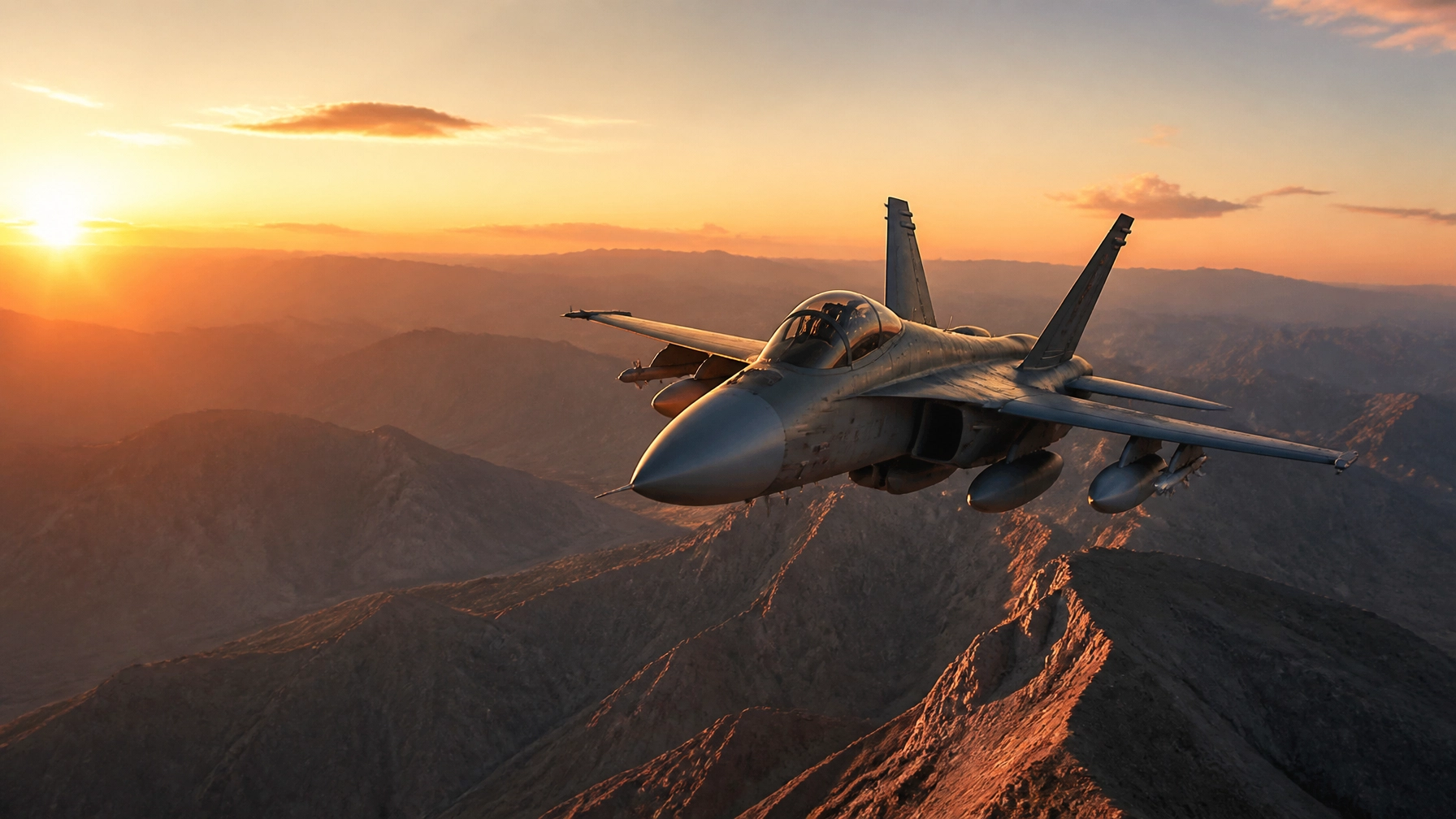
In a dramatic turn of events that has captivated the international community, details have emerged regarding a high-stakes American military operation conducted deep within Iranian territory. The mission, described as one of the most daring combat search and rescue operations in modern history, was launched following the downing of a US F-15E fighter jet. The aircraft, a cornerstone of tactical aerial power, was reportedly struck by a sophisticated surface-to-air missile whilst operating in a highly contested region. This incident immediately triggered a massive, multi-agency response aimed at recovering the two crew members before they could be captured by local forces.
The unfolding narrative of the rescue highlights the extreme risks faced by personnel operating in hostile environments. As soon as the jet was hit, the crew were forced to eject into a landscape that was as unforgiving as it was dangerous. While one pilot was located and brought to safety within a matter of hours, the weapons system officer faced a far more harrowing ordeal. Separated from his colleague and deep behind enemy lines, he was forced to rely on his survival training to evade detection in the rugged, mountainous terrain that defines much of the Iranian interior.
The Descent into Iranian Territory
The initial moments following the missile strike were chaotic. The F-15E, known for its speed and versatility, was unable to withstand the direct hit, leaving the crew with seconds to make a life-altering decision. Upon ejection, the two men were scattered across a vast, mountainous area, far from any immediate support. The environment itself posed as much of a threat as the Iranian patrols that were quickly mobilised to locate the crash site. With temperatures fluctuating wildly and the constant threat of discovery, the weapons system officer began a forty-eight-hour game of cat and mouse with his pursuers.
He was forced to move primarily under the cover of darkness, using the jagged peaks and deep ravines to mask his movements. The officer’s training in survival, evasion, resistance, and escape was put to the ultimate test. He maintained a low profile, avoiding any form of electronic communication that could be intercepted and traced back to his position. Meanwhile, back at command centres, the pressure was mounting. The window for a successful recovery was narrowing with every passing hour, and the prospect of an American serviceman being taken prisoner was a scenario that military planners were desperate to avoid.
The geopolitical sensitivity of the mission cannot be understated. Operating within the sovereign borders of a hostile nation without authorisation carries immense risk, not just for the personnel on the ground, but for international relations at large. Every move had to be calculated with surgical precision. The decision to commit such a large-scale force was a clear signal of the lengths to which the administration would go to ensure that no one was left behind, regardless of the complexity or the danger involved.
A Masterclass in Deception
To facilitate the rescue, a massive and intricate plan was put into motion. This was not merely a simple extraction but a coordinated effort involving over one hundred and fifty aircraft and hundreds of elite special operators. Among those deployed were members of Navy SEAL Team 6, a unit synonymous with high-profile and high-risk missions. Their presence underscored the importance of the operation and the level of skill required to navigate the hostile terrain and potential opposition.
Crucially, the physical rescue effort was bolstered by a sophisticated deception campaign orchestrated by the CIA. Recognising that Iranian forces would be monitoring communications and searching the likely areas around the crash site, intelligence officers worked to provide a series of false leads. This misdirection was designed to draw enemy resources away from the survivor's true location, creating the necessary space for the extraction teams to move in. By flooding the area with conflicting signals and simulated movements, the rescuers were able to keep the Iranian military off-balance during the most critical phases of the mission.
The operational footprint of the rescue was significant. To ensure that the mission remained successful and that sensitive technology did not fall into the wrongs hands, the decision was made to destroy two C-130 transport aircraft. These planes, which had been integral to the logistics of the operation, were scuttled once their roles were complete and it was determined they could not be safely recovered without compromising the main objective. The loss of the aircraft was a calculated sacrifice, prioritising the safety of the personnel and the integrity of military secrets over hardware.
The Final Extraction
The climax of the mission occurred nearly two days after the initial crash. After forty-eight hours of hiding and evading capture, the weapons system officer was finally reached by the special operations team. The extraction was carried out with the same level of precision that had defined the entire operation. Despite the proximity of Iranian forces and the inherent dangers of the terrain, the rescue was completed without a single American casualty. The success of the mission was a testament to the coordination between different branches of the military and the intelligence community.
Once the officer was safely on board a recovery aircraft, he was immediately flown to Kuwait for medical evaluation and treatment. While the physical toll of his ordeal was significant, initial reports indicated that his condition was stable. The relief felt by the command teams was palpable, as the long-shot mission had defied the odds to bring both crew members home. The weapons system officer's ability to remain undetected for so long in such a hostile environment will likely be studied for years to come as a prime example of survival under extreme pressure.
The broader implications of the rescue are still being processed. It stands as a powerful demonstration of military capability and the effectiveness of modern search and rescue protocols. By combining sheer numbers: in terms of aircraft and personnel: with the subtle art of intelligence-driven deception, the operation managed to achieve its goal in one of the most challenging environments imaginable. The successful recovery of both airmen has been hailed as a significant victory, highlighting the unwavering commitment to the safety of those serving on the front lines. As the details continue to emerge, the story of the forty-eight hours in the mountains of Iran will remain a definitive chapter in the history of aerial combat and recovery.