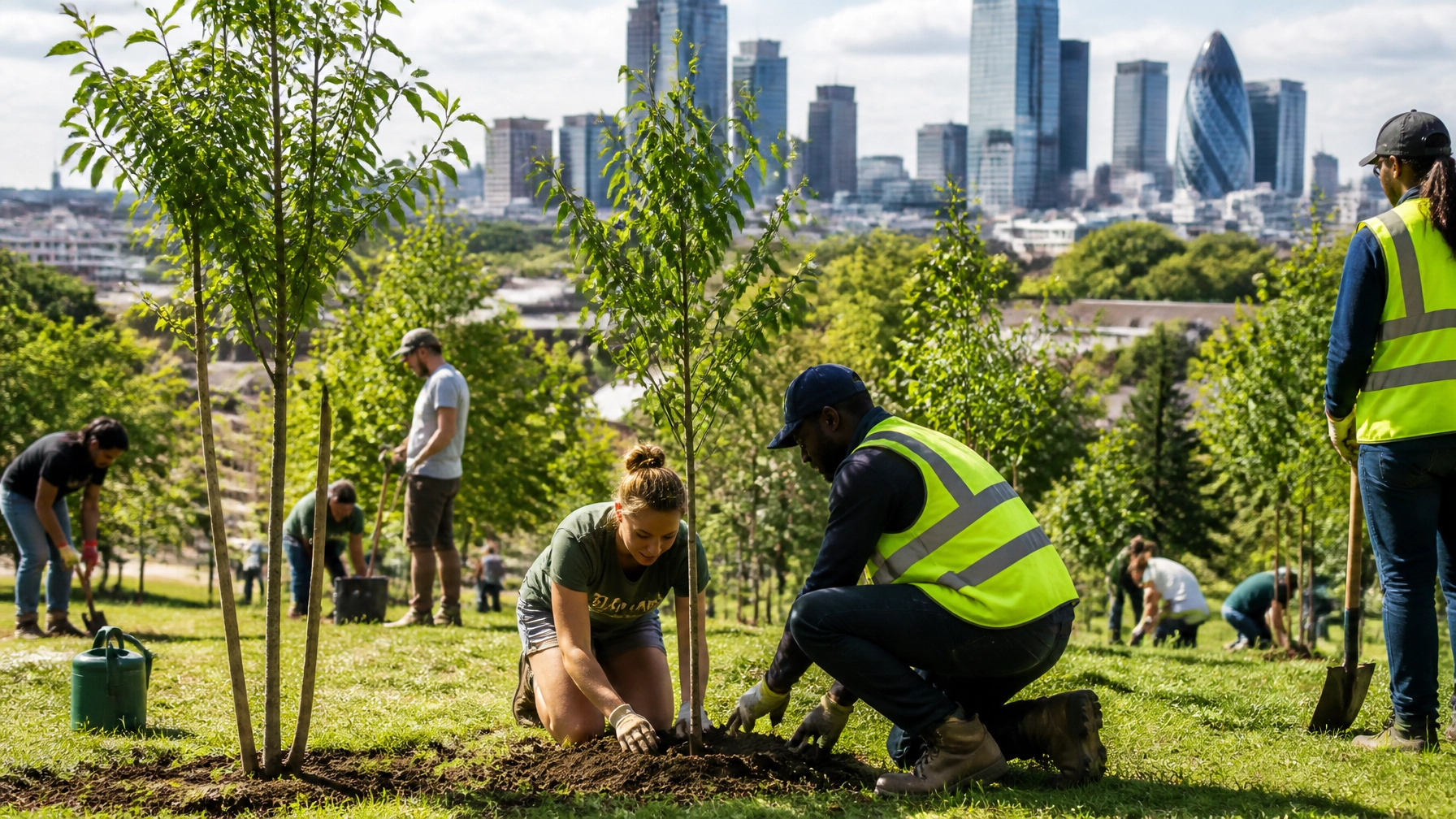
London is undergoing a quiet, green transformation that is reshaping the very fabric of its streets and parks.
Since 2019, the capital’s local authorities have successfully planted over 553,000 trees, marking a significant milestone in the city's effort to become more resilient against the escalating threats of climate change. This massive undertaking, led by individual borough councils, is not just about aesthetics; it is a calculated response to the growing necessity for natural cooling, enhanced biodiversity, and the rewilding of urban spaces that have long been dominated by concrete and asphalt.
The scale of the planting effort varies significantly across the city, reflecting the diverse geography and available space within each borough. Leading the charge is Enfield, where a staggering 129,389 trees have been bedded in over the last few years. This massive contribution is largely due to the borough's ambitious woodland creation projects, which aim to restore historical landscapes and provide expansive green lungs for the local community. Close behind is Barking and Dagenham, which has seen approximately 120,000 new trees and whips planted. These figures represent a monumental shift in how local governments view their responsibility toward environmental stewardship.
Other boroughs have also made substantial contributions, with Hillingdon planting around 61,000 trees and Waltham Forest adding roughly 37,000 to its canopy. While the outer boroughs naturally have more space for large-scale woodland expansion, the inner-city areas are not lagging behind in their commitment. Hammersmith and Fulham, despite its dense urban footprint, has managed to plant 15,000 trees, while Kensington and Chelsea has added over 7,500 street trees to its historic avenues. Each sapling represents a long-term investment in the capital’s health, providing immediate benefits for air quality and mental well-being while preparing the city for a warmer future.
The Strategic Distribution of Urban Canopy
The disparity in planting numbers between outer and inner London highlights a strategic approach to urban forestry. In boroughs like Enfield and Hillingdon, there is the luxury of land that can be converted into contiguous woodland. These areas are essential for meeting international benchmarks for what constitutes a forest. According to the United Nations definition, a forest is a land area of more than 0.5 hectares with trees higher than five metres and a canopy cover of more than ten per cent. While London as a whole is often described as a forest in a city, meeting these specific UN criteria requires the kind of large-scale planting seen in the northern and western fringes.
However, the smaller numbers in inner London are arguably just as significant. In dense neighbourhoods like Hammersmith or Kensington, every new street tree is a hard-won victory over subterranean infrastructure, utility pipes, and the competing demands for pavement space. These trees are strategically placed to provide maximum benefit to residents, offering shade on scorching summer days and breaking up the "urban heat island" effect that plagues the most built-up parts of the city. The focus in these areas is often on quality and survival over pure quantity, ensuring that the chosen species are resilient enough to withstand the pollution and restricted root space of a busy London thoroughfare.
The logistical challenge of planting half a million trees is immense. It involves not just the initial act of putting a sapling in the ground, but years of subsequent care. Local councils have had to balance their budgets to include maintenance programmes, ensuring that young trees are watered during increasingly frequent dry spells and protected from vandalism or accidental damage. In many boroughs, this has led to a rise in community involvement, with "tree wardens" and local volunteers taking ownership of the greenery on their doorsteps. This shift towards community-led environmentalism is a crucial component of the city's long-term green strategy, fostering a sense of pride and connection to the local environment.
Environmental Resilience and the Heat Island Effect
The primary driver behind this planting surge is the urgent need to cool our streets. Climate experts and urban planners have long warned that London’s traditional architecture and high density of dark surfaces: such as tarmac and slate: absorb and retain heat, making the city several degrees warmer than the surrounding countryside. This phenomenon, known as the urban heat island effect, can be deadly during extreme heatwaves. Trees offer a natural and highly effective solution. Through the process of evapotranspiration, trees release water vapour into the air, which consumes heat energy and lowers the surrounding temperature.
Research indicates that a healthy tree canopy can reduce street-level temperatures by as much as 12°C during the peak of summer. This is not merely a matter of comfort; it is a vital public health intervention. By lowering temperatures, trees reduce the risk of heatstroke and respiratory issues, particularly for the elderly and those with underlying health conditions. Furthermore, the shade provided by broad-leafed species protects pavements and building facades from direct sunlight, reducing the need for energy-intensive air conditioning and further lowering the city’s overall carbon footprint.
Beyond cooling, the addition of half a million trees provides a massive boost to London’s biodiversity. Each new tree becomes a mini-ecosystem, offering food and shelter for birds, insects, and fungi. By connecting existing green spaces through tree-lined corridors, councils are helping to create a "bolder London" where wildlife can move more freely through the urban landscape. This rewilding effort is essential for reversing the decline of local species and ensuring that the capital remains a vibrant, living city rather than a sterile concrete jungle. The variety of species being planted is also intentional, with a focus on native trees like oak, birch, and rowan, which are best suited to support local ecology.
Addressing Inequality Through Green Infrastructure
One of the most critical aspects of London’s tree-planting mission is ensuring that the benefits are shared equally across all socio-economic groups. Historically, wealthier neighbourhoods have enjoyed significantly more tree cover than deprived areas. This "green gap" means that those who are already facing economic challenges are also more likely to suffer from poorer air quality and higher temperatures. Climate charities and advocates have been vocal about the need to prioritise "kerbside greening" in the most built-up and disadvantaged parts of the city.
The effort to plant in deprived neighbourhoods is often more expensive and complex than planting in a park. It requires digging up pavements and navigating a maze of underground services. However, the social return on this investment is profound. Bringing nature into the heart of the most industrialised parts of London can transform the character of a neighbourhood, reducing stress levels and encouraging people to spend more time outdoors. As noted by environmental managers, trees are one of the simplest and most cost-effective tools we have to improve urban life, but they must be placed where they are needed most, not just where it is easiest to plant them.
Looking ahead, the challenge for London will be to maintain the momentum of the last five years. While half a million trees is a remarkable achievement, the city still has a long way to go to reach its ultimate canopy targets. Future planting will need to account for a changing climate, selecting species that can thrive in the hotter, drier summers and wetter winters that are predicted for the coming decades. Moreover, the focus will likely shift from just planting new trees to preserving the mature giants that already grace our streets and parks. These older trees provide the most significant cooling and carbon sequestration benefits, and their protection is just as vital as the growth of the next generation. Through continued investment and community support, London is proving that even the most historic and dense global cities can find a way to grow a greener, cooler future.