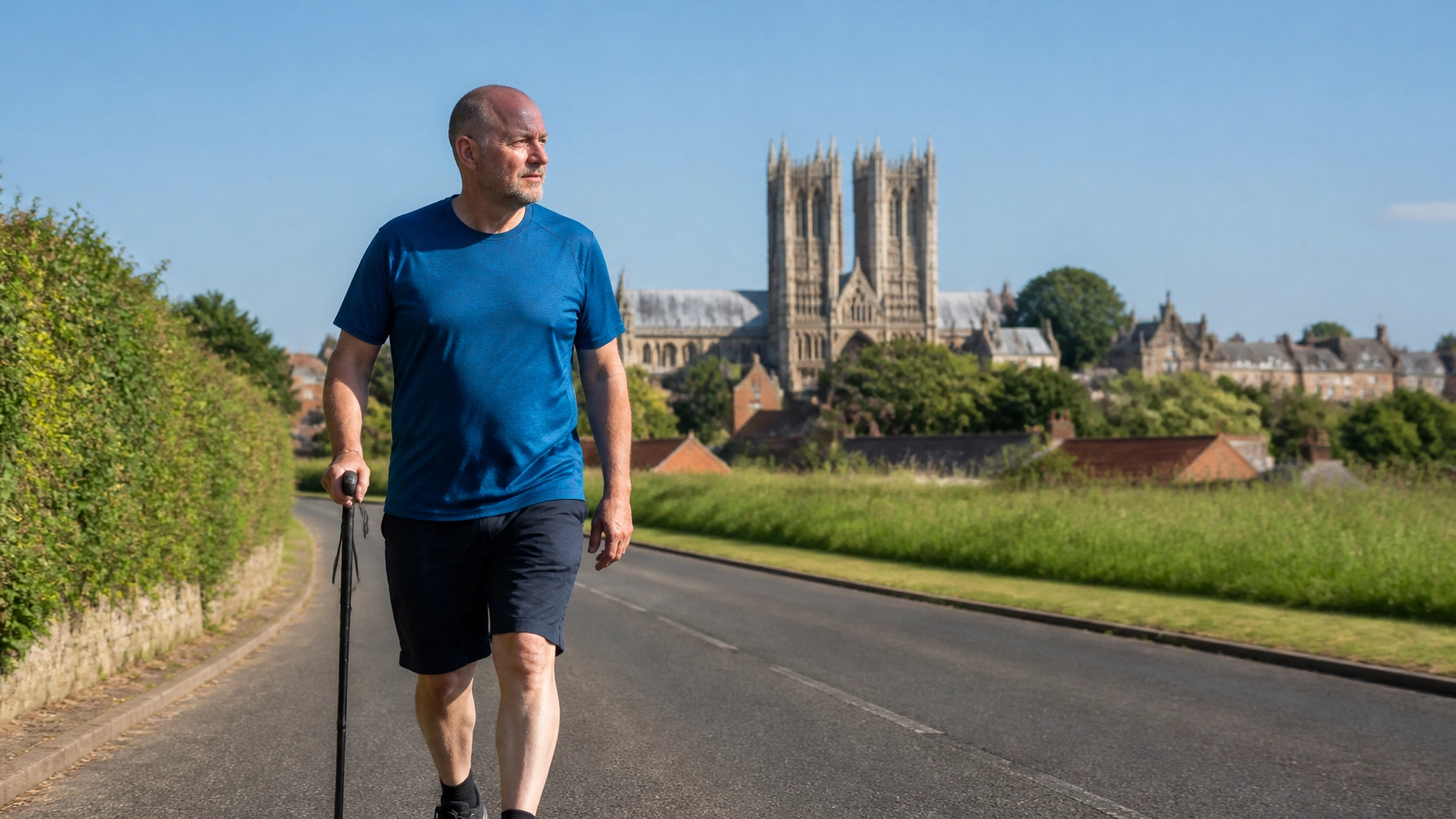
On a cold morning in January 2024, Ross Kaye set out for what he thought would be another routine run through the familiar lanes of Lincolnshire. At 54 years old, the Lincoln local was the picture of health: a seasoned runner who had conquered the Great North Run and spent years maintaining a high level of physical fitness. However, that morning, his life took a sudden and life-altering turn. While mid-stride, Kaye suffered a massive stroke that left him collapsed and fighting for his life. The irony was stark: the very activity he used to maintain his health became the backdrop for a medical emergency that would strip him of his mobility and independence.
Following the incident, Kaye was rushed to the stroke unit at Lincoln County Hospital. The diagnosis was severe, and the prognosis was uncertain. For a man accustomed to the freedom of long-distance running, being confined to a hospital bed was a psychological hurdle as much as a physical one. He spent months under the dedicated care of the hospital’s stroke team, navigating the exhausting and often frustrating journey of early recovery. When he was finally discharged, he left the ward not on his own two feet, but in a wheelchair. As he was wheeled through the doors of the stroke unit, Kaye made a solemn vow to himself and the staff who had saved him: he would one day return to those same doors, but he would do it walking.
Now, as July 2026 approaches, Kaye is preparing to fulfil that promise. On 3 July, he will embark on a five-mile walk from his home in Sudbrooke to the stroke unit at Lincoln County Hospital. This journey is not merely a personal milestone; it is a dedicated fundraising effort for the United Lincolnshire Hospitals Charity, an organisation that supports patients and families across the region’s medical facilities. Kaye has already seen a groundswell of support, with over £3,000 raised before he has even laced up his walking shoes for the challenge. The walk represents the culmination of years of arduous physiotherapy and the unwavering determination of a man refused to let a stroke define his future.
From Wheelchair to Walking
The transition from being wheelchair-bound to preparing for a five-mile walk has been anything but easy. For Kaye, the recovery process involved retraining his brain and body to perform the simplest of movements. The neuroplasticity required to overcome the damage caused by a stroke often involves thousands of repetitions of small gestures: moving a toe, lifting a heel, finding balance. Working closely with physiotherapists at Lincoln County Hospital, Kaye had to rediscover the mechanics of walking that most people take for granted. Each step was a battle against muscle weakness and the cognitive fatigue that often follows a major neurological event.
His route from Sudbrooke to the hospital stroke unit has been carefully planned to reflect his journey. The five-mile distance may seem modest to a former long-distance runner, but for a stroke survivor who was told he might never walk again, it is the equivalent of a marathon. The walk will take him through the suburban outskirts and into the heart of Lincoln, eventually leading him to the hospital doors he once exited in a chair. Supporters, friends, and family are expected to join him along the way, turning a personal mission into a community event. The visibility of the walk is intended to celebrate the progress he has made while acknowledging the vital role that local health services play in the recovery of stroke patients.
The funds raised through this walk will be directed toward the United Lincolnshire Hospitals Charity, which provides additional equipment, staff training, and environment improvements that go beyond the standard provision of care. For Kaye, this is a way to give back to the specific unit that helped him reclaim his life. The charity relies on such grassroots efforts to fund projects that make a tangible difference in patient outcomes, from advanced diagnostic tools to more comfortable rehabilitation spaces. By walking those five miles, Kaye is effectively paying forward the care he received, ensuring that future patients have access to the best possible resources during their own recovery journeys.
The Silent Danger of High Blood Pressure
One of the most significant aspects of Kaye’s mission is the message he carries regarding preventative health. Before his stroke, Kaye believed he was doing everything right. He was active, ate a balanced diet, and avoided the typical lifestyle risks associated with cardiovascular issues. However, he had neglected one crucial check: his blood pressure. It was later revealed that dangerously high blood pressure was the underlying cause of his stroke. Often referred to as the "silent killer," hypertension often presents no obvious symptoms until a catastrophic event like a stroke or heart attack occurs.
Kaye is now a vocal advocate for regular blood pressure checks, urging everyone: regardless of their perceived fitness level: to visit their GP or local pharmacy for a simple test. His experience serves as a powerful reminder that fitness does not always equate to health. A person can appear to be in peak physical condition while internal markers indicate a high risk of medical crisis. By sharing his story, Kaye hopes to prevent others from facing the same sudden upheaval he experienced. The awareness campaign tied to his walk emphasises that a five-minute check can save years of rehabilitation or, in many cases, a life.
The medical community highlights that high blood pressure is one of the most manageable risk factors for stroke. Simple lifestyle adjustments or medication can often bring pressure down to safe levels, but only if the condition is identified. Kaye’s walk is a literal and metaphorical journey toward better health awareness. He wants to demystify the process of health screening and encourage a culture where checking vital signs is as routine as checking the oil in a car. As he nears the hospital on 3 July, the message will be clear: do not wait for a crisis to understand your body’s internal health.
Continuing the Legacy of Giving
Kaye is no stranger to the world of charitable fundraising. Long before his stroke, he was a dedicated supporter of various causes, most notably raising over £10,000 for cancer charities. His commitment to helping others has always been a core part of his identity. The current walk for the United Lincolnshire Hospitals Charity is the latest chapter in a long history of altruism. Despite the physical setbacks he has faced, his drive to contribute to the well-being of his community remains undiminished. He views his recovery not just as a personal victory, but as an opportunity to continue his philanthropic work with a renewed sense of purpose.
Looking beyond the walk on 3 July, Kaye has already set his sights on even more ambitious goals. He plans to return to the Great North Run in 2027, a prospect that once seemed impossible. This aim serves as a long-term motivation for his ongoing physical therapy, pushing him to regain the stamina and strength required for a half-marathon. Additionally, he is planning a unique charity challenge involving carp fishing: a hobby that has provided him with much-needed mental respite during his recovery. These future projects demonstrate that Kaye does not see his five-mile walk as the end of his journey, but rather a significant stepping stone toward full reintegration into the active life he loves.
The support Kaye has received from the people of Lincoln and beyond has been overwhelming. The £3,000 already raised is a testament to the impact of his story and the respect he commands within his community. As he prepares to cross the threshold of the stroke unit once again, this time on his own feet, the moment will be a powerful symbol of resilience. Kaye’s story is a reminder that while a stroke can change the course of a life in an instant, it does not have to be the end of the story. Through sheer force of will, community support, and the excellence of local medical care, he is walking back toward a future defined not by what he lost, but by what he has fought to regain.