








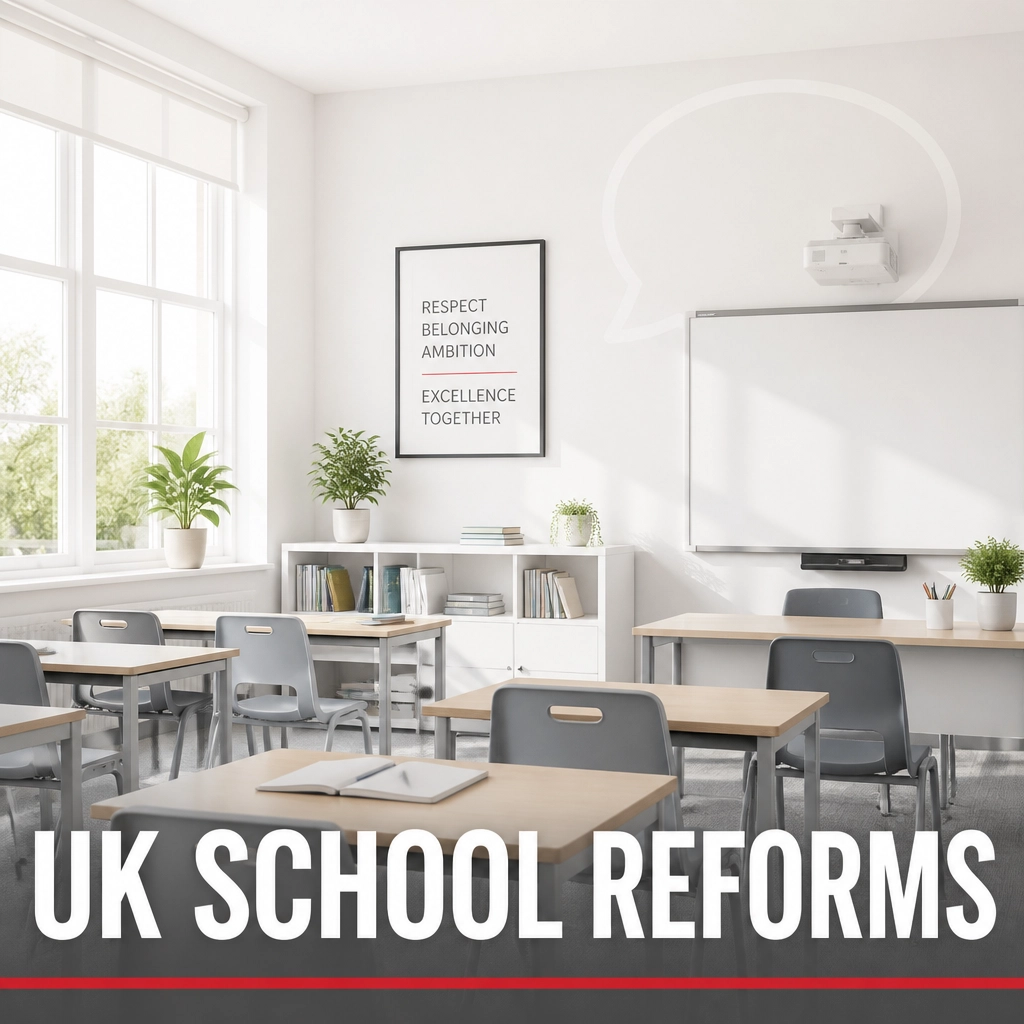
A sweeping set of educational reforms has been unveiled today, marking what many are calling the most significant shift in British schooling in over a decade. Under the banner of "Creative Classrooms," the government has announced a comprehensive package of changes designed to rebalance the national curriculum, moving away from a narrow focus on core academic subjects and towards a more holistic, arts-rich education. These reforms, which follow the long-awaited Curriculum and Assessment Review, aim to prepare pupils for a modern world shaped by artificial intelligence, financial complexity, and the need for high-level communication skills. For years, educators and artists alike have warned that creativity was being squeezed out of the state sector, but today’s announcement signals a firm reversal of that trend.
The centrepiece of the reform is the formal end of the English Baccalaureate, or EBacc, as the primary measure of school performance. Since its introduction, the EBacc has prioritised a specific suite of academic subjects: English, maths, science, languages, and humanities: often at the expense of creative and technical disciplines. Critics argued that this led to a "hollowing out" of music, drama, and design departments across the country. By reforming performance measures such as Progress 8, the government is now mandating that arts and creative subjects be given parity of status with traditional academic pillars. This structural change is intended to ensure that schools are no longer penalised in league tables for encouraging students to pursue their passions in the creative industries, which remain a vital part of the national economy.
Rebalancing the National Curriculum
The shift towards a broader curriculum is underpinned by the establishment of a new National Centre for Arts and Music Education. This institution will serve as a hub for excellence, providing high-quality training and online resources for teachers who may have seen their creative departments dwindle in recent years. The goal is to ensure that every child, regardless of their background or where they live, has access to a world-class arts education. This isn't just about fostering the next generation of professional musicians or actors; it is about the cognitive and social benefits that a creative education provides. Experts have long pointed to the way music can improve mathematical reasoning and how drama can build self-confidence and empathy.
To support this, the government is also introducing a new Enrichment Framework. This framework is designed to help schools offer a much wider range of extra-curricular activities that are integrated into the school day. From debating and volunteering to gardening and board games, the focus is on developing the "whole child." The move has been welcomed by various sector organisations who see it as a vital opportunity to secure a child's right to a rich and varied education. However, the success of this initiative will depend heavily on workforce capacity. With teacher recruitment remaining a challenge, the reforms include a commitment to ensuring a high-quality teacher in every classroom, supported by a new pay structure that provides a reliable floor for all educators while allowing schools the flexibility to innovate in how they retain staff.
The political signalling behind these changes is clear: the era of "exam factory" schooling is coming to an end. By restoring parity between arts subjects, humanities, and languages, the government is responding to a decade of pressure from the cultural sector. High-profile figures from the world of music and film have frequently spoken out about the lack of opportunities for young people from working-class backgrounds to break into the creative arts. These reforms aim to bridge that gap by making creative subjects a core part of the school experience again, rather than a luxury reserved for those who can afford private tuition or attend well-funded independent schools.
Skills for a Digital and Financial Age
Beyond the arts, the "Creative Classrooms" initiative introduces significant updates to how pupils are prepared for the practicalities of adult life. One of the most praised aspects of the new curriculum is the introduction of mandatory financial literacy. Recognising that many young people leave school without a basic understanding of how the economy works, the government is making it a requirement for pupils to learn about budgeting, debt management, and the mechanics of mortgages. Whether delivered through the mathematics curriculum or as part of a revamped citizenship programme in primary schools, the aim is to ensure that every school leaver is "financially resilient" and capable of making informed decisions in an increasingly complex financial landscape.
In tandem with financial skills, the curriculum is being updated to tackle the challenges of the digital age. A new focus on AI and misinformation literacy will see pupils taught how to identify "fake news" and navigate a world where AI-generated content is becoming the norm. This is seen as a crucial step in protecting the democratic process and ensuring that the next generation can critically evaluate the information they consume online. For older students, the government is exploring the introduction of new post-16 qualifications in data science and artificial intelligence, ensuring that the UK remains a leader in the global tech economy. A dedicated Digital, AI, and Technology Task and Finish Group has been established to advise the Education Secretary on how to best integrate these skills into the classroom.
This modernised curriculum also places a renewed emphasis on climate change and sustainability. Pupils will learn not just the science of global warming, but the practicalities of how society can transition to a green economy. This reflects a broader trend of aligning the education system with the national goal of reaching net-zero emissions. By embedding these topics across different subjects, the government hopes to foster a generation of "green-literate" citizens who are prepared for the jobs of the future. The focus on technology and the environment is intended to show that a creative classroom is not just one that looks to the past, but one that is firmly focused on the challenges and opportunities of the 21st century.
Oracy and Enrichment Beyond the Desk
Perhaps the most culturally significant change is the decision to give "oracy": the skill of speaking and listening: equal importance to reading and writing. For too long, the UK education system has been heavily weighted towards written examinations, often neglecting the vital verbal communication skills that are essential in almost every professional environment. The new reforms will see speaking and listening assessments integrated into various stages of a child's education. This is part of a wider push to close the attainment gap, as research consistently shows that children from disadvantaged backgrounds often start school with lower levels of oral language development. By prioritising oracy, the government aims to give every child the "gift of the gab" and the ability to articulate their ideas clearly and persuasively.
The reforms are not just about what happens inside the classroom, but how schools interact with the wider community. The new Regional Improvement Teams and a series of Ofsted reforms are being introduced to ensure that standards are raised across the board, with a particular focus on schools in "cold spots" where educational outcomes have historically been poor. These teams will work with schools to implement the new curriculum changes and ensure that the focus on creativity and oracy does not lead to a drop in core standards. Instead, the government argues that a more engaged and creative student body will lead to better performance in traditional subjects like English and maths.
While the "Creative Classrooms" package has been met with broad enthusiasm, some educationalists have cautioned that the devil will be in the detail. There are calls for a guaranteed "arts entitlement" within the school day: specifically, a minimum number of hours dedicated to expressive arts: to ensure that the policy intent is matched by classroom reality. There is also a push for dance and drama to be recognised as discrete subjects at Key Stage 3, rather than being grouped under a general "arts" banner. Despite these calls for further detail, the mood in the sector is overwhelmingly positive. For the first time in years, the conversation about education in Britain is not just about test scores and league tables, but about how to nurture the imagination, the voice, and the future potential of every child.