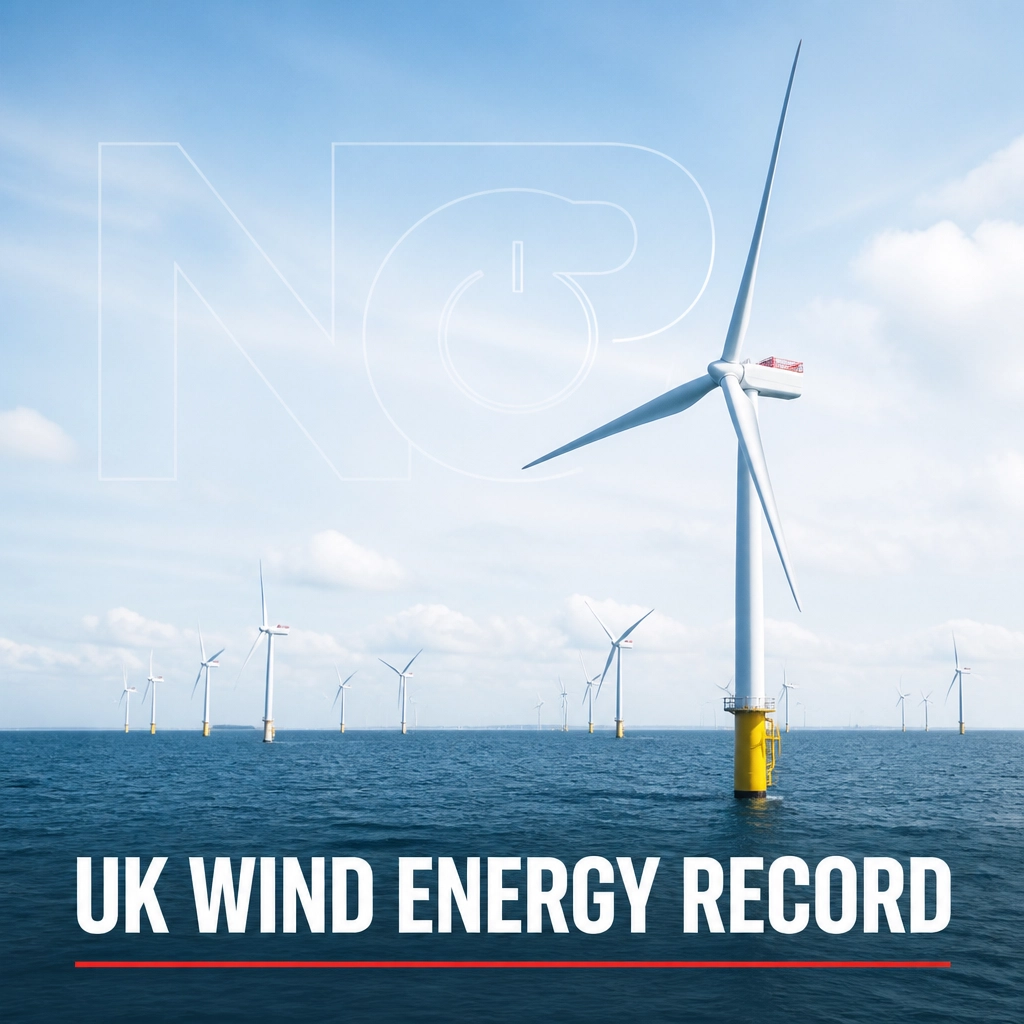
Britain’s energy landscape has reached a defining milestone this week as the nation’s wind fleet surpassed all previous generation benchmarks, signaling a fundamental shift in how the United Kingdom powers its homes and industries. New data confirmed that wind turbines across the country and around its shores delivered a record-breaking instantaneous output, providing a glimpse into a future where fossil fuels are increasingly relegated to a supporting role.
The peak generation, monitored by the National Energy System Operator, hit an unprecedented 23,880 megawatts during a period of sustained high winds. This figure represents a significant leap from previous highs, demonstrating the rapid scalability of the UK’s renewable infrastructure. For several hours during this peak, wind alone was responsible for more than half of the total electricity demand in Great Britain. This surge in clean energy production coincided with a dramatic drop in natural gas usage, which fell to its lowest share of the energy mix in nearly two years.
Industry analysts have noted that this record is not merely a statistical anomaly but the result of years of strategic investment in both onshore and offshore capacity. The expansion of massive offshore arrays in the North Sea and the Irish Sea has provided the grid with a more consistent and powerful source of energy, helping to stabilise the network even as older coal and gas-fired stations are decommissioned. The ability of the grid to handle such a massive influx of intermittent power without disruption marks a triumph for modern energy management systems and grid balancing technologies.
A shift in the national energy balance
The impact of this record-breaking performance extends far beyond the control rooms of energy providers. When wind generation peaks at these levels, it has a direct and measurable effect on the carbon intensity of the national grid. During the recent record window, the carbon emissions associated with every unit of electricity consumed were among the lowest ever recorded. This is a critical metric for the UK’s broader environmental commitments, showing that the transition to a net-zero economy is physically possible and increasingly frequent.
For the average household, the implications are equally significant. According to analysis of the generation data, the electricity produced during this peak was enough to power approximately 23 million homes. As the UK continues to electrify its transport and heating sectors: moving toward electric vehicles and heat pumps: the reliability of large-scale wind power becomes the cornerstone of national energy security. By reducing the reliance on imported natural gas, which is often subject to volatile global market prices, the domestic wind sector is acting as a buffer against external economic shocks.
The first quarter of 2026 has already shown that this trend is accelerating. Overall wind output was up by more than 30 per cent compared to the same period in the previous year. This growth is being driven by the completion of several major projects that have added hundreds of turbines to the national fleet. The UK now boasts some of the world’s largest operational offshore wind farms, turning the country’s natural geographic advantage into a tangible industrial asset.
Overcoming the challenges of the green transition
Despite the celebratory nature of these records, the transition to a wind-dominant grid is not without its hurdles. One of the most significant challenges remains the issue of storage and transmission. Because wind power is variable, the system must find ways to store excess energy generated during peak times for use when the air is still. This has led to a surge in interest and investment in battery storage facilities and "green" hydrogen production, where surplus electricity is used to split water into oxygen and hydrogen gas.
Furthermore, the physical infrastructure of the grid must be updated to move power from where it is generated: often in remote coastal areas or the far north: to the major population centres in the south. This "levelling up" of the energy network requires significant construction of new high-voltage subsea cables and overland pylons. While these projects are often met with local debate, the record-breaking figures of 2026 provide a powerful argument for their necessity. Without a robust transmission network, the green energy generated in the windiest parts of the country cannot reach the homes that need it most.
There is also the matter of market reform. The current pricing structure of the UK energy market often links the price of electricity to the cost of gas, meaning consumers do not always see the immediate financial benefit of cheap wind power. However, as wind becomes the primary source of generation for longer periods, there is growing pressure to decouple these prices. This would ensure that the low operational costs of renewable energy are passed directly to the public, potentially lowering bills and increasing support for further green developments.
The global context of British wind leadership
The UK’s success in the wind sector is being watched closely by international observers. As a pioneer in offshore wind technology, British firms and engineers are exporting their expertise to emerging markets in Asia and North America. The record of 23,880 megawatts serves as a proof of concept for other nations with extensive coastlines, showing that a modern, industrialised economy can indeed be powered by the elements.
Looking ahead to the remainder of 2026 and into 2027, several more large-scale projects are due to come online. These developments will likely see the current record fall again in the near future. The goal is no longer just to set records, but to make such high levels of renewable generation the standard rather than the exception. The transition is also fostering a new generation of skilled workers, from turbine technicians to data analysts who specialise in predicting wind patterns with pinpoint accuracy.
In the untold stories of the energy transition, it is the local communities hosting these giant structures that often provide the most insight. While the aesthetics of wind farms remain a point of discussion, the economic benefits brought to coastal towns through long-term maintenance contracts and port upgrades are undeniable. The "green power" revolution is as much an industrial story as it is an environmental one, revitalising areas that have historically relied on declining maritime or manufacturing industries. As the UK continues to set new records, the focus remains firmly on ensuring that the benefits of this natural bounty are felt by everyone, from the high streets of the midlands to the remote islands of the north.