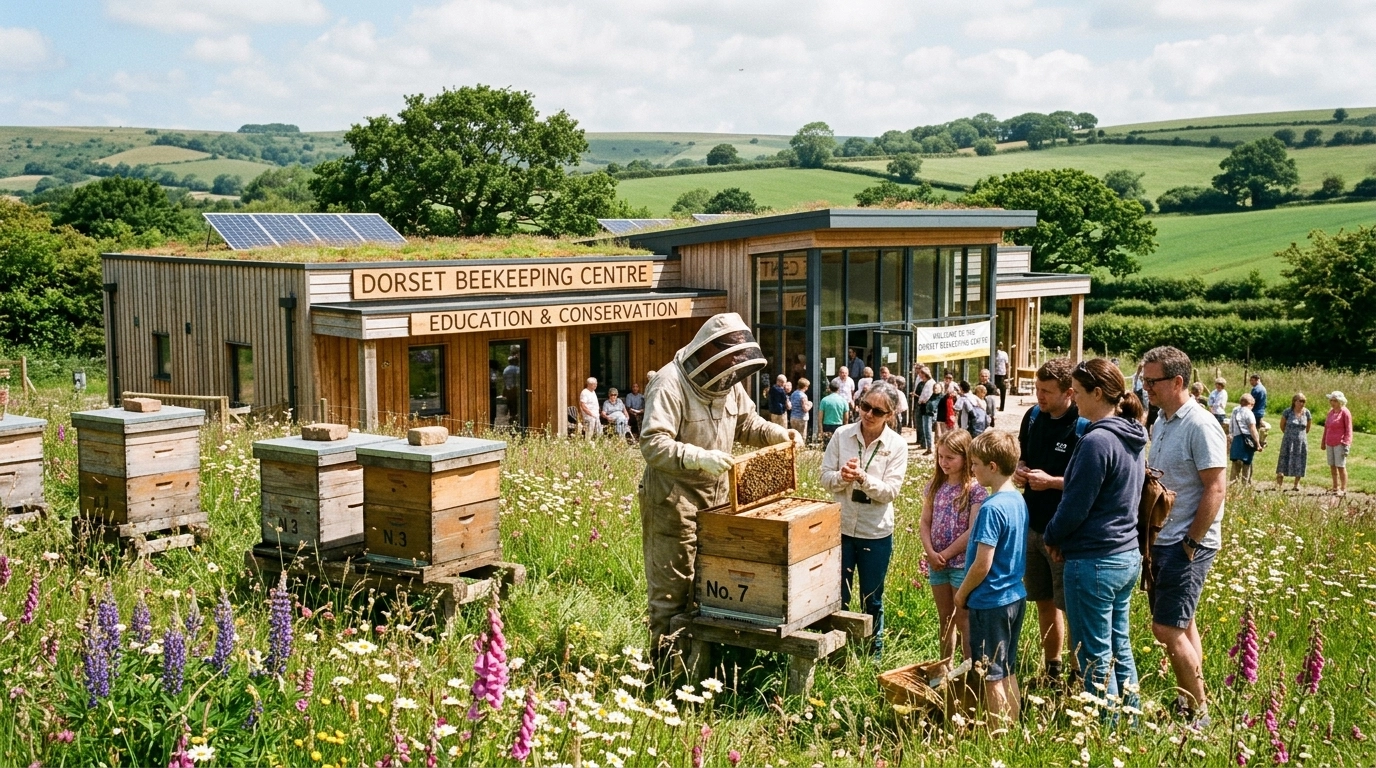
The village of Shillingstone in North Dorset has officially become the new heart of British apiculture. After more than ten years of meticulous planning, local community fundraising, and dedicated volunteer work, the North Dorset Honey Bee Centre has finally opened its doors. This milestone marks the culmination of a journey that began with a simple dream of creating a dedicated space for pollinator education and has ended with a state-of-the-art, eco-friendly facility that stands as a testament to local perseverance. The project, which saw more than £250,000 raised through various initiatives and a significant contribution from the National Lottery, is set to transform how the region engages with one of its most vital natural residents.
The journey to this opening day has been anything but swift. For the members of the North Dorset Beekeepers Association, the road was paved with planning applications, architectural consultations, and a tireless drive to secure the necessary funds. The facility is not merely a clubhouse; it is a purpose-built educational hub designed to be accessible to people of all ages and physical abilities. For too long, beekeeping was seen as a hobby restricted by physical demands or lack of accessible learning environments. The new centre in Shillingstone changes that narrative, offering a safe and controlled environment where everyone from school children to retirees can observe hives and learn the intricacies of honey production and bee health.
A Sustainable Hub for Environmental Education
The construction of the centre itself reflects the very values it aims to promote. Built with sustainability at its core, the facility features eco-friendly materials and design elements that allow it to sit harmoniously within the Dorset landscape. The interior provides a spacious teaching room, a modern kitchen for processing honey, and a community space where members can share knowledge. Outside, the landscaping has been carefully curated to provide a rich habitat for pollinators, with wildflower meadows and native planting schemes that ensure the resident bees have the best possible start in their new home. This focus on the environment extends beyond the bees themselves, as the centre aims to teach visitors about the broader ecosystem and the critical role that all pollinators play in food security and biodiversity.
Securing the £250,000 required to complete the project was a monumental task for a local community group. While local events, honey sales, and private donations formed the foundation of the fund, the final push came from a substantial grant from the National Lottery. This funding allowed the association to cross the finish line, ensuring that the facility met all the modern standards for accessibility and educational technology. The success of the fundraising drive reflects a growing public awareness of the plight of the honey bee and a desire to take tangible action at a local level. By providing a permanent home for the association, the centre ensures that beekeeping knowledge is preserved and passed down to future generations in a structured and professional environment.
Opening the World of Beekeeping to Everyone
One of the primary goals of the North Dorset Honey Bee Centre is to demystify the world of bees. Many people are fascinated by these insects but are often deterred by a lack of knowledge or a fear of being stung. The new facility addresses these concerns head-on with an observation gallery that allows visitors to see the inner workings of a hive without needing to don a full bee suit. This safe viewing area is expected to be a major draw for local schools, providing a unique educational resource that brings biology and environmental science to life. By seeing the bees at work, visitors can gain a deeper appreciation for the complex social structure of the colony and the incredible engineering involved in building honeycomb.
The educational programme at the centre is designed to be comprehensive. It covers everything from the basics of starting a hive to advanced topics like queen rearing and disease management. For many, beekeeping is a way to reconnect with the rhythms of the natural world, and the centre provides the perfect starting point for that journey. The association has already seen a surge in interest, with beginners’ courses frequently oversubscribed. This enthusiasm is a positive sign for the future of the craft in Dorset, as a new generation of beekeepers prepares to take up the mantle. The centre also serves as a hub for scientific study, providing data on local bee health and contributing to national efforts to monitor pollinator populations.
A Community Asset for the Future of Dorset
The impact of the new centre extends far beyond the boundaries of Shillingstone. It represents a significant investment in the local rural economy and a boost for green tourism in the area. Visitors to the centre are expected to come from across the county and beyond, drawn by the unique opportunity to learn about bees in such a high-quality facility. This influx of visitors will benefit local businesses and help to put North Dorset on the map as a leader in community-led environmental projects. The centre is more than just a building; it is a community asset that will host workshops, talks, and social events, fostering a sense of connection and purpose among those who care about the environment.
As the landscaping matures and the first full season of beekeeping at the new site gets underway, the sense of achievement among the volunteers is palpable. They have created something that will last for decades, providing a legacy of environmental stewardship and education. The opening of the North Dorset Honey Bee Centre is a reminder that even the smallest insects are worthy of our greatest efforts. By protecting the honey bee and teaching others to do the same, the people of Shillingstone are helping to ensure a vibrant and healthy future for the Dorset countryside. The buzz in the village is not just from the bees; it is from a community that has worked together to achieve something truly remarkable for the natural world.